

Premier Lacrosse’s $100M Series E pulls Glen Powell and Rob Mac into pro sports
Ares and Joe Tsai lead the league’s biggest-ever capital raise, with ESPN as a 2025 stakeholder.

Glen Powell and Rob Mac are among the investors in the Premier Lacrosse League’s new $100 million Series E financing round. The round, led by Ares and Joe Tsai, is the largest capital raise in pro lacrosse history and includes ESPN, which took a stake in 2025.
The Premier Lacrosse League just closed a $100 million Series E financing round, and it brought in investors that look less like traditional sports backers and more like Hollywood crossover. Deadline reports that Glen Powell and Rob Mac are among the investors participating, joining a lineup anchored by Ares and Joe Tsai. This is not a small “nice to have” infusion of cash for a niche league. Deadline describes the Series E as the largest capital raise in the history of pro lacrosse, which instantly changes the league’s financial gravity.
The stakes for decision-makers are simple: $100 million is enough to buy time, buy talent, and potentially buy legitimacy in a crowded attention economy. When the investors include both Ares and Joe Tsai, plus ESPN, which took a stake in the league in 2025, you can read the move as a bet that the Premier Lacrosse League is no longer a “wait and see” property. It is a league now positioned for bigger business outcomes, not just season-to-season survival. And the presence of Powell and Rob Mac signals something else: the league is attracting capital from outside the usual sports investment playbook.
To understand why this round matters, it helps to zoom out to how pro sports financing typically works. Leagues and teams generally need funding for a mix of hard costs, like operations and talent, and softer but equally important costs, like media visibility and brand building. In lacrosse, that challenge can be sharper because the sport is growing but still competes for mainstream sports dollars and eyeballs. That is where large rounds become more than fundraising. They can accelerate the league’s ability to lock in infrastructure, strengthen partnerships, and increase the frequency and reach of high-quality programming.
Series E is also a useful clue. By the time a company is raising at that stage, it usually means it has already moved beyond early validation. Deadline specifically labels this as a Series E round. While the story does not enumerate every use of proceeds, the implication is that the league is ready to scale what it has proven. That is a key board-level question for anyone reading: when you are already at Series E scale, the conversation shifts from “can this work” to “what do we prioritize, and how fast do we push?” Boards typically get pressure to show measurable traction after a large raise, especially when investors with track records in growth and media are involved.
Ares and Joe Tsai leading the round adds another layer to the incentives. Ares is associated with disciplined, return-minded capital. Joe Tsai is part of a broader business ecosystem that tends to think in terms of strategic leverage across media, technology, and long-term growth. That combination is relevant because sports is not just about wins on the field. It is about distribution, sponsorship budgets, audience building, and the ability to convert attention into durable economics. If ESPN took a stake in 2025, that suggests the league’s media trajectory is being taken seriously enough for a major platform to put money behind it.
Then there is the Powell and Rob Mac angle, which is where the story becomes culturally interesting as well as financially relevant. Hollywood investors do not automatically mean a league is “turning into entertainment.” Sometimes it does, sometimes it is simply access. But either way, their participation can signal that the league is building a narrative strong enough to attract people used to scaling audiences across film, TV, and pop culture. For executives, that can matter because brand momentum can reduce the friction of partnership conversations. Sponsors and advertisers often want an environment where their messages travel farther than game highlights.
The ESPN stake in 2025, combined with this $100 million Series E, suggests a sequencing play. Rather than treating lacrosse as a passing experiment, ESPN appears to have stayed involved long enough to justify more than a one-off bet. Deadline does not provide additional details beyond saying ESPN took a stake in 2025, but the fact is still meaningful. It reframes the league’s funding event as part of an ongoing investment thesis rather than a standalone headline.
For peers in sports, media, and adjacent investing, the second-order implication is clear: capital is flowing into growth properties that can credibly scale both audience and revenue. If the Premier Lacrosse League can attract the largest capital raise in pro lacrosse history and do it with investors ranging from Ares and Joe Tsai to ESPN and Hollywood names like Glen Powell and Rob Mac, then the bar for “what counts as investable” in developing sports categories is rising. Boards considering similar bets will likely face more competition for distribution, partnerships, and top-tier talent. And for anyone evaluating sports investment opportunities, this $100 million round is a reminder that the attention economy is not waiting for traditional consensus. It is pricing in momentum, and sometimes it does it fast.
This story's Key Insights and Take-aways are locked.
Create a free account to unlock Executive Actions for one credit.
Register to UnlockAlways free for Executives Club members. Join the Club
More in Business
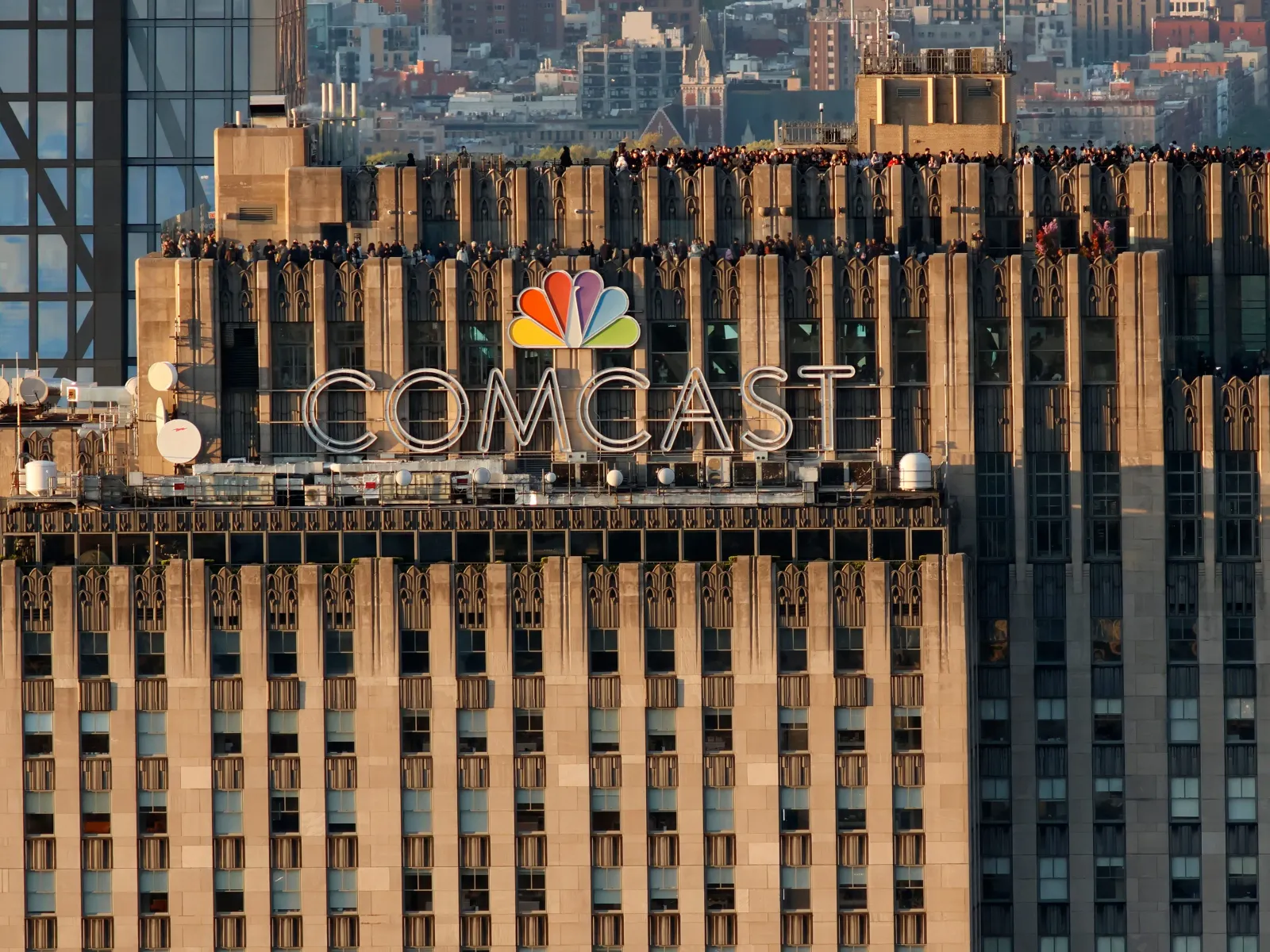
Comcast shares jump 25% as it plans to split NBCUniversal and Sky
The tax-free spin-off could reshape focus, funding, and competition across media and tech for years.

Bungie cuts most Destiny 2 staff as Sony says Marathon still matters
Herman Hulst confirms layoffs affecting most Destiny and some Marathon teams after Bungie admits Destiny fell short.

SK Hynix jumps 11% after seeking up to $29.4B in Nasdaq listing
The chip giant filed for a Nasdaq listing plan that could raise $29.4 billion, instantly reshaping investor expectations.