

Princess Ita Sameh’s dagger wasn’t décor, bone changes suggest real archery and fighting
A study of six Middle Kingdom royal mummies links arm and hand loading to habitual weapon use, not symbolism.
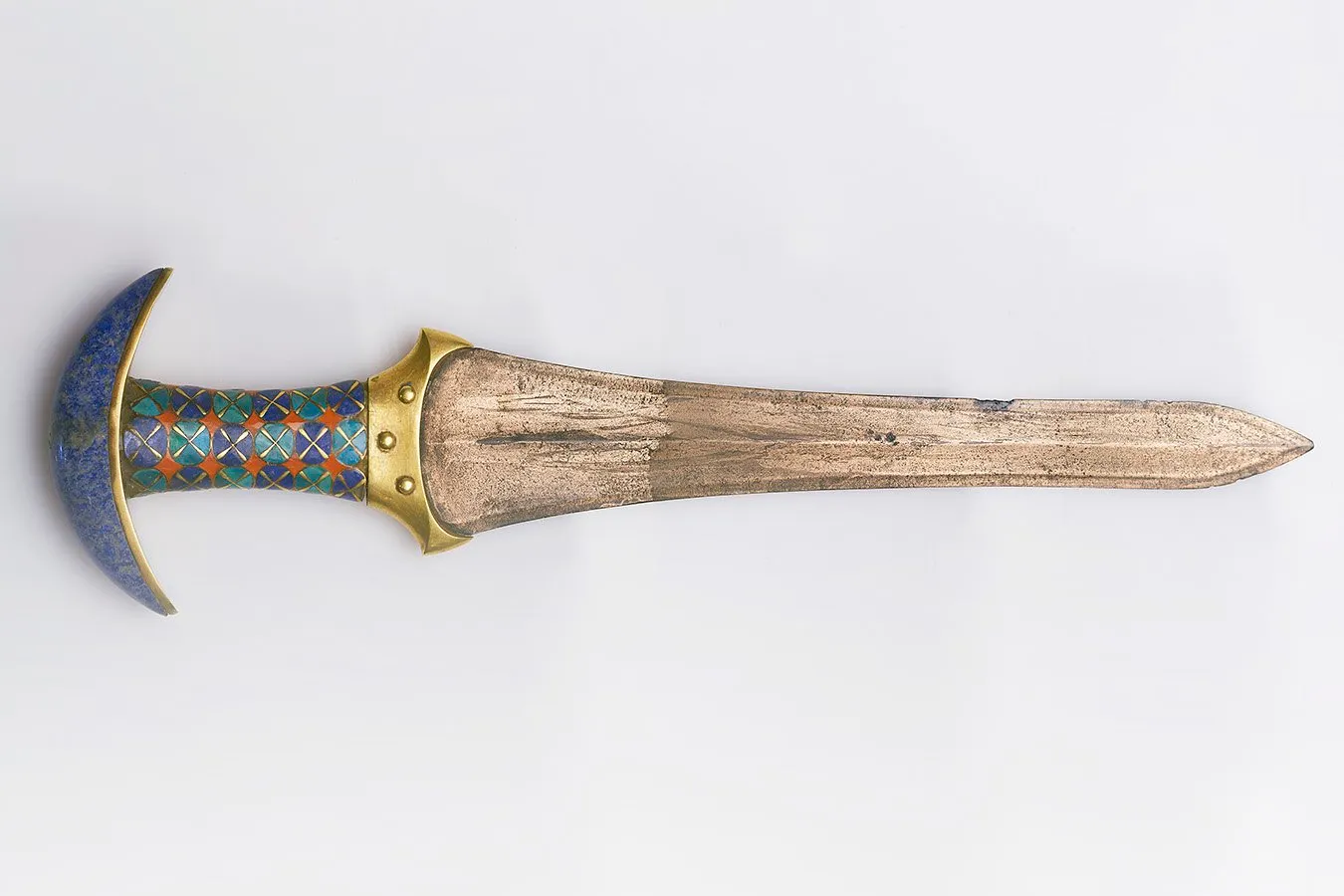
Researchers led by Zeinab Hashesh of the University of Beni-Suef analyzed bone changes in six royal mummies, including Princess Ita Sameh Abdel Mohsen and Princess Noub-Hotep, rediscovered in Cairo during a 2020 curation effort. The findings challenge the long-running debate over whether weapons buried with women were symbolic or reflected active martial training.
Ancient Egyptian princesses were buried with bows and daggers for reasons that look a lot more practical than decorative. In a new analysis of six royal mummies from Egypt’s Middle Kingdom, Zeinab Hashesh and colleagues report bone changes consistent with habitual gripping of weapons and repetitive archery stress. The standout is Princess Ita, aged between 28 and 34 at death, whose burial included an elaborate gold and lapis lazuli dagger and whose forearm and hand bones suggest very strong connections to muscles used to hold and control a weapon.
That is the headline the evidence earned. Hashesh interprets Princess Ita’s bone pattern as implying habitual gripping of weapons like daggers or maces. The second set of clues comes from Princess Noub-Hotep and Princess Itaweret: both show enlargement of the radius bone in the forearm, which could be an adaptation to the repetitive stress of drawing a bow. Noub-Hotep, in particular, also shows bowing of the second right metacarpal bone in the palm and strengthened attachments of finger muscles, pointing to what the researchers describe as “archer’s grip.” In other words, the bodies being studied are not just sitting through history as symbols. They look like people who trained.
Why this matters beyond the archaeology nerd circle is that it directly hits a familiar interpretive fault line in museum and research rooms: were weapons buried with women symbolic status markers, or evidence of lived skill? The source notes that weapons have been found buried with women from many cultures throughout history, and that there has been much debate about whether the burial practice reflected use or just representation. This study pushes the needle toward “lived,” at least for these specific royal individuals.
The dataset is also specific enough to be interesting to anyone who cares about how claims get made. Hashesh and her colleagues studied six royal mummies, five of them female, from the Dahshur complex of pyramids and tombs, dated to about 1850 to 1700 BC. Some mummies were excavated in the 1890s. The key twist is that several of these remains were rediscovered in the Egyptian Museum in Cairo during a curation project in 2020. In practice, that means the work is not just “find new stuff.” It is also “re-open what already exists and read it differently with new methods.”
From there, the researchers move from artifacts to biology. They analyze bones to infer physical activity, and the results include both the “weapon use” signal and the “injury happens” signal. For example, Princess Itaweret survived broken ribs and foot fractures, which Hashesh says were probably caused by accidents or hard blows. That interpretation matters because it turns the page from training to risk. If injuries like fractures and broken ribs were common and survivable, then these princesses may have been engaged in high-impact activities where falls and blows were a real danger.
There is also a second-order incentive baked into the social structure. When injured, the researchers say their status gave them access to surgeons capable of setting bones so they healed without infection or misalignment. That claim is about outcomes, not drama. It is essentially saying that the same elite system that could produce elaborate burial assemblages could also produce medical support, which would shape who survived injuries and how well they recovered. For executives and boards, the analogy is simple: systems that control resources also shape results, even in ways that are easy to miss if you only look at what is displayed on the surface.
Still, the study is careful enough to acknowledge that similar bone changes can come from other activities. Sonia Zakrzewski at the University of Southampton raises a methodological caution: other activities could result in similar alterations to arm and hand bones, such as frequent juggling or using a scythe. Her example is pointed. If you were to find a tennis player buried with a club, you cannot simply argue that the bony change was caused by clubbing people. In other words, bone mechanics can be suggestive, but they are not a single-purpose receipt. Hashesh’s interpretation, however, is supported by the pairing of specific weapon-related artifacts with the specific patterns of forearm and hand loading, especially for Noub-Hotep and Ita.
Finally, the broader historical interpretation is getting sharper. Michelle Langley at Griffith University in Australia says the study provides real insight into these princesses’ lives, arguing that royal women were not simply sedentary figures in palaces. She frames the implication as practical training in martial and hunting arts, similar to what people often assume for fathers and brothers. Whether you call that a revolution in our mental models or just a correction of old stereotypes, the stakes are clear: the way institutions interpret burial evidence shapes what we think power and gender roles looked like in the past.
Reference details also anchor credibility. The Journal Reference is Frontiers in Environmental Archaeology, DOI: 10.3389/fearc.2026.1844402. And the core takeaway is not just that weapons were present. It is that bone changes in these specific princesses, tied to bow drawing stress and habitual gripping, align with the weapons they were buried with, suggesting real fighting and archery training rather than purely symbolic display.
This story's Key Insights and Take-aways are locked.
Create a free account to unlock Executive Actions for one credit.
Register to UnlockAlways free for Executives Club members. Join the Club
More in Science

Alaska's 1,580-foot tsunami had warning signs. Scientists just found them.
Rapid glacier retreat, heavy rainfall, and thousands of tiny tremors preceded Alaska's 1,580-foot tsunami, a warning for every coastal community in a warming world.

The rare mutation that lets high-risk brains dodge Alzheimer's
Scientists found a natural defense against protein buildup, opening a new path to preventive treatments.

3,000 steps a day may halve Alzheimer's decline, study finds
New research links a modest daily walk to less tau buildup and nearly half the cognitive and functional decline, even for those with early signs.