

PS brand CEO Hideaki Nishino pitches “pick up and play” and portable PlayStation setups
Sony says consoles stay central, but new experiences will reuse tech “in various forms and locations,” including other rooms.
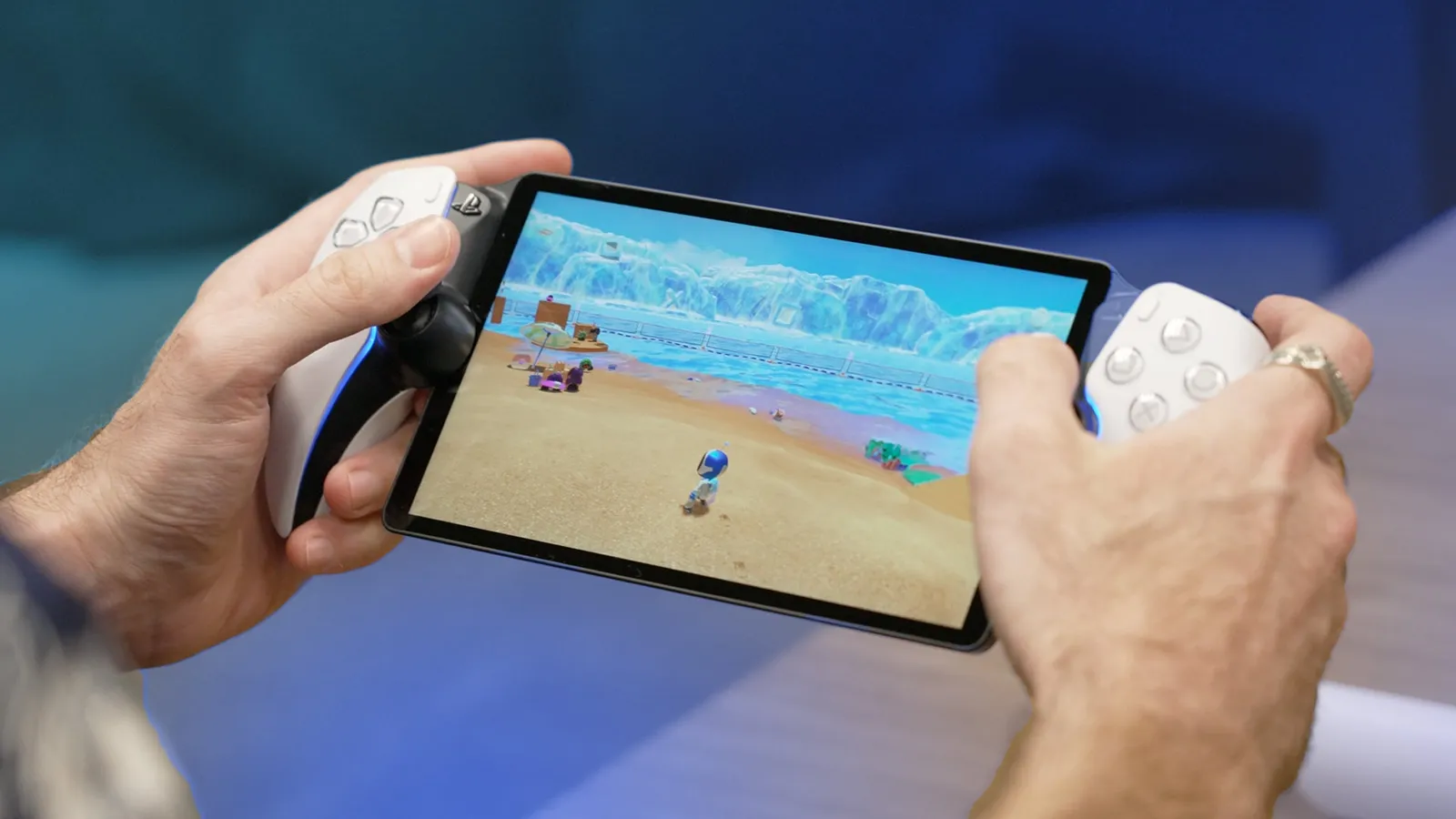
Hideaki Nishino, CEO of Sony Interactive Entertainment, told Famitsu that a console remains necessary, and next-generation PlayStation experiences will “leverage technologies” across different forms and locations. For decision-makers, it signals a hardware roadmap built for hybrid usage patterns, with Portal-like streaming and comfort as core design goals.
Sony Interactive Entertainment CEO Hideaki Nishino just used a very specific phrase for what he thinks consoles need next: “pick up and play.” In a special Famitsu interview marking the Japanese game magazine’s 40th anniversary, Nishino said his belief that “a console is necessary for playing games hasn’t changed,” and that Sony “wants to continue providing its own game consoles.” Then he connected that console commitment to the hardware direction: new console experiences will involve “leveraging technologies that can be used in various forms and locations.”
The clearest “various forms and locations” proof point came when Nishino described Sony’s plan to broaden where PlayStation can be comfortably used. He said the PlayStation brand is strongly associated with playing on the TV in the living room, but Sony is “planning to release monitors and speakers so that people can play comfortably in other locations as well.” He also tied the strategy directly to existing products, noting, “We developed the PlayStation Portal as part of this initiative.” Translation: this is not just console talk, it is a plan to make PlayStation feel less like one device in one room and more like a flexible play experience across spaces.
Why this matters now is that “pickup and play” is not merely a vibe. It is a design constraint that affects the whole pipeline, from user experience and network setup to how quickly players can get into a session. Nishino framed it as the most important console quality “nowadays,” which matters because the console market has been pulled in two directions at once: long-form TV gaming and increasingly mobile, on-the-go behavior. Sony is telling stakeholders it intends to meet that reality without giving up consoles entirely.
And Sony has been testing the “not only on the TV” idea in steps. Nishino’s own description nods to how the PlayStation identity has moved on multiple occasions: the early 2000s PSone portable screen, the Japan-only Pocketstation, the PSP and PS Vita handhelds, PlayStation VR, and the PlayStation Portal as a companion device for PS5. That history is important because it implies Sony already knows consumers do not treat PlayStation as a single platform form factor. They treat it as an ecosystem, and the company’s job is to keep the friction low regardless of how the player consumes games.
Portal is also where the strategy gets more operational and less conceptual. The source notes that back in November 2025, Sony officially launched cloud streaming on PlayStation Portal. Nishino flagged cloud streaming as an important feature, and the mechanism matters for planning: remote play streams games directly from a PS5, while cloud streaming bypasses the PS5. That changes household dynamics. It can let someone give the PS5 a rest, or let another person use the PS5 while you play. Nishino also reported adoption momentum with a concrete metric: “the number of users in January 2026 was 1.5 times that of December 2025.” For executives, that is a signal that Sony’s hybrid approach is not purely theoretical, at least at the Portal layer.
Nishino framed the Portal effort as exploratory product development, saying Sony was thinking, “Let’s try this, let’s try that,” and that it wants to move forward while exploring various ideas. He then connected the hardware question to lifestyle change, reiterating that games will remain one of the “essential sources of entertainment,” while acknowledging that meeting changing needs is a challenge for hardware developers. That is a useful reminder for boards and investors: hardware roadmaps are no longer just about raw performance. They are about context, convenience, and how quickly a player can enter the game.
There is another strategic thread running through the interview, and it impacts how this console direction might be financed and positioned: Sony’s altered stance on PC releases. The source says that last week, Sony nixed PC releases from descriptions of its launch strategy for first-party titles. The new main stance is that Sony will focus on PS5-exclusive releases for first-party single-player games, while live service titles are likely to head to both PS5 and PC to bolster the playerbase. Nishino added that Sony will continue making platform choices per game, releasing on PC where that would “maximize the gaming experience.” For decision-makers, that matters because it suggests Sony sees different business models requiring different distribution tactics, even as it pushes “various forms and locations” on the hardware side.
So where does this leave PS6 talk? The source notes that PS6 form-factor rumors have been around for a while, including a Switch-like dockable console or even a console with a separate handheld. It also mentions the likelihood of an expensive price tag. The context here is not gossip-free: it references Valve’s Steam Machine and its $1,050 starting price that triggered shocked reactions, plus memory manufacturers suggesting rising costs could see next generation consoles like the PS6 exceed $1,000. Sony may push back the console’s release to avoid such high pricing, according to the source.
Finally, the source adds that this is not the first “PS6 handheld” tease. Last year, Moore’s Law Is Dead reported an unannounced PS6 handheld that would be dockable and backwards compatible with PS4 and PS5 games, and there was also a brief mention of what sounded like a PS6 S, framed like a cheaper companion option. Even without confirming any specific PS6 hardware details, Nishino’s comments establish a directional principle: Sony is interested in reusing “technologies that can be used in various forms and locations,” and it is actively building products and partnerships that make that principle tangible, starting with comfort in other rooms and streaming behavior that can bypass the PS5.
For leaders watching the industry, the takeaway is simple but not small: if Sony truly believes “pick up and play” is the console standard now, then the next competitive battle is not just for frames or resolution. It is for the fastest path from “I’m here” to “I’m playing,” across living rooms, alternative spaces, and devices that may not look like a traditional console at first glance. That is the kind of strategic bet that reshapes platform roadmaps, content planning, and even how you measure adoption, because usability and mobility become product metrics, not afterthoughts.
This story's Key Insights and Take-aways are locked.
Create a free account to unlock Executive Actions for one credit.
Register to UnlockAlways free for Executives Club members. Join the Club
More in Entertainment

Russell Brand's accuser 'bewildered and confused' as he denies 7 sex charges
The criminal case against the comedian is a live test of how media companies manage talent risk when serious allegations go public.

'It's a Magic Trick': Ballet Experts Say Rosalía's SNL Pose Is Impossible
Three ballet experts tell Rolling Stone Rosalía's gravity-defying SNL stillness shouldn't be possible - and why the debate is now part of the show.

Activision CMO: GTA 6 Will Boost Call of Duty, Not Bury It
Activision's top marketer says Rockstar's blockbuster will drive players back to consoles and into Modern Warfare 4, even as the company admits its recent strategy failed.