
Putin faces rare public blame in Russia over Ukraine war fallout
Fuel shortages, inflation, energy attacks, and rising casualties are pushing prominent voices to publicly pin blame.
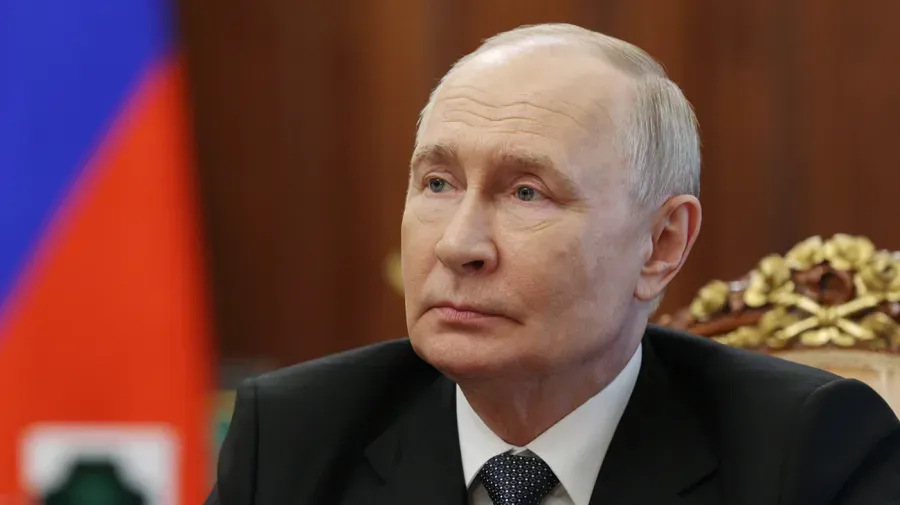
Russian President Vladimir Putin is facing rare public criticism at home as pressures from the more than four-year war in Ukraine intensify. Fuel shortages, rising inflation, high-profile attacks on Russian energy infrastructure and cities, and mounting military casualties are driving prominent figures to start pinning blame.
Russian President Vladimir Putin is coming under rare public criticism at home, and the Hill describes this as a significant signal of how the more than four-year war in Ukraine is squeezing Russia internally. The concern is not just battlefield pressure. It is the way that pressure is showing up in daily life, in public trust, and in the kind of blame that normally stays behind closed doors.
The immediate picture Russia faces, according to the report, is blunt. Fuel shortages and rising inflation are combining with high-profile attacks against Russian energy infrastructure and cities. Layer in mounting military casualties, and you get the kind of multi-front stress that tends to force even powerful elites to pick a side in public. The report says prominent figures are starting to pin blame. That matters because public blaming is rarely a casual act in an environment where dissent can carry consequences.
To understand why this is a big deal for decision-makers elsewhere, think about the incentives inside a tightly governed system. When hardship concentrates in tangible, measurable pain like fuel scarcity and inflation, the political cost of “business as usual” rises. Even if elites still believe the leadership is ultimately responsible, the act of pinning blame publicly can be a way to manage personal risk, compete for influence, or signal a willingness to absorb new narratives that explain why outcomes have worsened. Put differently, when conditions deteriorate in ways people can feel, the margin for silence gets smaller.
This is also where the Ukraine war shifts from being purely a foreign conflict to being a domestic economic and infrastructure stress test. The report points to high-profile attacks on Russian energy infrastructure and cities. In energy-dependent economies, attacks on production, distribution, or resilience capabilities can create knock-on effects quickly. Fuel shortages are one of those knock-on effects. And once supply becomes less reliable, inflation can accelerate even without any new external shocks, because costs rise across logistics, industry, and household consumption. That is the chain executives watch for in any sanctions-heavy, conflict-exposed market: operational disruption turns into pricing pressure, and pricing pressure turns into political pressure.
Russia's situation is also a reminder that war changes what “security” means for businesses and regulators. Energy infrastructure has economic gravity. When it is hit, it forces companies to reconsider contingency planning, repair timelines, and supply routing. It also tends to elevate the role of state directives, because the market may not be able to solve the disruption fast enough. That can lead to a regulatory posture that is more interventionist, with priorities set through administrative channels rather than normal commercial contracting. While the Hill piece focuses on criticism and pressure, the underlying theme is operational: when core systems face repeated disruption, governance becomes more reactive.
The report also flags mounting military casualties as part of the pressure stack. Casualties are not only a human tragedy; they are a destabilizer for public confidence and internal morale. The risk for leadership is that repeated losses, if not convincingly justified or effectively concealed, can create a widening gap between the official story and lived reality. In that context, rare public criticism becomes more than noise. It becomes a signal that the credibility of explanations is weakening, and that prominent figures feel the need to respond before the narrative window closes.
Second-order, this can create a feedback loop that concerns boards, investors, and policymakers even outside Russia. In markets under stress, domestic political turbulence can spill into economic policy, energy pricing, trade flows, and enforcement priorities. When fuel and inflation dynamics get bad, leaders often respond with controls or other measures to stabilize prices and supplies. Those measures can work temporarily but can also reduce efficiency and increase fiscal strain. Meanwhile, external attackers targeting infrastructure can intensify, because attacks become both strategically useful and psychologically potent.
For peers in similar roles, the strategic stake is simple: watch the link between battlefield outcomes and domestic legitimacy. The Hill story describes a chain of pressure from attacks and casualties to fuel shortages, inflation, and rare public criticism. That link is where systems either regain stability or fracture. When prominent figures begin pinning blame publicly, it signals the system is already recalibrating. The question for decision-makers is whether that recalibration leads to tighter coordination and resilience, or whether it becomes a loss of coherence that makes every next disruption harder to manage.
This story's Key Insights and Take-aways are locked.
Create a free account to unlock Executive Actions for one credit.
Register to UnlockAlways free for Executives Club members. Join the Club
More in Politics

Glacial collapse, not rain, killed 180 in Nepal's Himalayan flood
The Himalaya's extreme geography hid the true cause of Nepal's catastrophic flood, a glacial collapse that turned a geological battleground into a mass-casualty zone.

Iran’s Esmail Baghaei says Oman talks start shipping via Hormuz, not US talks yet
Temporary route plans with Oman aim to restart commerce while Tehran says Washington dialogue is not on the table.

Standards watchdog opens probe into Reform UK deputy leader Richard Tice over interests
The parliamentary standards commissioner says it began an investigation on 28 July into a possible undeclared interest.