

Quantum proofs show why verifying quantum answers is harder than finding them
Researchers unpack how checking correctness in quantum settings can’t dodge quantum complexity, reshaping how we think about quantum advantage.
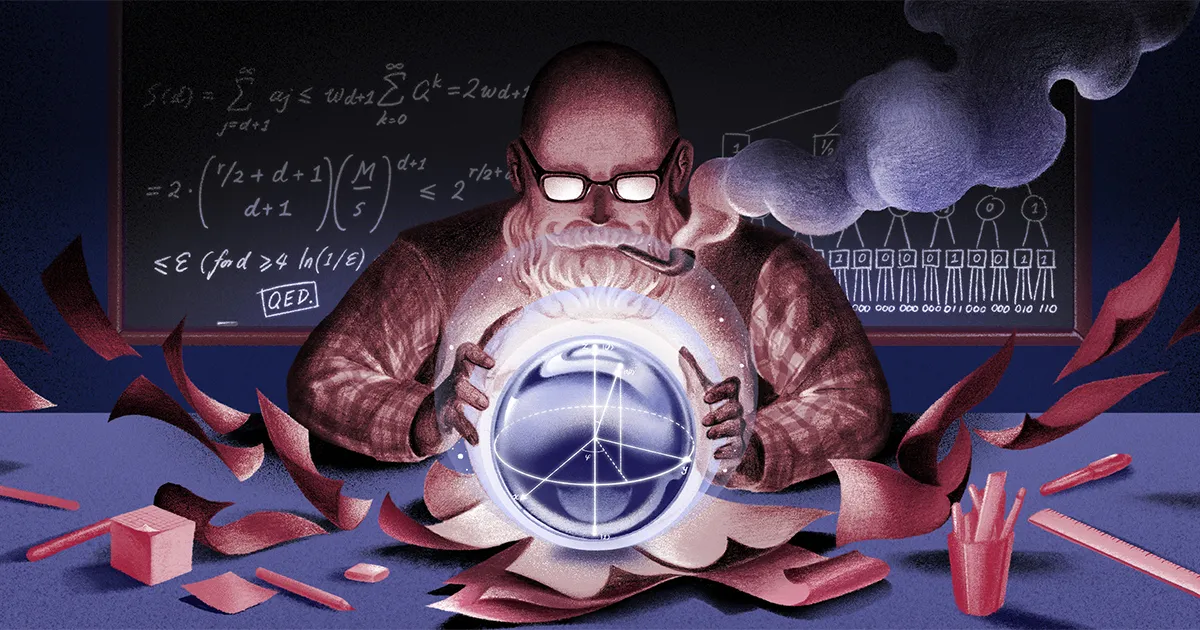
Researchers in quantum computer science analyze how “quantum proofs” change the economics of verification for quantum problem solving. The implication for decision-makers: quantum advantage is not just about faster computation, but also about whether outputs can be efficiently verified.
For decades, quantum computing has been sold with a clean story: build a hypothetical quantum computer and it can rapidly solve certain hard math problems that would crush ordinary computers. But there is a second, less glamorous question that matters just as much once you leave the lab and try to run anything at scale: if someone hands you a solution, how do you prove it is correct?
That is exactly where the idea of “quantum proofs” enters. According to Quanta Magazine, researchers have now revealed the power of quantum proofs, showing that when you check solutions to certain problems, you run into the inherent complexity of the quantum world. In other words, you can’t simply sidestep quantum difficulty during verification the way you might in simpler settings. The hunt is not just “can quantum find the answer?” It is also “can we efficiently check the answer, without paying the same quantum price?”
To understand why this is a big deal, it helps to separate two tasks that often get conflated. Finding a solution is one thing. Certifying it is another. In classical computing and in many proof systems, verification can be dramatically easier than discovery. You can imagine a researcher running a heavy computation, then producing a short certificate that a verifier can check quickly. The quantum world, however, has a habit of refusing to be that convenient. The Quanta account frames the central lesson: even when your goal is only to verify, the structure of quantum mechanics pulls verification back into the same complexity that makes quantum computation powerful in the first place.
This matters for the broader quest that the article describes. More than 30 years ago, researchers identified hypothetical quantum computers capable of rapidly solving difficult math problems, and ever since, the field has tried to pinpoint specific cases where quantum computers are more powerful than their classical counterparts. That work is typically interpreted as a raw compute advantage story. But the “quantum proofs” angle shifts the spotlight from solving to confirming, which is where real systems face friction. If verification is expensive, then even a fast solver may not translate into practical advantage, because the cost of establishing trust can erase the win.
Second-order implications start showing up immediately for anyone thinking about quantum deployment, partnerships, or platform investments. In a quantum program, you do not just need an algorithm that runs. You also need a credible path to validation, including ways to detect mistakes, quantify uncertainty, and prove correctness claims. If the field is learning that “verification” cannot escape quantum complexity for certain problem classes, then architectures and budgets have to reflect that. Teams that assume verification will be cheap may discover they are underestimating the real engineering challenge.
There is also a governance and incentives angle hiding in plain sight. Quanta points to “a small band of computer scientists” pursuing a related question for nearly as long: under what conditions quantum computers are more powerful, not just computationally, but in how they can prove things. That pursuit hints at a deeper institutional dynamic. In competitive environments, everyone wants to claim quantum advantage. But claims need to survive scrutiny. Proof systems and verification mechanisms are how claims become actionable. If quantum verification has inherent complexity, then boards and investors should expect longer timelines for “proof of correctness” narratives, not just “proof of concept” demos.
Finally, zoom out to regulatory and compliance framing, even if the article is not about regulators directly. When systems make claims that affect customers, markets, or critical decisions, verification becomes a compliance concern. Even in purely computational domains, the credible question is whether someone else can check what was produced, and how costly that check is. Quantum proofs, as described by Quanta Magazine, reinforce the idea that in certain quantum settings, verification cannot be engineered into simplicity. That has ripple effects for auditability, third-party validation, and the standards that will eventually define what counts as a trustworthy result.
For executives and decision-makers tracking the quantum race, the takeaway is straightforward and a little uncomfortable. Quantum advantage is not only a story about generating outputs quickly. It is also a story about whether those outputs come with verifiable guarantees that do not demand the same level of complexity you were trying to avoid. The more the field clarifies the power and limits of quantum proofs, the more it will define the real competitive frontier: who can both compute and certify, and who has to live with expensive verification that drags the business case back to Earth.
This story's Key Insights and Take-aways are locked.
Create a free account to unlock Executive Actions for one credit.
Register to UnlockAlways free for Executives Club members. Join the Club
More in Science

ESA targets Oxia Planum clay for the Rosalind Franklin rover, chasing life clues.
A new paper argues Mars’ ancient clay at Oxia Planum could preserve evidence, and Europe is planning the landing.

NASA astronaut Chris Williams captures Bahamas sandbar waves from 263 miles above Earth
A summertime ISS snapshot turns into a reminder: we can still see beauty and physics clearly, even from space.

Proofpoint ties UNK_MassTraction to mailbox raids via a Roundcube flaw
Universities in the US and Canada were targeted as credentials were stolen, with Proofpoint tracking the campaign back to May.