
Quantum “proofs” show why verifying solutions can be as hard as computing them
A new line of research argues the quantum world blocks shortcuts even when you only check answers.
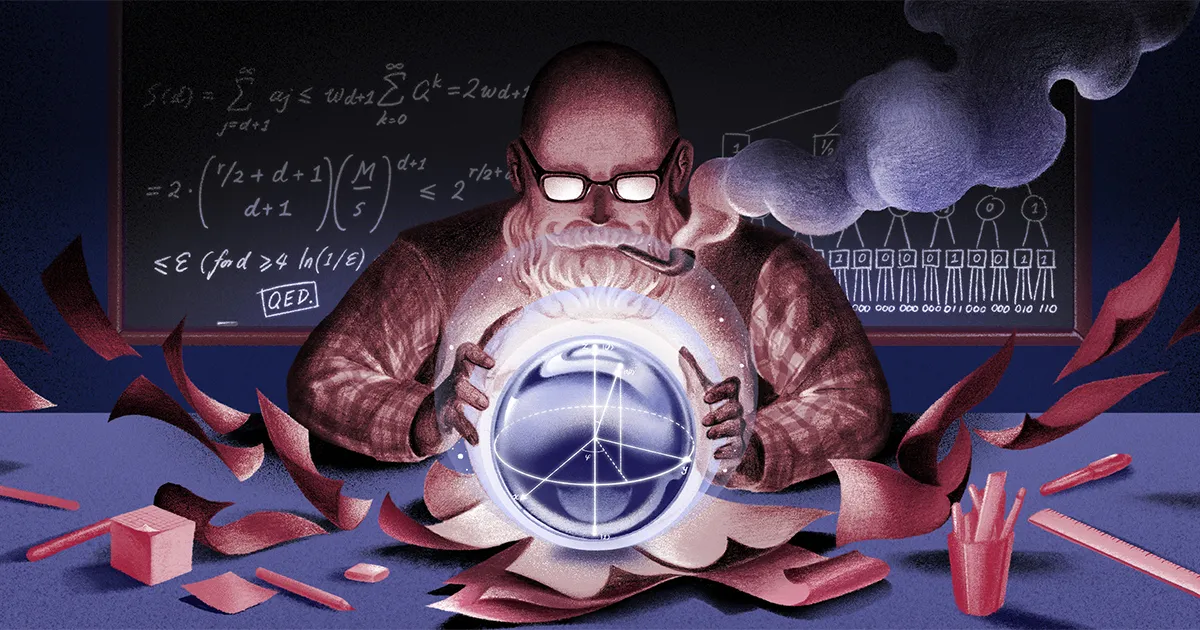
Researchers are revealing that verifying purported solutions for certain problems demands quantum-level complexity. For decision-makers, this reshapes expectations for when quantum systems can offer speedups, even in “verification-only” workflows.
For more than 30 years, researchers have worked under a big, motivating assumption: if computers followed the laws of quantum physics, they could rapidly solve difficult math problems. That idea fueled a long race to identify specific cases where quantum machines are truly more powerful than ordinary classical computers.
Now, a related but stubborn question is getting sharper. Instead of asking how fast quantum computers can produce an answer, researchers are asking how fast we can check that an answer is correct. And the punchline is uncomfortable: for certain problems, you cannot escape the inherent complexity of the quantum world just by switching from “compute” to “verify.” The act of verification is not a free service. It can be just as hard as the original problem.
That distinction matters because it changes how we think about quantum advantage in practice. In classical computing, there is often a clean separation between generating a solution and verifying it. You might accept that solving is expensive, but checking can be cheaper. The quantum verification problem, as described in this Quanta Magazine report on “quantum proofs,” suggests that for some tasks, the usual asymmetry collapses. You can’t just take a potentially faster quantum computation and then slap on a lightweight classical check. The quantum world keeps its receipts.
This is where the “quantum proofs” framing becomes more than a cute phrase. It signals that verification may require a level of complexity that is itself quantum. In other words, the proof system does not magically compress difficulty into something easy. The researchers’ conclusion is tied to the broader goal of the field: pinpointing where quantum computers can do more than classical machines. If the verification step has the same or comparable complexity, then “speedup” has to be measured end-to-end, not just at the compute stage.
Zoom out to how the industry thinks about quantum timelines and risk. Many investors, boards, and operators like problems that have a clear path to milestones: run the experiment, get the output, verify quickly, repeat. If verification can carry quantum-level difficulty, that can complicate benchmarking and validation. It also affects how teams design protocols, because they can’t assume that correctness checking will be a minor engineering detail.
There is also an important second-order implication for governance and oversight. When verification is complex, it becomes harder to build systems where internal teams can confidently certify results without deep expertise at every step. That can increase the burden on review processes, independent audits, and technical due diligence. In a world where quantum systems are still scarce and expensive to run, teams may have fewer opportunities to cross-check results through cheap alternative methods.
Regulatory and standards bodies typically like verifiability. Not because regulators are allergic to math, but because verification is the bridge between innovation and accountability. Even if this story is not about a specific regulator or a specific rule change, it still points to a general reality: if the verification step is intrinsically complex, then standardized, broadly accessible validation becomes a harder target. Boards should take that into account when defining what counts as “evidence” for progress.
Finally, the strategic stakes extend beyond any single lab. The field has spent decades hunting for quantum advantage. For the last 30 years, researchers have pursued cases where hypothetical quantum computers based on quantum physics can solve difficult math problems rapidly, and where that power shows up in ways classical machines cannot match. “Quantum proofs” adds a crucial constraint to that search: it is not enough for quantum computation to be fast. For some problem classes, verification refuses to be an easy afterthought.
For executives, the practical takeaway is simple but far-reaching. If quantum speedups depend on end-to-end workflows where verification is costly, then adoption timelines, product claims, and system architectures have to be evaluated with more rigor. Quantum advantage may still exist, but it likely has sharper edges than the “compute faster, check cheaply” story suggests. Peers building quantum applications, protocols, or investment cases should treat verification complexity as a first-class requirement, not a footnote.
This story's Key Insights and Take-aways are locked.
Create a free account to unlock Executive Actions for one credit.
Register to UnlockAlways free for Executives Club members. Join the Club
More in Science

Alaska's 1,580-foot tsunami had warning signs. Scientists just found them.
Rapid glacier retreat, heavy rainfall, and thousands of tiny tremors preceded Alaska's 1,580-foot tsunami, a warning for every coastal community in a warming world.

The rare mutation that lets high-risk brains dodge Alzheimer's
Scientists found a natural defense against protein buildup, opening a new path to preventive treatments.

3,000 steps a day may halve Alzheimer's decline, study finds
New research links a modest daily walk to less tau buildup and nearly half the cognitive and functional decline, even for those with early signs.