

Rare earths CEO: 'Paramount' to break China's grip as Trump-Xi meet
Rafael Moreno's Brazil demo plant targets EU supply in two years, but a nervous market hangs on Thursday's Trump-Xi summit.
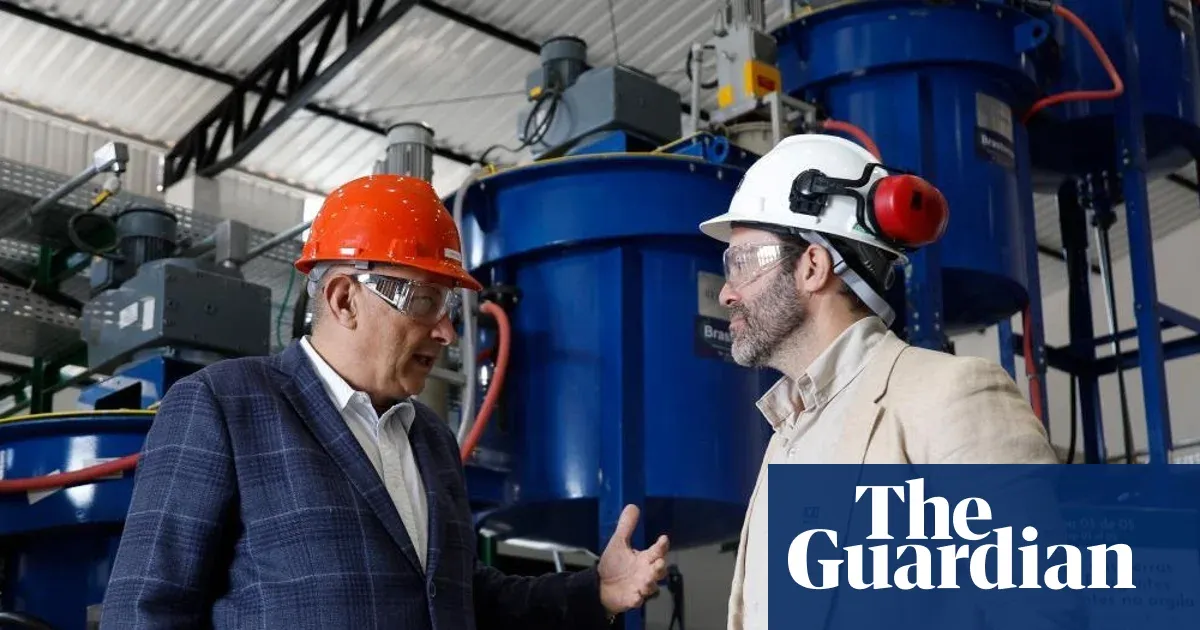
Rafael Moreno, whose company opened a rare earths demo plant in Brazil, says ending China's stranglehold is 'paramount' and a Trump-Xi deal is 'imperative' as the market turns nervous. For EU and US decision-makers, the stakes are supply-chain security for cars, wind turbines, and military jets.
Rafael Moreno, the head of a mining company hoping to supply the EU with rare earths within two years, has a blunt message for leaders gathering in Washington: ending China's stranglehold on the market is 'paramount.' With Donald Trump and Xi Jinping set to meet on Thursday in their second summit of the year, Moreno told The Guardian that the market is 'nervous' and that it is 'imperative' the two presidents do a deal for Beijing to ease up, once again, on its threat to ban exports of rare earths.
That threat is not abstract. Rare earths are the raw materials inside everything from electric car motors and wind turbines to smartphones, precision-guided munitions, and the avionics of military jets. China dominates the refining and magnet-making stages of that supply chain, which means a single export ban could stall factories in Detroit, Stuttgart, and Seoul within weeks. Moreno's company has opened a demonstration plant in Brazil, positioning itself as a future non-Chinese source for the EU, but the timeline is tight: commercial supply is still two years away, and the market is already pricing in the risk of a trade-war escalation.
The timing of Moreno's warning matters. The Trump-Xi summit comes after months of tit-for-tat tariffs, with rare earths repeatedly floated as Beijing's sharpest counterpunch. China has used export controls before, most notably in 2010, when a dispute with Japan over a maritime incident led to a sharp reduction in rare earth shipments, sending prices soaring and forcing automakers and electronics giants to scramble for alternatives. More recently, China has tightened export rules on gallium and germanium, two critical minerals used in semiconductors and fiber optics, signaling that it is willing to weaponize its dominance in strategic materials.
For the EU, the urgency is structural. The bloc imports roughly 98% of its rare earths from China, according to industry estimates, and has been trying to diversify through initiatives like the Critical Raw Materials Act, which sets targets for domestic mining, processing, and recycling. But building a mine and a processing facility takes years, and permitting delays have slowed projects across Europe. That is why Moreno's Brazil plant is significant: it offers a potential alternative source outside China's orbit, but only if it can scale quickly and compete on price.
The market's nervousness is also a business opportunity. When rare earth prices spike, as they did in 2010-2011 and again in 2021-2022, buyers start signing long-term contracts with non-Chinese suppliers, and investors pour money into exploration. Moreno's company is clearly betting on that dynamic, but the window is narrow. If Trump and Xi reach a deal on Thursday that eases export restrictions, prices could soften, and the urgency for diversification might fade. If they do not, the threat of a ban could become reality, and the scramble for alternatives will intensify.
There is also a geopolitical layer. The EU has been courting resource-rich countries like Brazil, Australia, and Canada as partners in its push to reduce dependence on China. Brazil, with its vast mineral wealth and its own strategic ambitions, is a natural candidate. But rare earths are not just a trade issue; they are a national security issue. Military jets, missile guidance systems, and advanced radar all rely on rare earth magnets, and no Western power wants to depend on a potential adversary for those components.
For executives in automotive, defense, and clean energy, the lesson is straightforward: supply chains that look cheap today can become existential risks tomorrow. The companies that thrive will be those that lock in diversified sources now, even at a premium, rather than waiting for the next crisis. Moreno's warning is a reminder that the rare earths market is not just a commodity market; it is a strategic chessboard where a single summit can shift the pieces.
The bottom line: Thursday's Trump-Xi meeting is a pivotal moment for every company that builds a car, a wind turbine, or a fighter jet. If the two leaders fail to ease the export threat, the nervousness Moreno describes could turn into a full-blown supply shock. If they succeed, the pressure to break China's stranglehold will ease, but the underlying vulnerability will remain. Either way, the race to build non-Chinese rare earth supply chains is no longer a niche concern; it is a boardroom priority.
This story's Key Insights and Take-aways are locked.
Create a free account to unlock Executive Actions for one credit.
Register to UnlockAlways free for Executives Club members. Join the Club
More in Business

Paramount's Ellison: Merger Clearance Done, WBD Deal by Oct 1
David Ellison says the Paramount-WBD merger has full clearance after settling with state AGs, clearing the path for an October 1 close.
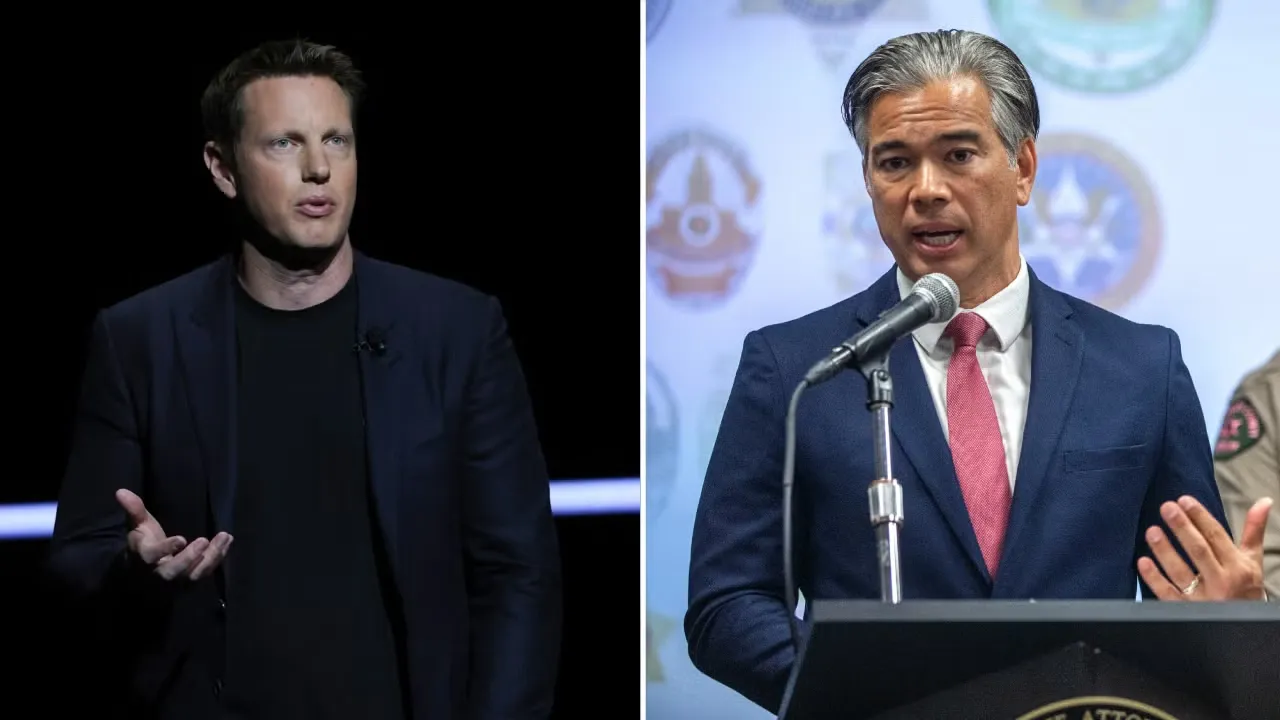
Paramount settles with 12 states, $110B Warner merger clears final hurdle
David Ellison's studio avoids a March trial and a $7M-a-day ticking fee by settling with state AGs over local job losses.

Apple unveils first foldable iPhone Duo with 7.6-inch display under new CEO Ternus
Apple's first foldable, the iPhone Duo, marks a major product bet for new CEO John Ternus, with a 7.6-inch unfolded screen.