
Reagan National shuts 15 hours on July 4, slashing flights to 260
FAA closures for America250 let airlines rebalance earlier, but ripple effects hit travelers and nearby hubs.
The FAA ordered Reagan National Airport to close for aerial rehearsals and Independence Day celebrations tied to America250. The 15-hour July 4 shutdown is expected to reduce flights to about 260, forcing airlines to reroute and offering waivers.
Washington D.C. is celebrating its America250 moment by doing something that feels almost operationally heretical in aviation: shutting down Reagan National for nearly 15 hours on July 4. The FAA announced the airport will be closed from noon until midnight for Independence Day celebrations, and on that date Cirium estimates airlines will schedule only about 260 flights, roughly one-third of the airport’s typical daily volume. In other words, this is not a “minor disruption” weekend. It is a deliberate, system-level pause, designed around a very loud air show.
The closures start earlier, too, with a separate FAA shutdown on July 3 from 10 a.m. to 1 p.m. for aerial rehearsals. But it is July 4 that really matters for most travelers: airlines adjusted their schedules in advance, and the FAA closure makes room for military flyovers and the large fireworks-and-air spectacle the White House has planned. Reagan National typically handles about 850 flights a day, and the scale of the cut is the point. Cirium’s estimate implies around 600 fewer flights on July 4, not because demand disappeared, but because the sky above the National Capital Region was going to be managed tightly for the celebrations.
If you run an airline, a travel program, or a travel platform, the lesson here is less about fireworks and more about timing and incentives. The story notes that airlines appear to have received months of notice, which changes the math from “cancel at the last minute and eat the chaos” to “trim schedules early and limit blowback.” American Airlines, Delta Air Lines, Southwest Airlines, and United Airlines told Business Insider they adjusted schedules earlier this year for the closure and made alternate arrangements for affected customers. That is exactly what decision-makers want regulators and planners to do: communicate clearly enough, far enough ahead, that you can absorb the impact through schedule design instead of crisis support.
This kind of airport stoppage is also a regulatory and airspace management flex, not just a logistics inconvenience. The source reminds readers that flight operations are usually paused briefly during Washington’s annual Fourth of July fireworks show, sometimes forcing aircraft to circle until airspace reopens. Passengers occasionally get a unique view of the show because aircraft have to wait and then continue when restrictions lift. The difference in 2024, per the reporting, is duration. The FAA stopped flights at Reagan National for an unusually long two hours on July 4, 2019, during President Donald Trump’s first term, causing delays and cancellations. But a nearly full shutdown is described as unprecedented, and that matters because it increases the likelihood that flights, crews, and airport connections will need bigger reroutes rather than minor hold-and-go adjustments.
The operational centerpiece of the closure is the airshow itself. The source says the shutdown makes way for the White House’s planned events, including flyovers by Air Force One and demonstration teams such as the U.S. Air Force Thunderbirds, plus B-2 stealth bombers. That combination signals something bigger than a standard holiday fireworks stop. It is a rehearsed, orchestrated airspace use case, where planners must protect routes, timing, and safety buffers for high-profile military aircraft. For airlines, that means fewer feasible swaps at the last minute and more reliance on earlier schedule changes, capacity trimming, and customer re-accommodation.
There’s also a market ripple beyond Reagan National. Nearby airports, like Washington Dulles and Baltimore, could theoretically accommodate some flights originally destined for Reagan National. But the source is explicit that those airports, along with airports around New York City, also have airspace restrictions for America250 celebrations and are expecting fewer flights this weekend. That turns the problem from a single-airport issue into a regional demand and capacity management issue across the East Coast. American, Delta, and JetBlue are already offering travel waivers, suggesting operators are preparing for downstream effects like rebooking, connection shifts, and potential delays even when schedules are trimmed early.
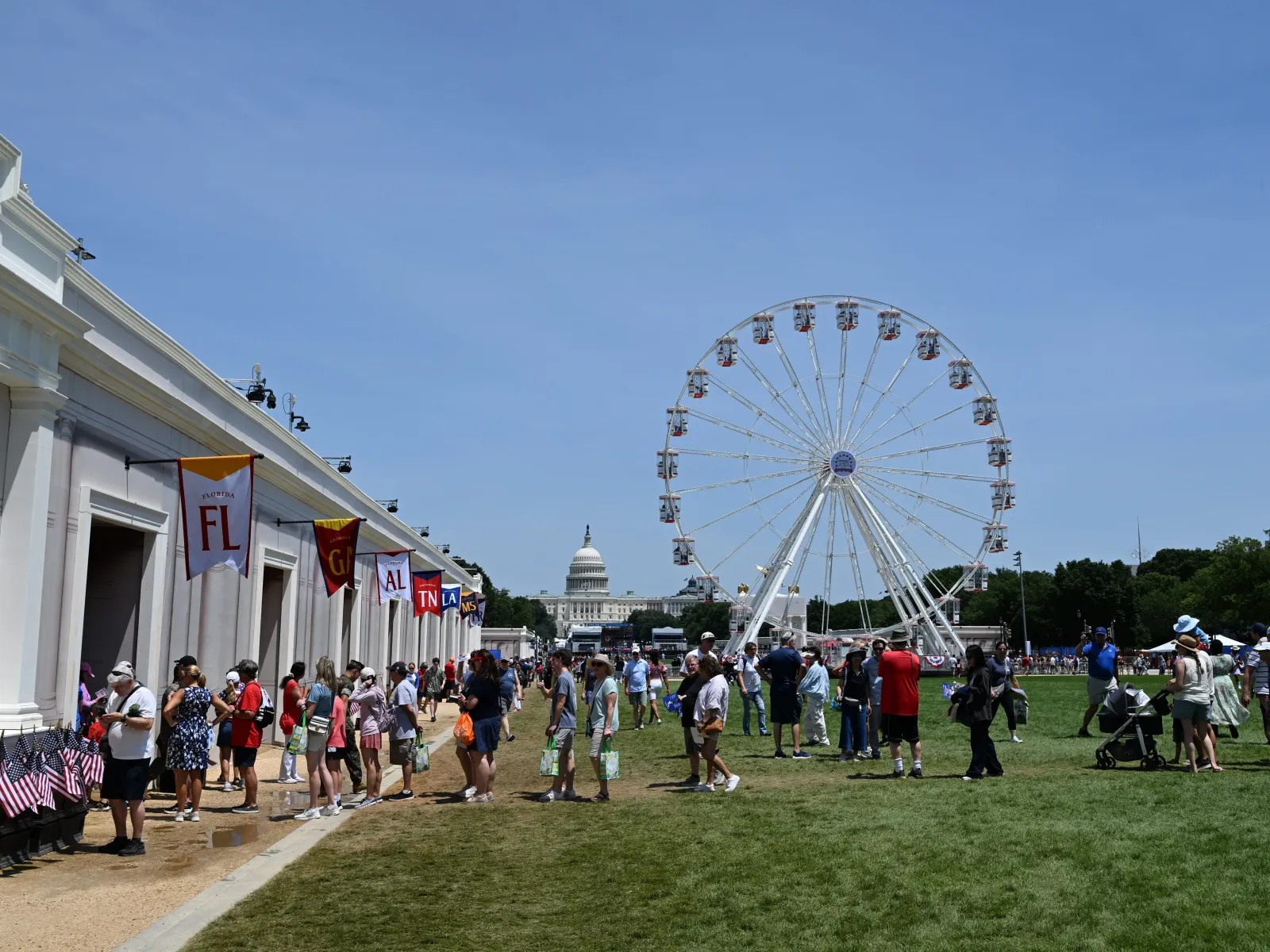
For executives and boards, the second-order question is not “will the airport close,” because the FAA announcement makes that clear. The real question is what this implies for planning discipline and customer communications during high-visibility national events. The source also notes Trump has been heavily involved in planning the July 4 festivities expected to take over major US cities including D.C., Boston, New York, and Los Angeles. In D.C., the free Great American State Fair on the National Mall runs through July 10 with exhibits from all 50 states, live entertainment, food, rides, and military displays. The aviation tie-in is that when political and public spectacle concentrates around core metro infrastructure, airlines have to treat airspace restrictions as capacity events, not just weather equivalents.
Finally, the calendar and conditions add pressure. The source mentions reports of thin crowds at the fair so far and a heat wave across the East Coast, with temperatures above 100 in Washington expected through Friday. Heat can stress ground operations and passenger experience, even if it does not directly cause flight restrictions. Put it together with an unprecedented near-total shutdown window at Reagan National, and you get a scenario where operational preparedness and customer support become differentiators. This is the kind of weekend that quietly tests how resilient your schedule planning, alliance coordination, and communications playbook are, long before anyone thinks about it as “strategy.”
This story's Key Insights and Take-aways are locked.
Create a free account to unlock Executive Actions for one credit.
Register to UnlockAlways free for Executives Club members. Join the Club
More in Politics

Glacial collapse, not rain, killed 180 in Nepal's Himalayan flood
The Himalaya's extreme geography hid the true cause of Nepal's catastrophic flood, a glacial collapse that turned a geological battleground into a mass-casualty zone.

Iran’s Esmail Baghaei says Oman talks start shipping via Hormuz, not US talks yet
Temporary route plans with Oman aim to restart commerce while Tehran says Washington dialogue is not on the table.

Standards watchdog opens probe into Reform UK deputy leader Richard Tice over interests
The parliamentary standards commissioner says it began an investigation on 28 July into a possible undeclared interest.