

Rémi Louf rents a moat-side castle office, and his AI startup pays about €600/month
The CEO of.txt explains why a medieval setup is doing serious work for distributed AI teams and GPU costs.

Rémi Louf, CEO and cofounder of the AI startup.txt, runs the team’s office out of a castle in Bourron-Marlotte, France with iron gates, a moat, and free electricity for his GPUs. For decision-makers, it’s a sharp reminder that infrastructure, operating rhythm, and location incentives can matter as much as model strategy.
Rémi Louf, the 39-year-old CEO and cofounder of the AI startup.txt, works out of a castle in Bourron-Marlotte, France. The pitch is simple, and kind of ridiculous in the best way: the castle has iron gates, a moat, free electricity to run his GPUs, and he says he “appreciate[s] having the space to think,” including that “I’m literally touching grass every day.” He also pays about €600 a month for a big standalone office, an arrangement he says leaves him almost nothing to worry about when it comes to electricity costs.
That pricing detail is the first real hook for operators. €600 per month in a large rural office with a serious internet setup and electricity coverage is not the typical “startup real estate” story, especially for an AI company that needs GPUs. In the source, Louf also notes that the castle used to be the only place in the village with fiber-optic internet, which helps explain why the location works. The environment is also part of the operating system: Louf describes a morning ritual where, if you call him between 8:30 and 10 a.m., he’s likely walking from the castle area through fields, phone in hand.
Now zoom out..txt is small and deliberately structured: it is “15 of us now,” “almost only engineers,” and it is “fully distributed.” Half of the team is in the US and half is across Europe, with only “two of us in France.” Louf says people think it’s a French company, but “really it’s an American company that happens to have a French CEO.” That detail matters because it frames why the office is less about “branding the team locally” and more about giving a distributed company a center of gravity for the part that still needs a human anchor: leadership and day-to-day coordination.
When distributed teams scale, the hard problem is not just where people sit. It is how you prevent constant context switching, how you reduce cognitive load, and how you keep the leadership cadence consistent across time zones. Louf’s explanation leans into that. He says the castle is “15-minute walk” distance (he describes it as “a 20-minute walk” from nearby options) and that he likes to walk outside in the fields rather than straight through the village. He also contrasts the castle’s outside beauty with a workplace he compares to San Francisco: in that comparison, the office is “beautiful on the outside and boring on the inside,” where it becomes “just another day at the office” and the team is more distracted. He even points to a specific friction, like “carpet on the floor,” which he says is not his favorite.
If you run AI, the electricity question is the quiet killer. Training and inference can be power-hungry, and GPU uptime is a business-critical input. Louf says the castle does not charge for electricity for his GPUs, and he emphasizes that the environment is important because it keeps the daily stress manageable. That is not a technical claim about performance. It is an operational claim about cost visibility and workload friction. If you do not have to negotiate power rates, or worry about electricity billing complexity, you can spend more time on product and systems rather than on contingency plans.
There is also a “why now” angle embedded in his personal timeline. Louf describes living in a small flat in Paris during the Covid lockdown with a five-year-old and a one-month-old, and then moving when the lockdown ended. After that year, he got tired of the home office and wanted something outside Paris. The immediate decision was pragmatic: the village has “no WeWork,” and the only option was to rent an actual standalone office. He says there was a castle with a hotel that also rents offices, and it was “the only one that was reasonably close” without driving. In other words, the moat didn’t come first. It became the best option after constraints removed the usual alternatives.
This is where regulatory framing becomes relevant, even though the story itself does not cite regulations. AI infrastructure is increasingly shaped by energy policy, data center norms, and local permitting rules, all of which can make “cheap power” hard to find. Louf’s setup is unusual because it’s not a traditional data center. It is a rental office in a castle with fiber-optic connectivity and electricity coverage for his GPUs. That suggests the more general strategic lesson: executives should treat infrastructure procurement as a sourcing exercise, not just a technical requirement. The second-order effect is that location choices can influence burn rate, governance overhead, and speed of iteration, especially when the company is small enough for a single operational lever to matter.
Finally, consider the capital and talent implications..txt is “only two” people in France, but it runs distributed teams across the US and Europe. That implies recruitment and coordination across regions, which typically increases complexity in communication, scheduling, and decision rights. Louf’s “I can hear my own thoughts” framing is less about vibes and more about leadership throughput. If your CEO is operating from a place that helps them focus, they can keep the distributed machine synchronized. In a market where AI competition is increasingly about execution speed and reliability, the unglamorous advantage could be exactly that: fewer distractions, lower operational friction, and a stable cadence.
For peers and board members, the takeaway is not that everyone should move into a medieval fortress. It’s that competitive advantage often hides inside boring inputs: office economics, power cost predictability, fiber access, commuting design, and the way leadership uses time. In a company that is “almost only engineers,” the environment that protects thinking time can become a measurable productivity lever. And in AI, where cost and continuity can determine whether you can iterate as fast as the market demands, a €600/month castle office with free electricity is a decision that deserves board-level attention.
This story's Key Insights and Take-aways are locked.
Create a free account to unlock Executive Actions for one credit.
Register to UnlockAlways free for Executives Club members. Join the Club
More in Business
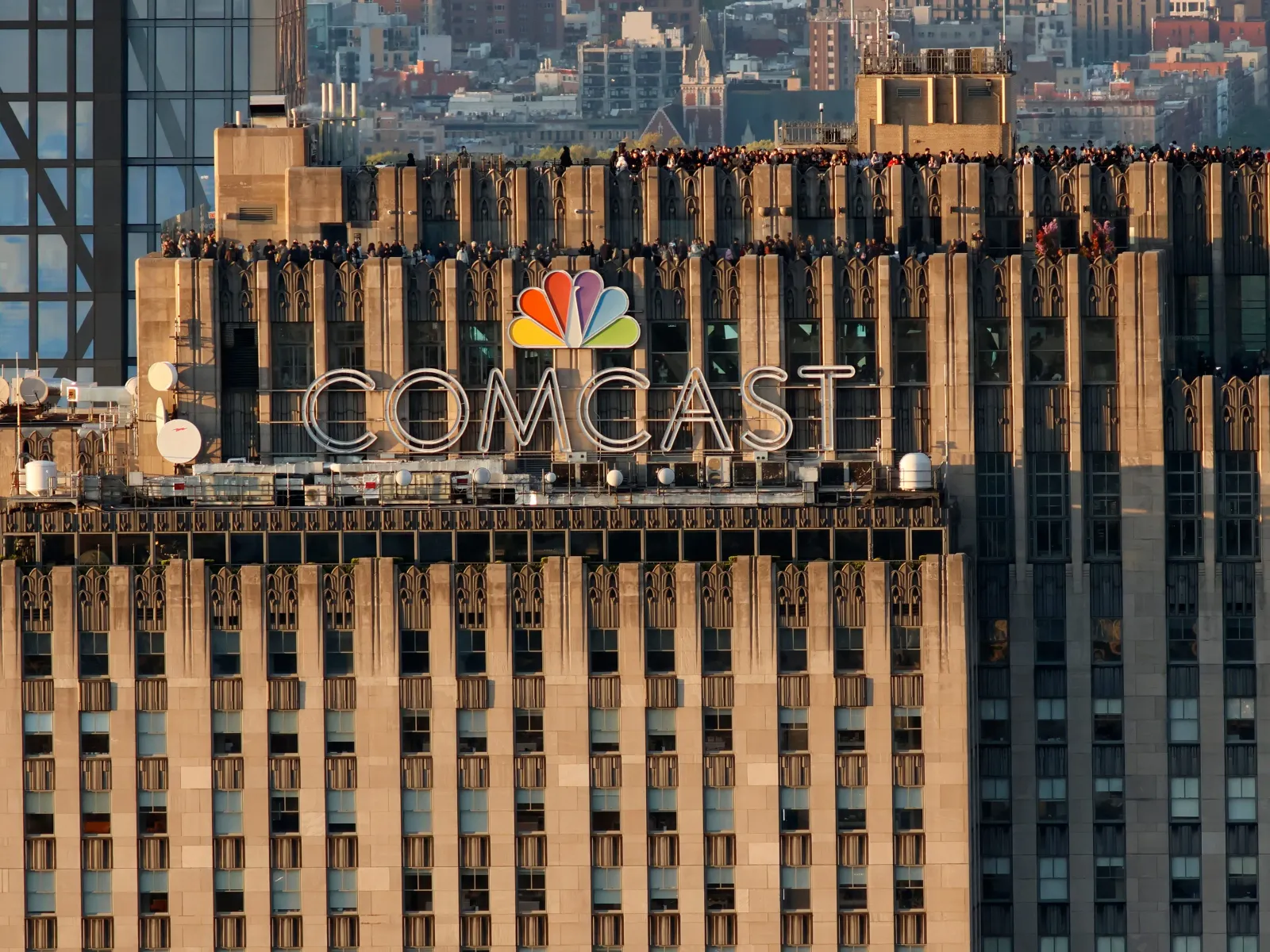
Comcast shares jump 25% as it plans to split NBCUniversal and Sky
The tax-free spin-off could reshape focus, funding, and competition across media and tech for years.

Bungie cuts most Destiny 2 staff as Sony says Marathon still matters
Herman Hulst confirms layoffs affecting most Destiny and some Marathon teams after Bungie admits Destiny fell short.

SK Hynix jumps 11% after seeking up to $29.4B in Nasdaq listing
The chip giant filed for a Nasdaq listing plan that could raise $29.4 billion, instantly reshaping investor expectations.