
Resident Evil 2 fans finally identify Jill Valentine’s photo boyfriend as Kyle MacLachlan
After 27 years of pixel guessing, a fan traces the desk photo to a Roadshow magazine image.
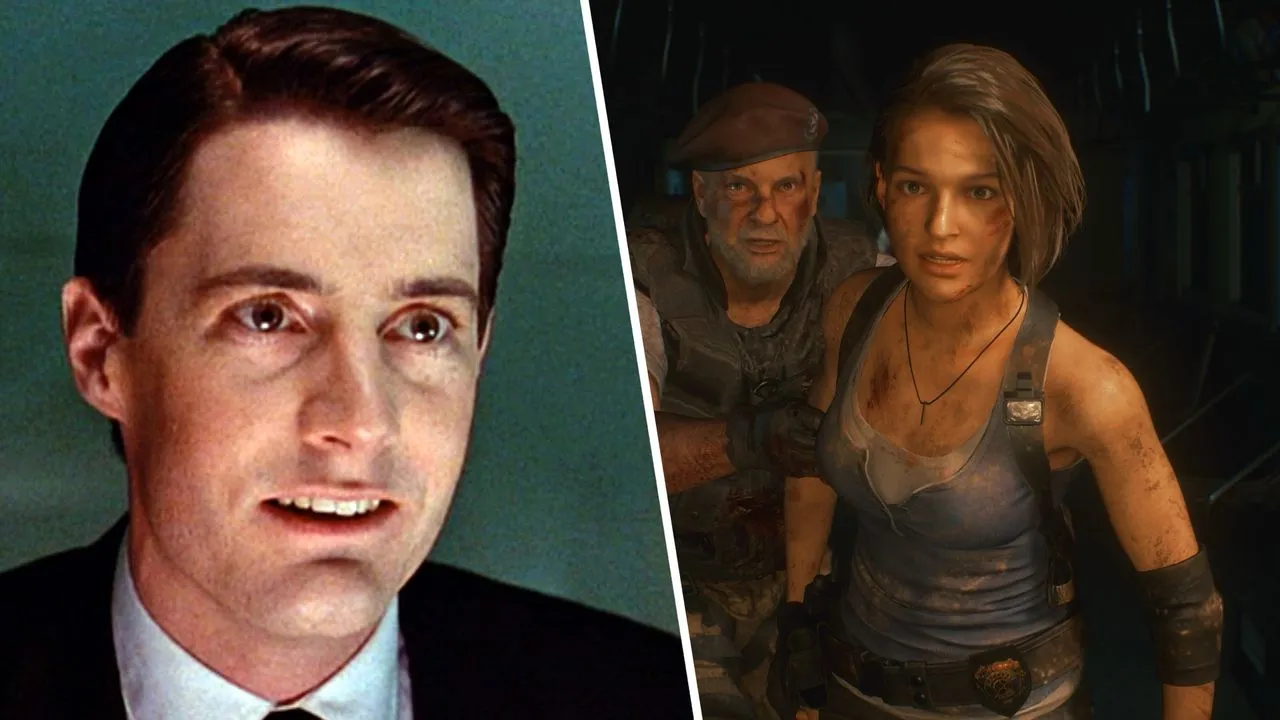
Resident Evil 2 fans used a clue posted by Morio on X to identify the young man in Jill Valentine’s Raccoon City Police Department desk photo as Kyle MacLachlan. The finding matters for how studios handle legacy references, because the remake later swapped the image to a dog, not a 4K MacLachlan.
In 1998, players leaned in close to Jill Valentine’s desk in the Raccoon City Police Department in Resident Evil 2 and found a familiar kind of mystery: a photo labeled only by vibes. The in-game message says it’s a picture of a young man, and there’s a good chance it’s her boyfriend. The problem was that the pixels were too small to identify who it actually was. Today, a Resident Evil fan named Morio says the years of searching are over, and the answer is Kyle MacLachlan.
Morio’s post, shared June 22, 2026, makes the link explicit: “Alright, that's it then. The guy from Jill's desk is Kyle MacLachlan. Years of searching finally over.” The identification, as the source reports, ties the image to an early-1990s issue of Japan’s Roadshow magazine, a publication that often covered western media like Twin Peaks and, notably, was keen on the series. In other words, this was not just a random face rendered for flavor. It was a sourced image, and fans were finally able to match the model to MacLachlan.
Why does a 27-year-old in-game desk photo suddenly matter beyond the joy of trivia? Because this kind of artifact is where modern audiences prove they are not passive. When a game ships with a small easter egg, the internet treats it like a crime scene, and the chase can outlast the original release window by decades. That has second-order effects for anyone making or maintaining games, especially executives thinking about IP longevity and community trust. If the community believes they can reconstruct what’s in a product, they will. If a future product changes that artifact, the change gets measured. In this case, the “Jill boyfriend photo” is the sort of detail players will return to because it is concrete and searchable.
The search also tells you something about how fan detective work functions as a parallel information pipeline. Morio did not just claim a match. The source describes that the photo appears to be taken from Roadshow magazine, and that magazine routinely covered western media including Twin Peaks. That matters because it suggests the identification came from an evidence-based comparison, not just “it looks like him.” For decision-makers at game studios, that’s a reminder that even small, static assets can become durable references. A face in a screenshot can become a canon-like identifier through repetition, archival screenshots, and later database-like matching.
There is also an important wrinkle: the answer depends on which version of the game you are looking at. If you were hoping the remake delivered a high-definition MacLachlan, the source is pretty blunt: Capcom did not use a 4K MacLachlan for the version of this photo in the Resident Evil 2 Remake. In fact, Capcom did not use a person at all. Valentine was “un-shipped,” and the shot of a young man on her desk was replaced by a photograph of a dog. That detail is funny, and it’s also strategically revealing. It signals that, at least for the remake, the studio prioritized something else over preserving the exact referenced image. The community notices, compares, and then turns the comparison into content.
To an operator or investor, this is the kind of situation that forces hard questions about remake constraints. The source does not spell out legal or licensing specifics, but the observed behavior is clear: the original had a person photo; the remake swapped the person for a dog. For studios, that’s a risk trade. Preserving every easter egg can increase complexity, especially when assets look like they may have real-world media origins. But removing or altering an iconic micro-detail can also create backlash or at least disappointment among the most attentive players.
One more detail deepens the operational lesson. Morio also found that a similar magazine picture of Winona Ryder is used for Barry Burton’s daughter. That suggests the desk-photo mystery is part of a broader pattern: multiple in-game visuals may have been sourced from western media coverage. When that’s the case, the “internet archaeology” isn’t just one-off fandom. It becomes an engine that can uncover systematic approach or systematic sourcing decisions across a title.
For executives in entertainment and interactive media, the strategic stakes are straightforward. This story is a reminder that audiences treat games like living documents. They will archive, compare, and solve. If you change an asset in a remake, expect that someone will eventually prove what you swapped out. And if you keep legacy details intact, know that the community will excavate them, connect them to real-world publications like Roadshow, and turn your pixels into searchable history. Today’s “boyfriend photo” answer does not change the plot of Resident Evil 2. But it does change the story players can tell about how carefully (or loosely) a game was assembled, and it shows how quickly community scrutiny can convert a tiny mystery into a durable reputational test.
This story's Key Insights and Take-aways are locked.
Create a free account to unlock Executive Actions for one credit.
Register to UnlockAlways free for Executives Club members. Join the Club
More in Entertainment

Russell Brand's accuser 'bewildered and confused' as he denies 7 sex charges
The criminal case against the comedian is a live test of how media companies manage talent risk when serious allegations go public.

'It's a Magic Trick': Ballet Experts Say Rosalía's SNL Pose Is Impossible
Three ballet experts tell Rolling Stone Rosalía's gravity-defying SNL stillness shouldn't be possible - and why the debate is now part of the show.

Activision CMO: GTA 6 Will Boost Call of Duty, Not Bury It
Activision's top marketer says Rockstar's blockbuster will drive players back to consoles and into Modern Warfare 4, even as the company admits its recent strategy failed.