
Retail investors fueled SpaceX's soaring debut, proving individuals now move mega-cap markets
SpaceX’s blockbuster trading debut shows how everyday buyers can swing valuations and force boards to plan for retail.
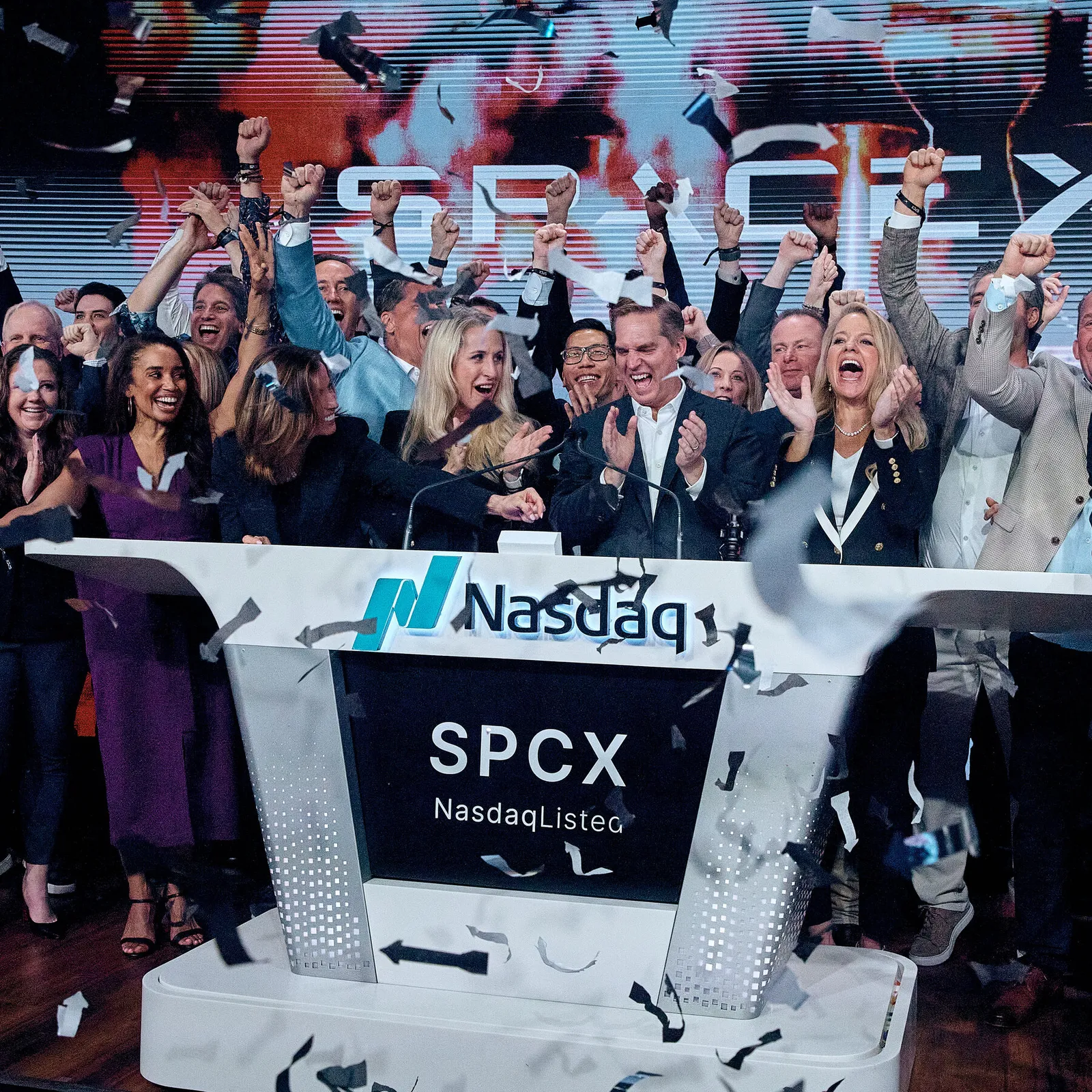
SpaceX’s trading debut delivered blockbuster momentum, and New York Times frames it as the latest sign that individual investors are now a real force in financial markets. For decision-makers, it raises the stakes of who shows up at the bell and how boards manage that demand.
SpaceX’s blockbuster trading debut is the newest evidence that retail investors are not just background noise anymore. The New York Times points to the surge around the company’s debut as an example of how individuals can help send a stock soaring, shifting the dynamics of financial markets in real time.
That matters because debuts and early trading can set the tone for everything that follows. When a trading debut runs hot and the move is visibly connected to individual participation, it can change how executives think about price discovery, investor communications, and what kinds of shareholders a company is effectively building on day one. In other words, it is not only institutions making the first impression anymore.
For context, stock trading has long been dominated by professional capital: asset managers, hedge funds, and other large players that can deploy significant resources at scale. But retail investors have grown into a more organized and faster-moving segment over the past few years, aided by easier access to markets and near-instant sharing of information. When that ecosystem aligns with a high-profile event like a debut, it can amplify buying pressure quickly and turn a first day story into a market narrative.
The regulatory background here is less about a specific rule mentioned in the New York Times piece, and more about what regulators expect from public markets in general. Once a company is publicly traded, it operates under a framework designed to protect investors and ensure that material information is disclosed in a way that is broadly accessible. That matters when individual investors become more influential, because the market is no longer just reacting to institutional models. It is also reacting to what people understand, how quickly they understand it, and what they think other people will do next.
There is also a boardroom angle. A debut driven in part by retail demand can be a blessing for visibility and liquidity, but it can also introduce volatility. Retail-driven moves often reflect sentiment and momentum, which can be powerful, then fragile. If the market price is lifted quickly by a large wave of smaller investors, executives have to plan for the possibility that the stock can move just as quickly in the other direction when that wave recedes or when the story changes. Even if fundamentals remain unchanged, trading behavior can still do real damage to how the market interprets the company.
This is where incentives show up. Institutional investors typically care about long-term thesis work, valuation discipline, and risk management. Retail investors often focus more on the immediate trade, the public narrative, and the emotion of the moment. That mismatch can create a gap between what management expects the stock to represent and what the market temporarily makes it represent. Executives therefore have to think beyond the debut and ask: What will we be saying, and how will we be saying it, in the weeks after the initial surge? Public companies learn quickly that the first chart is never the last chart.
For decision-makers at other companies, the second-order implication is straightforward: the shareholder base is becoming part of the strategy. The New York Times frames SpaceX as a blockbuster example of retail influence. That suggests that peers cannot assume that early momentum will only reflect institutional underwriting and fundamental valuation models. Instead, board members and leadership teams may need to treat retail participation as a serious variable in how markets react to major corporate moments, including equity issuance, partnerships, product milestones, and guidance.
The stakes are not theoretical. When retail investors help propel a stock, the company’s market perception can accelerate faster than traditional communication cycles. That can be good for awareness, but it also raises the burden of clarity. If executives want durable investor trust, they have to align the company’s messaging with the reality of what investors are reacting to in the moment. SpaceX’s debut is the reminder. Individual investors are becoming a force, and when they move, boards have to be ready.
This story's Key Insights and Take-aways are locked.
Create a free account to unlock Executive Actions for one credit.
Register to UnlockAlways free for Executives Club members. Join the Club
More in Business

A flaw in PHP just forced governments to pull their own sites offline
European agencies from Belgium to Germany took websites dark to patch a critical weakness in the language behind almost 70% of the web, and the blast radius extends far beyond government portals.

BioWare shuts down, Mass Effect 5 dead after $55B EA buyout
The legendary RPG studio's closure lands months after a $55 billion investment group buyout of EA, raising tough questions for gaming's biggest acquirers.

Musk weighs Tesla-SpaceX mega-merger as boards form review panels
Special committees at both companies will examine a tie-up that could fuse electric vehicles and space launch, forcing a fresh look at governance and valuation.