
Reto Project’s Kodak EC35 turns 35mm into a $34.99 impulse buy
A fixed-f/10 25mm lens, simple controls, and automatic flash make it disposable-like, but with film.
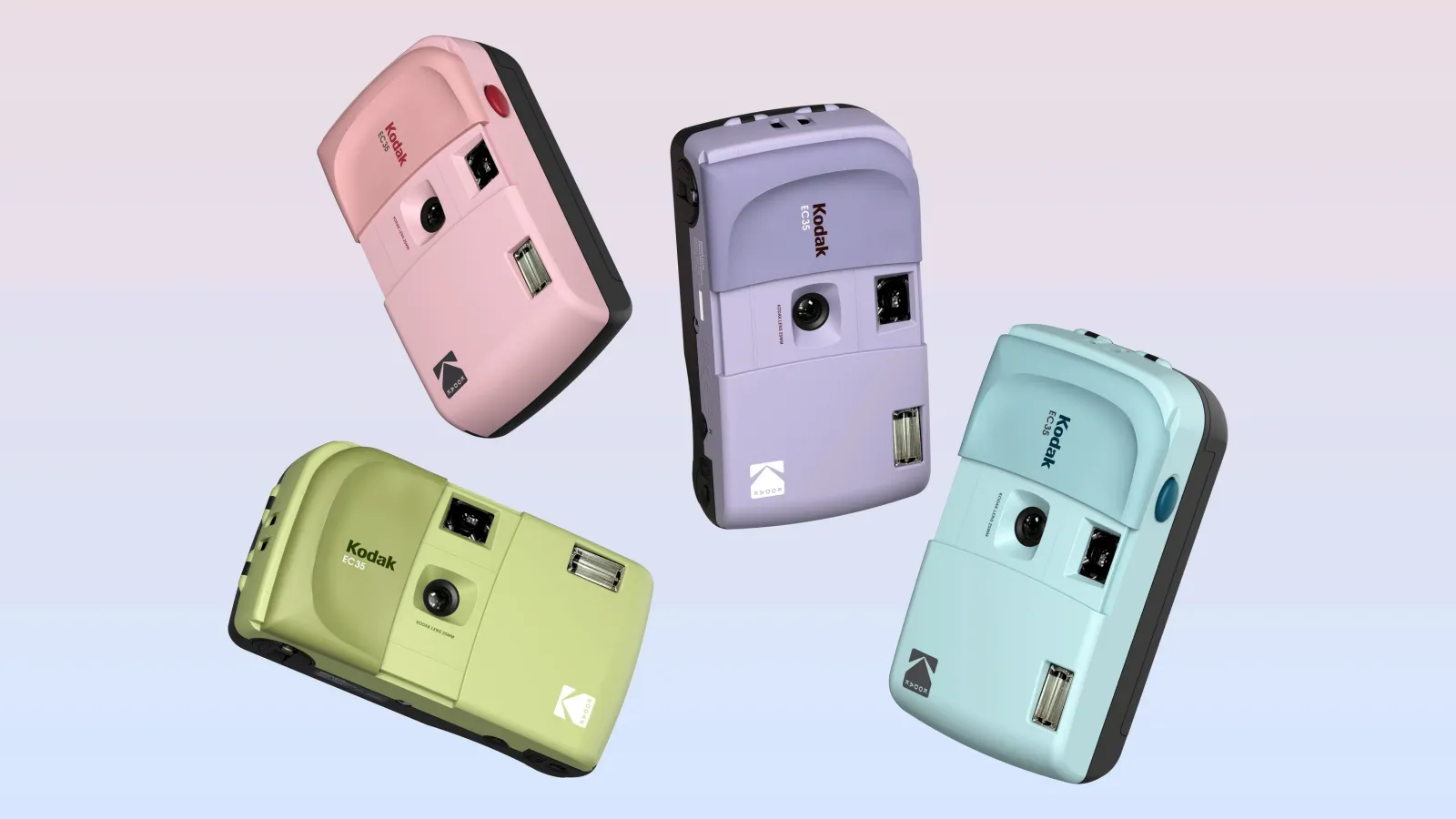
Reto Project is releasing the Kodak EC35, a 35mm point-and-shoot film camera priced at $34.99, following the company’s $99 Kodak-branded Snapic A1. The EC35 leans hard into simplicity, using a fixed 25mm acrylic lens, fixed f/10 aperture, 1/100 shutter speed, manual wind and rewind, and a built-in automatic flash.
If you’ve been waiting for a 35mm camera to feel less like a hobby commitment and more like a checkout-line decision, meet the Kodak EC35. Reto Project is selling the Kodak EC35, a point-and-shoot film camera for just $34.99, after its earlier $99 Kodak-branded Snapic A1 found traction.
The EC35 is about as close as you can get to “disposable camera energy” without calling it disposable. It uses a 25mm acrylic lens with a fixed f/10 aperture and a 1/100 shutter speed, plus manual wind and rewind. And to keep the whole experience low-thought, it includes a built-in automatic flash. The design goal is clear: you should be able to use it without studying exposure settings or learning focusing modes.
To understand why this matters in decision-making terms, zoom out. The camera market is split between two very different kinds of buyers. One group wants controllability: more lens options, faster shutter options, and features that reward skill. The other group wants the vibe. Not “vibe” as a vague marketing word, but as a literal product experience: the sensation of film, the ritual of winding, the constraints that lead to different photos than phone cameras.
Reto Project is clearly betting on the second group, and the pricing signals that bet. The Snapic A1 was $99, and the EC35 undercuts that by a wide margin at $34.99. That is not a small tweak, it is a category shift in perceived risk. At $99, you are more likely to justify the purchase as a deliberate project. At $34.99, you are more likely to treat it as an impulse experiment, especially for people who already associate “disposable” with casual outings and friends holding the camera like a novelty.
The camera’s spec sheet reinforces the point. The 25mm lens is fixed, the aperture is fixed at f/10, and shutter speed is fixed at 1/100. That combination limits the variables you can change, which is exactly what makes the camera require “almost no thought” to use. Unlike some film devices that add creative complexity, the EC35 comes without features that typically slow people down.
Reto Project also differentiates the EC35 from the Snapic A1. The source notes that unlike the A1, the EC35 does not include a double exposure feature or zone focusing. In other words, this is a product shaped to remove decision points. From a product and operations perspective, that usually helps keep manufacturing and instruction overhead simpler. From a consumer perspective, it helps explain why this camera is positioned as a low-friction entry to 35mm.
There is also a practical reason automatic flash matters for adoption. Phone cameras typically handle low light exposure automatically. If a film camera forces users to learn flash sync rules or manual exposure tradeoffs, you get friction and returns. A built-in automatic flash is a way to borrow the “just works” behavior people expect, while still keeping the tactile and aesthetic differences that film fans chase.
Second-order implications for executives and boards show up in where this kind of product sits in the value chain. A low-cost camera is rarely just a hardware sale. It is usually a funnel into ongoing consumables. Film is the recurring spend, and simple cameras can broaden the number of people willing to try film in the first place. The cheaper the hardware feels, the more likely you are to grow the top of that consumables pipeline.
There is another context layer here: brand perception. Kodak-branded products carry a kind of built-in nostalgia, and the EC35 follows that pattern by attaching the Kodak name to an ultra-accessible 35mm experience. For peers watching this space, the strategic question is whether “nostalgia + constraint” becomes a sustainable distribution model, or whether it is a short-lived novelty wave. The EC35’s feature omissions, fixed optical parameters, and emphasis on disposable-like use suggest Reto is leaning into the durable part of the story, which is simplicity and experiential difference.
The Kodak EC35 might not be fancy. But in a market where most people want less friction and faster delight, a $34.99 film camera with a fixed 25mm f/10 lens, 1/100 shutter speed, manual wind and rewind, and automatic flash is a pretty direct answer to what people actually buy. For decision-makers across consumer tech, that is the quiet lesson: the winning product often isn’t the one with the most knobs. It is the one that removes enough decisions that new buyers finally try the thing.
This story's Key Insights and Take-aways are locked.
Create a free account to unlock Executive Actions for one credit.
Register to UnlockAlways free for Executives Club members. Join the Club
More in Technology

Google quietly links your phone number to every Android account on your SIM
Adding a SIM now ties your phone number to all Google accounts - and future accounts inherit it. Here's the security and privacy stakes.

Hijacker AI 'Skynet mode' runs 100,000 attack steps against exposed models
Symantec caught a criminal AI agent that borrows other models, steals data, and mines crypto; the only relief is no confirmed victims yet.

Nvidia's AI-financier shift faces its first big test as neoclouds stumble
A rout in neocloud stocks is forcing investors to weigh Nvidia's hidden exposure as both supplier and lender to the AI buildout.