
Rights limbo lifted: Criterion’s 4K “I Shot Andy Warhol” returns after missing years
Mary Harron explains how the film’s rights, elements, and music licenses finally got sorted, unlocking theaters again.
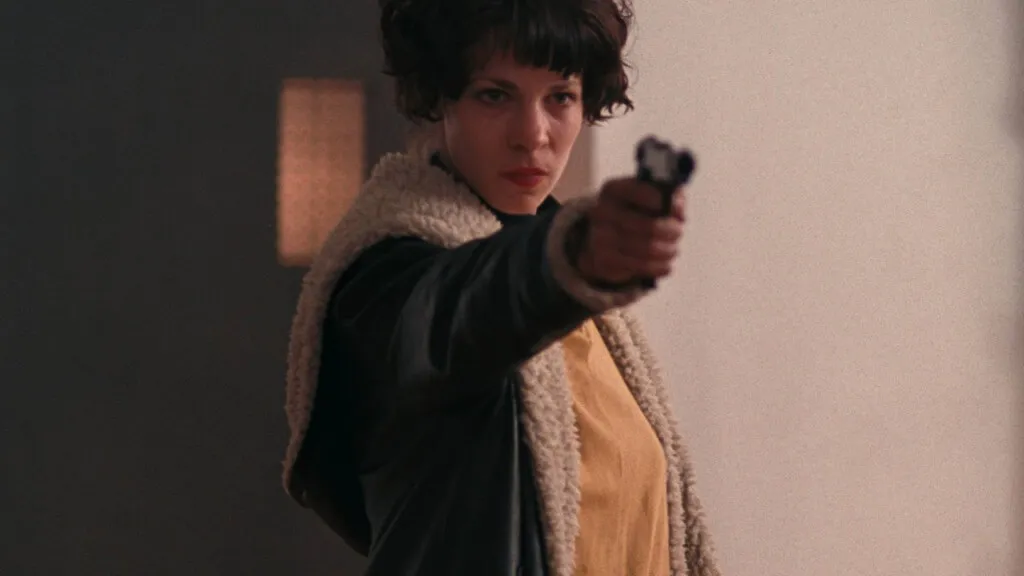
Mary Harron says Criterion reached out to get I Shot Andy Warhol on Criterion, but nobody initially knew who owned the rights, pushing the movie into years of legal limbo. The resolution means a long-missing 1996 debut can return in 4K, spotlighting a problem decision-makers still face: rights and licenses that quietly expire mid-process.
Mary Harron’s I Shot Andy Warhol is finally back on the big screen in a new 4K restoration, but the real story starts somewhere more mundane than film history: rights ownership. Harron tells The A.V. Club that Criterion reached out “about six or seven years ago” asking for I Shot Andy Warhol to go on Criterion. Then the hunt began, because “nobody knew who had the rights.” It took “several years just to track down who had the rights,” and then more time to determine who held the elements, after a chain of studio bankruptcies and ownership changes, including Samuel Goldwyn, Orion, and “then somebody else.”
Even after the parties were identified, the last mile was where projects usually die quietly: music licenses. Harron explains that Criterion “can’t put it out unless you have the music licenses,” and those licenses turned into an extended scavenger hunt because “no one had kept a record.” Translation: the movie existed. The picture existed. But without documented licensing, distribution was blocked. That is what “legal limbo” looks like in practice, and why this release matters beyond cinephiles. When ownership and permissions are unclear, capital tied up in restoration, marketing, and distribution can’t convert into audience reach, and an entire title can stall for decades.
To understand how the wait could stretch so long, you have to picture the ecosystem around ’90s indie filmmaking. I Shot Andy Warhol premiered at Sundance in 1996, then went to Cannes and theaters, before playing on cable and coming to home video. But after “a few years,” sightings became scarce, and Harron notes that this happened to many ’90s indie releases. Rights holders went out of business, or rights were bought and sold without telling the filmmakers. The result is a common failure mode in entertainment deals: the creative team moves on, but the rights trail does not. Missing Movies, the group Harron joined efforts with directors like Nancy Savoca and others, formed around the fix. It helped Mira Nair regain the rights to Mississippi Masala, and it enabled Savoca’s Household Saints to return to theaters.
Now, 30 years after its initial release, I Shot Andy Warhol has its turn. The film begins at the end, with the climactic attempted murder of Warhol. As Valerie Solanas is interrogated, the story flashes back to how she arrived at The Factory, Warhol’s studio, chasing the artist to produce her play. Lili Taylor plays Solanas with the intensity of someone always preparing to fight. The film tracks a spiral: after selling the rights to her next book to a “sleazy publisher,” Solanas decides “all men” are out to get her, including publisher and Warhol (played by Jared Harris). The chemistry is tense, the perspective is paranoid, and the movie’s structure forces viewers to revisit the origin story of an act that is difficult to watch and even harder to contextualize.
The new 4K restoration is where the “why now” becomes tangible. One of the pleasures of restoration, as Harron frames it, is seeing details lost in earlier transfers, and in this case it’s the hair and makeup work that makes Taylor look grungy in the way city streets do, down to “the dirt under her fingernails.” Costume and production design also get a second spotlight: Thérèse DePrez (production designer) and David Robinson (costume designer) bring out bold colors, and cinematographer Ellen Kuras supervised the restoration. The visual move matters because it changes how audiences feel the movie’s geography. Kuras shifts from bright city corners to dingy bars, run-down flats, The Factory’s shiny playground, and lurid parties, translating Solanas’ descent into spaces that feel unmoored, not just gloomy.
There is also the question of how the film reinvents time. Harron’s approach to the ’60s is routed through the ’90s. She recreates Warhol’s stark black-and-white screen tests for scenes of Solanas reading her manifesto, but Harron and Kuras avoid simply copying the 1960s look on film. Instead, they swing toward more contemporary bright colors and camera movement. Harron puts it plainly when she describes revisiting the scenes: she was “reminded of how beautiful the lighting was,” and she calls the Factory sequences “this kind of world, like this hidden land, a cave of wonder.”
Then there is the soundtrack, which acts like a licensing stress test that the restoration had to pass. The film features an original John Cale score and covers of popular contemporary songs by R.E.M. and Wilco. Those music rights are exactly the kind of licensing complexity that turns restorations into legal projects. And that’s not trivia. When a movie is missing, it is often missing because agreements did not survive contact with reality: studio bankruptcies, evaporated records, and licensing terms that live in scattered legal documents rather than in the memory of the people who made the film.
So what’s the strategic stake for decision-makers, not just film fans? Missing Movies and the I Shot Andy Warhol restoration show that returning titles to theaters and platforms is not only a creative act, it is an operations and rights program. Harron’s advice for the next generation is basically an internal control checklist for creative businesses: “Look after your work, or try and keep track of things.” Keep track of who has the rights, where the elements are, and ensure licenses are not lost. She says she spent “six, seven years” trying to get her film back out, because “everybody’s onto the next thing when that's over.” For founders, producers, and investor-backed labels, the second-order implication is brutal: if your rights metadata is sloppy, your distribution runway ends long before your content lifecycle does. And boards should care because the cost of that failure shows up later, when the project is already expensive to revive, and the market window is likely moved on.
This story's Key Insights and Take-aways are locked.
Create a free account to unlock Executive Actions for one credit.
Register to UnlockAlways free for Executives Club members. Join the Club
More in Entertainment

Entertainer Russell Brand denies 7 sex charges amid accuser's 'couldn't breathe' claim
The alleged victim's account sharpens the reputational and legal stakes for Brand, his platforms, and any business tied to a public figure under criminal scrutiny.

Russell Brand's accuser 'bewildered and confused' as he denies 7 sex charges
The criminal case against the comedian is a live test of how media companies manage talent risk when serious allegations go public.

'It's a Magic Trick': Ballet Experts Say Rosalía's SNL Pose Is Impossible
Three ballet experts tell Rolling Stone Rosalía's gravity-defying SNL stillness shouldn't be possible - and why the debate is now part of the show.