

RJ Scaringe bets Rivian should be compared to Apple, not Tesla
At Fortune’s CEO Daily, Rivian’s founder argues the brand matters more than catching up on EV hype cycles.

RJ Scaringe, Rivian CEO, tells Diane Brady how he wants the company evaluated against Apple or Nike, not Tesla, while defending the R2 launch push. The CEO Daily also flags Ford rehiring 350 veteran engineers after AI fell short, underscoring how execution discipline is becoming the real competitive moat.
Rivian CEO RJ Scaringe wants one specific outcome: when people talk about his electric-vehicle company, he hopes they compare it to Apple or Nike, not Tesla. He is making that case at the Aspen Ideas Festival while holding a small, practical artifact in his hand: the felt-lined glove box in the Rivian R2. “That cost $11,” Scaringe says, and then he shows a phone review from an auto writer who wants to buy an R2 when sales start next year. The point is less marketing than measurement. Scaringe calls that reaction “we had to get this right,” and frames it as the signal Rivian needs as it moves from prototype-stage ambition to mass-market reality.
This is the tension Rivian lives in. The R2 is the third try at getting the vehicle right, and the company’s history has not exactly been smooth. Rivian launched in 2009, one day after Scaringe earned a PhD from MIT in making combustion engines cleaner, a research path he studied in order to help “kill them” and then attract investors. It took nine years to unveil its first products, a pickup truck and a large SUV. In 2021, Rivian had the biggest IPO of the year, raising almost $12 billion to start production. But since then: scrapped plans for a sports coupe, supply shortages, software bugs, price hikes, and optimistic promises that culminated in Rivian paying $250 million to settle a shareholder lawsuit. Even with losses shrinking but still in the billions, Rivian stock is 88% below its debut price of $130.
So when Scaringe says he wants comparison beyond Tesla, it is not a wish for a trophy. It is a strategy for interpretation. Tesla, in the numbers Scaringe points around without naming here, dwarfs Rivian: Tesla has about 17 times the revenue of Rivian, around 75 times the market cap, and almost 10 times the cash with healthy profits. That gap can distort every conversation. Investors and customers can end up judging Rivian like it is supposed to immediately match Tesla’s scale. Scaringe instead is trying to reset the evaluation framework toward product experience and brand meaning, not just market share momentum.
That matters because the second-order risk for EV executives is not only unit sales. It is the internal cost of building a complex company while being misunderstood. Scaringe tells Fortune that for entrepreneurs “building a complex business” means you must get comfortable being misunderstood for a while. He argues patience and a “good signal-to-noise filter” are important, because if he got dropped into his role now, without the previous experiences, “the noise would be so overwhelming.” He also recounts the kind of rejection founders hear when the plan looks impossible to outsiders, including people telling him it is a horrible idea or that he is wasting his brain. The throughline is resilience, but the operational version is signal management: separating real defects and constraints from noise about why the entire concept should fail.
This is where Rivian’s capital partnerships also pull in the background. Investor Amazon has partnered on electric delivery vans, with 30,000 on U.S. roads and plans to have 100,000 in service by 2030. Rivian also has a $5.8 billion joint venture with Volkswagen to create software-designed vehicle architecture. And it has a deal with Uber to build 50,000 robotaxis. Those efforts are effectively multiple bets on different parts of the ecosystem: delivery logistics, software-defined platforms, and autonomy-adjacent services. Even if the products and timelines differ, they help keep the company in the conversation and can diversify revenue logic. For peers, the implication is clear: when a hardware product takes years to mature, partnerships can act like timeline compression, but only if the execution underneath improves.
Scaringe also addresses external competitors and geopolitical narratives. He does not fret about China, arguing Rivian’s technology is as good as its top five EV makers, while acknowledging it cannot compete on the cost of labor. He is also unbothered by “very vocal” Elon Musk, saying “we probably couldn't be more different in terms of the way we show up to the world.” The deeper point is that Rivian’s differentiation is not only engineering. It is how the company chooses to communicate risk and progress to customers, regulators, and investors.
And execution is the theme Fortune adds with the rest of the CEO Daily briefing. The leadership story includes Ford rehiring 350 veteran engineers after AI fell short. That detail might look unrelated to glove-box felt and Apple comparisons, but it points to the same reality: when systems do not perform as promised, organizations swing back to experienced human judgment, process discipline, and practical iteration. EVs are software-forward and manufacturing-heavy at the same time. If the software layer stumbles, it can amplify manufacturing costs, delay learning cycles, and pressure pricing. If pricing pressure shows up, it can trigger investor skepticism faster than engineers can fix bugs. Rivian’s past includes software bugs and price hikes, and it still has losses in the billions.
For decision-makers watching Rivian, Scaringe’s Apple-or-Nike framing is a reminder that category winners can be defined by more than speed. Tesla’s scale advantages are real, but they also set a benchmark that can crush companies still building fundamentals. Scaringe is trying to shift the goal from catching Tesla to building something people want enough to keep buying through the messy middle of product launches and operational corrections. Rivian’s stock performance, the settlement, and the R2’s “we had to get this right” moment all suggest the market will judge outcomes. His bet is that if Rivian nails the experience, the brand will eventually earn a better comparison than the nearest giant benchmark.
This story's Key Insights and Take-aways are locked.
Create a free account to unlock Executive Actions for one credit.
Register to UnlockAlways free for Executives Club members. Join the Club
More in Business
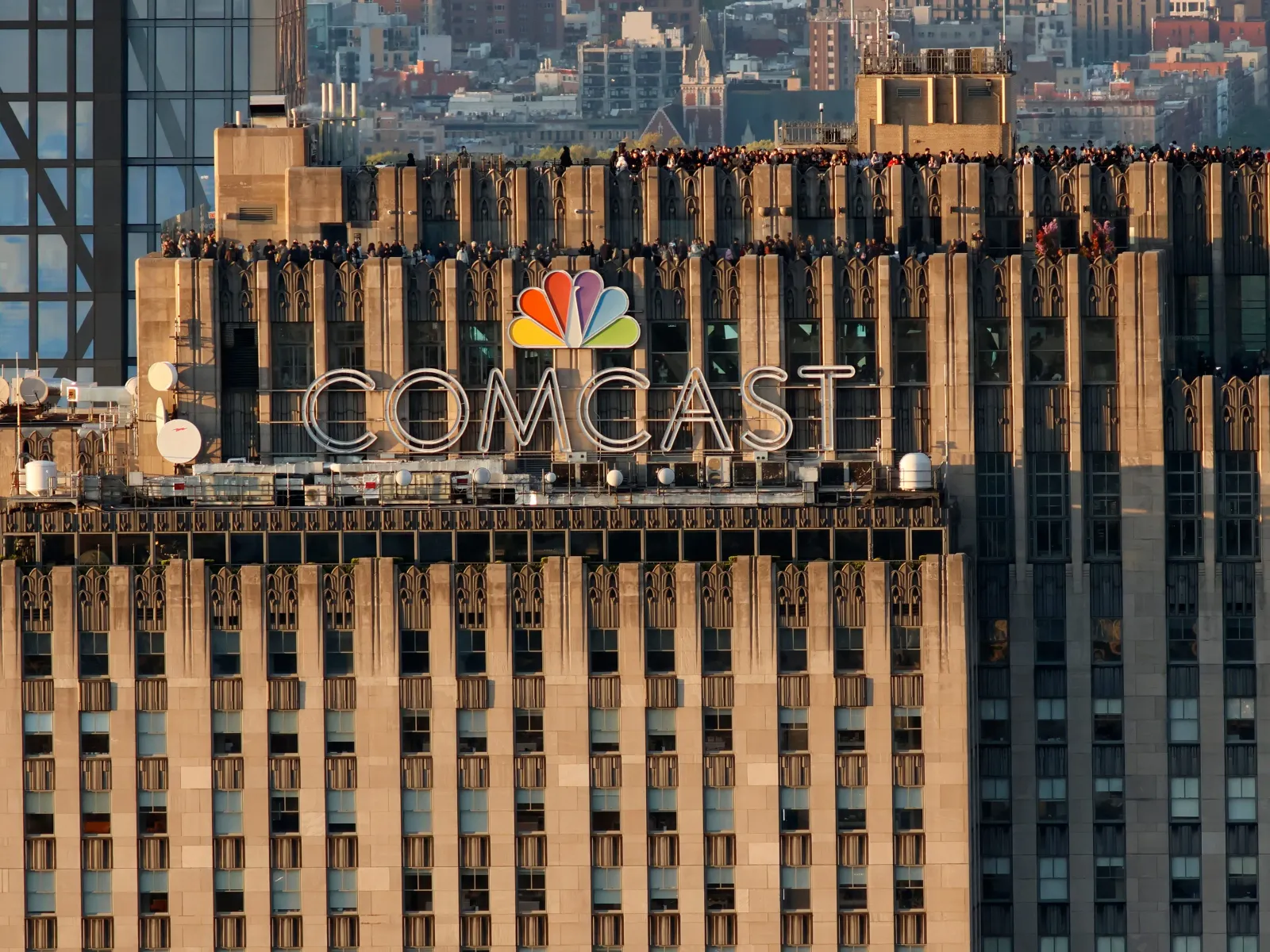
Comcast shares jump 25% as it plans to split NBCUniversal and Sky
The tax-free spin-off could reshape focus, funding, and competition across media and tech for years.

Bungie cuts most Destiny 2 staff as Sony says Marathon still matters
Herman Hulst confirms layoffs affecting most Destiny and some Marathon teams after Bungie admits Destiny fell short.

SK Hynix jumps 11% after seeking up to $29.4B in Nasdaq listing
The chip giant filed for a Nasdaq listing plan that could raise $29.4 billion, instantly reshaping investor expectations.