

Ro Khanna was barred from leaving for 90 minutes by Israeli settlers
The West Bank incident turns a routine visit into a test of who Democratic hopefuls perform for, and how.
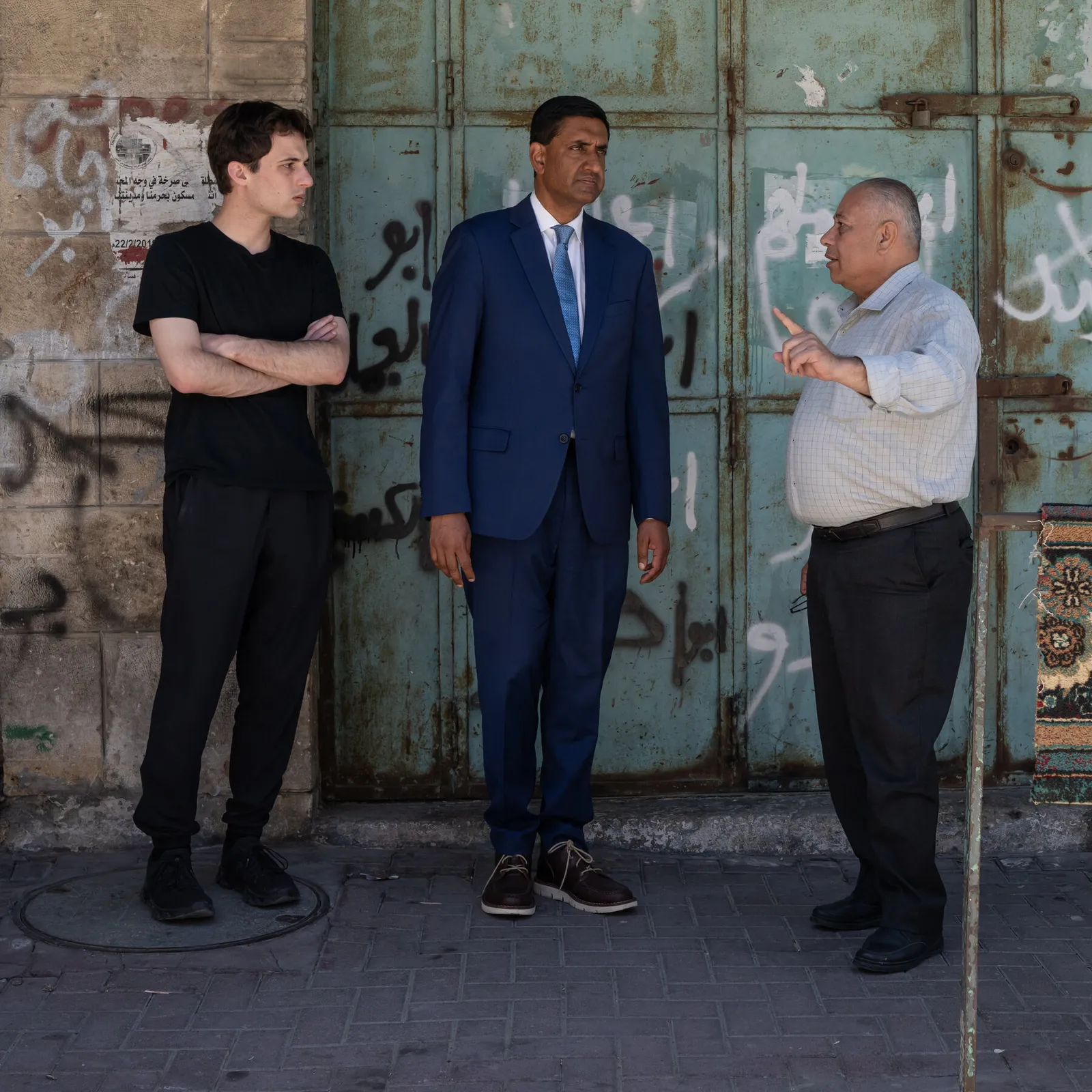
Rep. Ro Khanna was barred from leaving for 90 minutes during his time in the West Bank. The episode reshapes how Democratic presidential aspirants try to build credibility, especially in a region that past U.S. leaders used as a stage for support of Israel.
Rep. Ro Khanna was barred from leaving for 90 minutes in the West Bank, according to the report. The blunt fact matters because it reframes what is normally a low-drama stop on a political itinerary into a power collision with immediate physical and symbolic consequences.
That is the sharp pivot the story is really about. Where past U.S. leaders toured the region to show support for Israel, today’s Democratic presidential aspirants are going to bolster their credentials as critics. In other words: the same geography, the same trip, but a different political job to be done. It is not just diplomacy and photography anymore. It is signaling, and it is happening under pressure, in real time.
For decision-makers, this is a reminder that political optics are increasingly treated like strategy, not ceremony. When candidates go to the West Bank, the goal is rarely only “understand the situation.” The goal is to be seen taking a position, and to have that position interpreted by voters, allies, and adversaries. That kind of performance has to land cleanly in a polarized environment. But the Khanna detail shows how messy reality can get, even when the script sounds familiar.
Think about what “barred from leaving” implies in the choreography of any political visit. A trip is normally planned down to minutes, with routes, meeting windows, and messaging prepared in advance. Removing someone’s ability to depart for 90 minutes is not just a delay. It breaks the timetable and turns the visitor into the story. It also creates a vivid data point for domestic audiences watching from far away, where every moment becomes evidence in a larger argument.
Zoom out, and the incentive structure gets clearer. In the past, the report says, U.S. leaders toured the region to show support for Israel. That was a recognizable posture, a message sent loudly through presence. Now, the report frames the behavior of Democratic presidential aspirants as credential-building as critics. The political economy here is straightforward: candidates need differentiation within their party and credibility with segments of the electorate that interpret Israel-related policy through a moral and human-rights lens.
When that intent meets on-the-ground resistance, the second-order effects spill beyond the immediate headlines. For political operators, it changes how they think about risk management during travel. For campaign teams, it means the “message” cannot be separated from the “moment.” If the environment can physically constrain a politician, then it can also shape what they can say, where they can stand, and how they can pivot when plans go sideways.
For boards and executives in the broader political-adjacent ecosystem, this matters in a less obvious way: political credibility is now a faster-moving asset. Media cycles compress, and incidents like this can quickly become talking points for fundraising, coalition-building, and partnership decisions. Even organizations that are not campaigning are still exposed to the downstream consequences of political narratives, especially when those narratives concern international conflict, public statements, and advocacy alignment.
There is also a regulatory-adjacent subtext, even though the report is focused on politics rather than policy enforcement. In environments like this, legal and bureaucratic processes often sit behind the visible trip. Think visas, security permissions, diplomatic clearances, and official protocols that define what travel is allowed, when it can happen, and what it can signal. When a politician is barred from leaving, the friction can feel like it comes out of nowhere for observers, but the underlying systems are exactly where friction concentrates.
The strategic stake for peers in similar roles is simple: public action in contested spaces cannot be optimized like a normal stakeholder engagement. You can prepare for optics, but you also have to plan for unpredictability. Khanna’s 90-minute constraint is a concrete example of how quickly a planned visit can become a test of narrative control, and how quickly that narrative will be used by campaigns to map supporters into camps.
And that leads back to the headline’s real issue. The story says past U.S. leaders toured to show support for Israel, while today’s Democratic aspirants are touring to bolster their credentials as critics. If you are a decision-maker watching this from the sidelines, you learn two things at once: first, the region is still treated as a stage; second, even the stage is volatile. The credibility game might be the same, but the constraints are changing in real time.
This story's Key Insights and Take-aways are locked.
Create a free account to unlock Executive Actions for one credit.
Register to UnlockAlways free for Executives Club members. Join the Club
More in Politics

Glacial collapse, not rain, killed 180 in Nepal's Himalayan flood
The Himalaya's extreme geography hid the true cause of Nepal's catastrophic flood, a glacial collapse that turned a geological battleground into a mass-casualty zone.

Iran’s Esmail Baghaei says Oman talks start shipping via Hormuz, not US talks yet
Temporary route plans with Oman aim to restart commerce while Tehran says Washington dialogue is not on the table.

Standards watchdog opens probe into Reform UK deputy leader Richard Tice over interests
The parliamentary standards commissioner says it began an investigation on 28 July into a possible undeclared interest.