
Roberto Lopes ignored a LinkedIn message, then Cape Verde reached the World Cup
A Dublin bank job to World Cup history, routed through an “is this spam?” recruitment gamble.
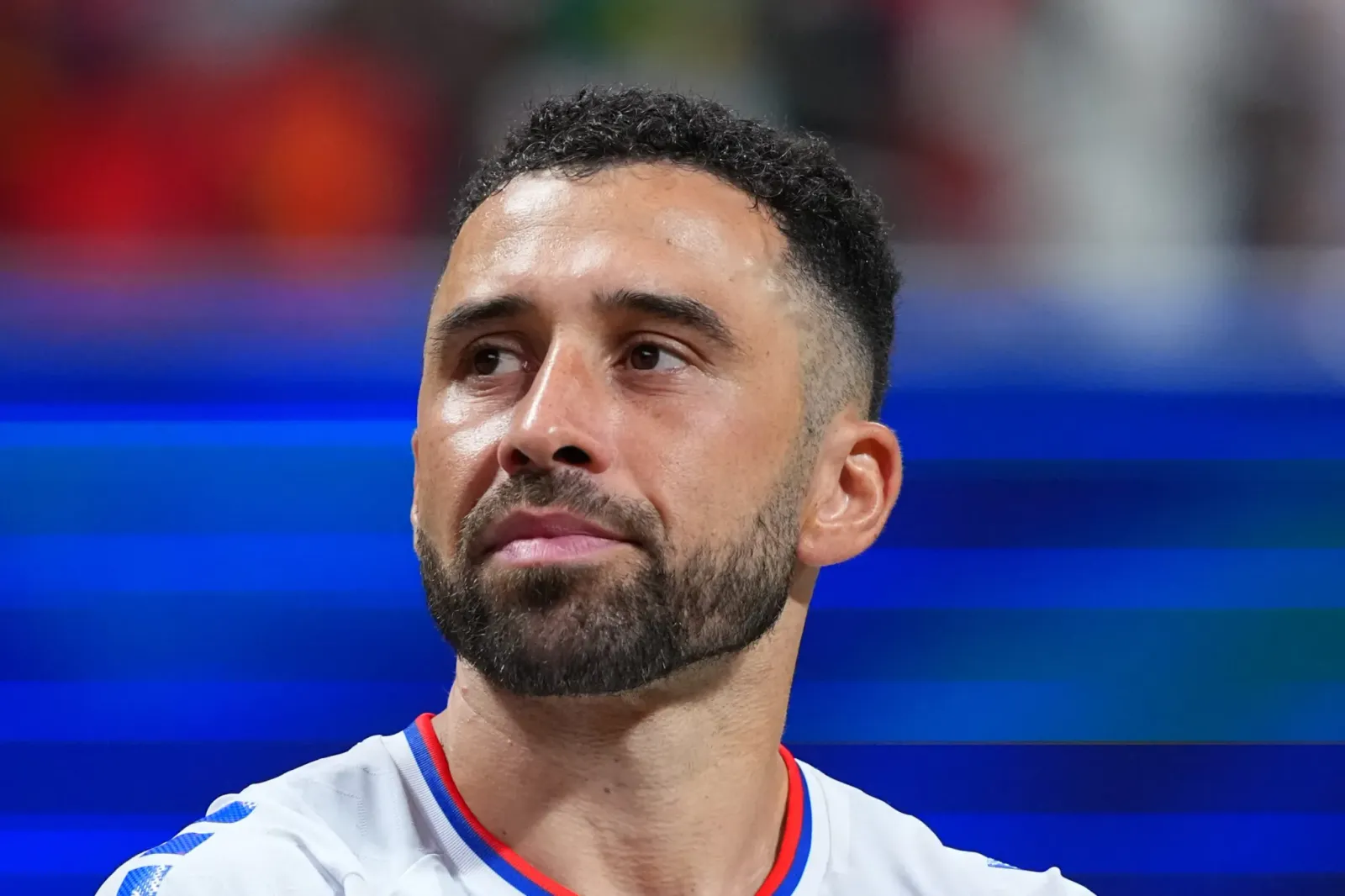
Roberto “Pico” Lopes went from working at a Dublin bank and playing part-time for Shamrock Rovers to accepting a recruiting message for Cape Verde in 2018. Seven years later, Cape Verde made its World Cup debut, drawing Spain 0-0 in the group stage.
Roberto Lopes admits he nearly binned the moment that changed everything. In 2018, while working at a Dublin bank and playing part-time for Shamrock Rovers, he received a seemingly random LinkedIn message. Lopes thought it was spam and ignored it. Then Cape Verde national team coach Rui Aguas followed up nine months later, in English, asking whether Lopes had seen the original message and whether he was interested in declaring for Cape Verde. Lopes says he copied the message and ran it through Google Translate, where it effectively read: Cape Verde was looking to bring in new players to the squad and would he be interested in declaring. “I was absolutely buzzing with that,” Lopes told BBC Sport, adding he was “100%” in.
Just three weeks after that follow-up, the logistics sprint began. Lopes scrambled to get documents from his father, including a birth certificate and passport, and then was on a plane to make his international debut against Togo. Fast forward seven years, and that unlikely digital detour ends with something that feels almost designed for a highlight reel: Cape Verde’s first-ever appearance at the World Cup. Last week, the nation opened with a scoreless draw against Spain, a result that came even though Spain entered as the world’s No. 3-ranked team and Cape Verde as No. 64. For a player who started from a banking career and a “this looks like spam” inbox, that contrast is the whole story.
There’s a business-adjacent moral hiding in the background: talent acquisition can look messy from the inside, but it often works when someone persists through low signal. Lopes’s recruitment wasn’t a scout staking out fields. It was an online outreach tied to eligibility and timing. Aguas was searching for eligible players to bolster Cape Verde, a small West African island nation. The follow-up matters, because the first message was missed, and recruiters rarely control how quickly candidates interpret a cold inbound. In this case, the process survived user error, language friction, and document delays to reach the kind of outcome executives love to cite but rarely see play out in real time.
To understand why this is more than a feel-good sports story, zoom out to how “eligible player” pipelines typically work in international football. National team selection is not just about who is best today; it’s also about who can legally represent a country, which is why coaches hunt for players through networks, databases, and diaspora connections. That makes LinkedIn more than a random channel here. It’s a global directory where a coach can try to find people who have a link to the country through family. Lopes’s background, born to an Irish mother and a Cape Verdean father, gave him that eligibility. Aguas’s outreach turned that passive connection into an active pathway. For operators watching systems and pipelines, the takeaway is simple: even in sports, “eligibility” is a bottleneck, and bottlenecks get solved by process, not hope.
The other part of the story is what Lopes says leaving banking actually felt like at the time. In a FIFA video released this week, he describes the move as ‘risky.’ He was in a “solid job,” and he points out that in their league there wasn’t much security in terms of a football career when Aguas outlined the plan. Lopes initially imagined it might be a short-term experiment, maybe two years, before expanding into something much larger. “I would say we’ve achieved what we wanted to achieve, but we still want more as well,” he says. That tension is familiar to anyone who funds startups or builds careers: you commit without certainty, because the upside is tied to a future you cannot fully model.
This is also why Fortune included a parallel example: Richardo Pepi, a 23-year-old U.S. national team star. The story highlights years of sacrifice by his family to fund youth soccer, with his father Daniel Pepi describing how they did whatever they needed to get money, sometimes borrowing, asking for a loan at his job, or even pawning the title to the car. Like Lopes, Pepi’s path is framed as risk plus runway, with finance and logistics determining whether talent can actually survive long enough to become opportunity. It’s not just athletes. Even Cristiano Ronaldo has described a childhood with financial hardship, telling ITV in 2019, “When I was a kid, 11 or 12 years old, we didn’t have money,” and noting it shaped his early life.
If you’re an executive or board member, the non-obvious second-order effect is how these stories change what you think “recruiting” means. Lopes’s path shows that a candidate might ignore the first message and still end up in the funnel, because the recruiter followed up. It suggests the value of persistence and multi-touch outreach in high-stakes decisions, where “first contact” is not the moment of truth. And it reframes uncertainty as part of the process, not a reason to wait. In a similar spirit, Fortune includes a line from Microsoft executive vice president Ryan Roslansky, who oversees LinkedIn: “Big win for recruiters who don't give up on a great candidate.” That quote lands because the entire timeline in Lopes’s case proves the point: ignore it, follow up, translate it, document it, fly it.
Cape Verde’s next matches are set for June 21 against Uruguay and June 26 against Saudi Arabia. For Lopes and for the people tracking these outcomes, the debut draw against Spain is only the first layer. The strategic stake is that international tournaments create a spotlight that can rewrite careers and credibility overnight, but only if a recruitment pipeline survives the friction of real life, not just the pitch deck version. If your job is building teams, investing in talent, or designing systems that match people to opportunity, this is a reminder that the biggest wins can start with a missed message, a follow-up, and a decision made when the outcome is still genuinely unknown.
This story's Key Insights and Take-aways are locked.
Create a free account to unlock Executive Actions for one credit.
Register to UnlockAlways free for Executives Club members. Join the Club
More in Business

A flaw in PHP just forced governments to pull their own sites offline
European agencies from Belgium to Germany took websites dark to patch a critical weakness in the language behind almost 70% of the web, and the blast radius extends far beyond government portals.

BioWare shuts down, Mass Effect 5 dead after $55B EA buyout
The legendary RPG studio's closure lands months after a $55 billion investment group buyout of EA, raising tough questions for gaming's biggest acquirers.

Musk weighs Tesla-SpaceX mega-merger as boards form review panels
Special committees at both companies will examine a tie-up that could fuse electric vehicles and space launch, forcing a fresh look at governance and valuation.