

Rolls-Royce wants UK help to re-enter narrowbody jets after engine fixes
Derby factory floor, hangar teardown reality, and the government support question that could decide its next market push.

Rolls-Royce, after addressing engine problems, is turning to its next big challenge: seeking UK government support to re-enter the narrowbody jet market. For decision-makers, the key consequence is whether public backing can accelerate a turnaround in a brutally competitive, regulation-heavy corner of aerospace.
Rolls-Royce is trying to clear the runway for its next act. After it fixed engine problems, the aerospace giant is now turning to a new hurdle: winning UK government support as it seeks a re-entry into the huge narrowbody jet market. That shift matters because narrowbody jets are where aircraft sales and long-term fleet growth compound, and where competitors already have supply chains, certification experience, and airline relationships locked in.
The company’s ambition is easier to see than to prove, at least from the factory floor. In a 100-year-old hangar at Rolls-Royce’s factory in Derby, engines lie on their noses while technicians strip them down after a couple of years circling the world. Cranes lift and flip the engines, then engineers separate different modules to be cleaned, treated in acid baths if necessary, repaired or replaced. The point is not just maintenance. It is evidence of how complex an engine ecosystem is, and how hard it is to keep it reliable once an aircraft has been flying and wearing on the parts for years.
Inside this hangar, you can understand why the engine issue Rolls-Royce has just addressed is so central to its broader strategy. The source describes a metre-diameter core, where fuel and air combine at high pressure to drive the turbines and propel 200-tonne planes through the air. That is the heart of performance and, therefore, the heart of risk. When an engine has issues, the consequences ripple beyond a single fix. Airlines care about reliability and downtime. Regulators care about safety and certification. And the business, whether it is selling new engines or supporting existing fleets, needs a credible story for performance under real-world conditions.
A narrowbody re-entry is not only a marketing challenge. It is a systems challenge. Narrowbody jets are typically the workhorse of global air travel, used for shorter routes with high aircraft utilization. That means engines on these jets run more hours, see more cycles, and are expected to deliver consistent performance at scale. If you are Rolls-Royce, the “next big challenge” is therefore not just building or designing something new. It is demonstrating to customers and to the UK that the industrial plan is resilient, fundable, and aligned with how the market actually buys and operates engines.
Which brings us to the UK government support ask. The source is clear that Rolls-Royce is seeking that support as part of its return to the narrowbody jet market. In practice, that kind of request sits at the intersection of industrial policy and aerospace economics. Aerospace programs are capital-intensive. They involve long development timelines, extensive testing, and regulatory processes that can take years. When companies hit technical problems, the financial and credibility costs rise quickly. Government support can reduce pressure on near-term cash while a company works through certification and supply chain scaling. It can also strengthen the domestic industrial base, keeping high-skill manufacturing and engineering activity at home.
Still, government backing is not a blank check. Decision-makers on both sides will be evaluating risk, milestones, and whether support improves the odds of a credible commercial outcome. For Rolls-Royce, the maintenance hangar scene is not a random detail. It signals a company that is operating at industrial depth, with procedures like acid baths, module separation, and targeted repairs or replacements. Those are the kinds of operational realities that shape how regulators and customers think about reliability over time.
For peers, the signal is immediate. A major engine maker moving from fixing engine problems to seeking UK backing suggests the competitive clock is ticking. Narrowbody jets are a huge market, and re-entry implies a plan to compete where others have already established positions. The second-order effect for boards is governance pressure: strategy can shift from purely technical problem-solving to a broader capital and policy negotiation that requires clear execution milestones and transparency. If Rolls-Royce can line up government support with credible engine outcomes, it could accelerate its return. If it cannot, the cost of delay in aerospace is often measured in lost market opportunities, slower scale-up, and harder economics when competitors keep moving.
In other words, this is not just a factory story and not just a policy story. It is a bridge between two realities: the hard physics inside an engine core, and the hard math inside industrial support decisions. Rolls-Royce is effectively telling the UK, and the market, that it is ready to tackle the next phase. Now it needs the backing and the credibility to make re-entry into narrowbody jets a practical, fundable plan, not a headline ambition.
This story's Key Insights and Take-aways are locked.
Create a free account to unlock Executive Actions for one credit.
Register to UnlockAlways free for Executives Club members. Join the Club
More in Business

Uber buys Delivery Hero for nearly $15B, vaulting to top food delivery outside China
The deal doubles Uber's dual-services footprint and pushes a ride-and-eats bundling play into 50 more markets.

Epic and Google drop settlement bid, forcing rival Android app stores by July 22
Google told the court it is ready to carry third-party app stores starting Wednesday, July 22.
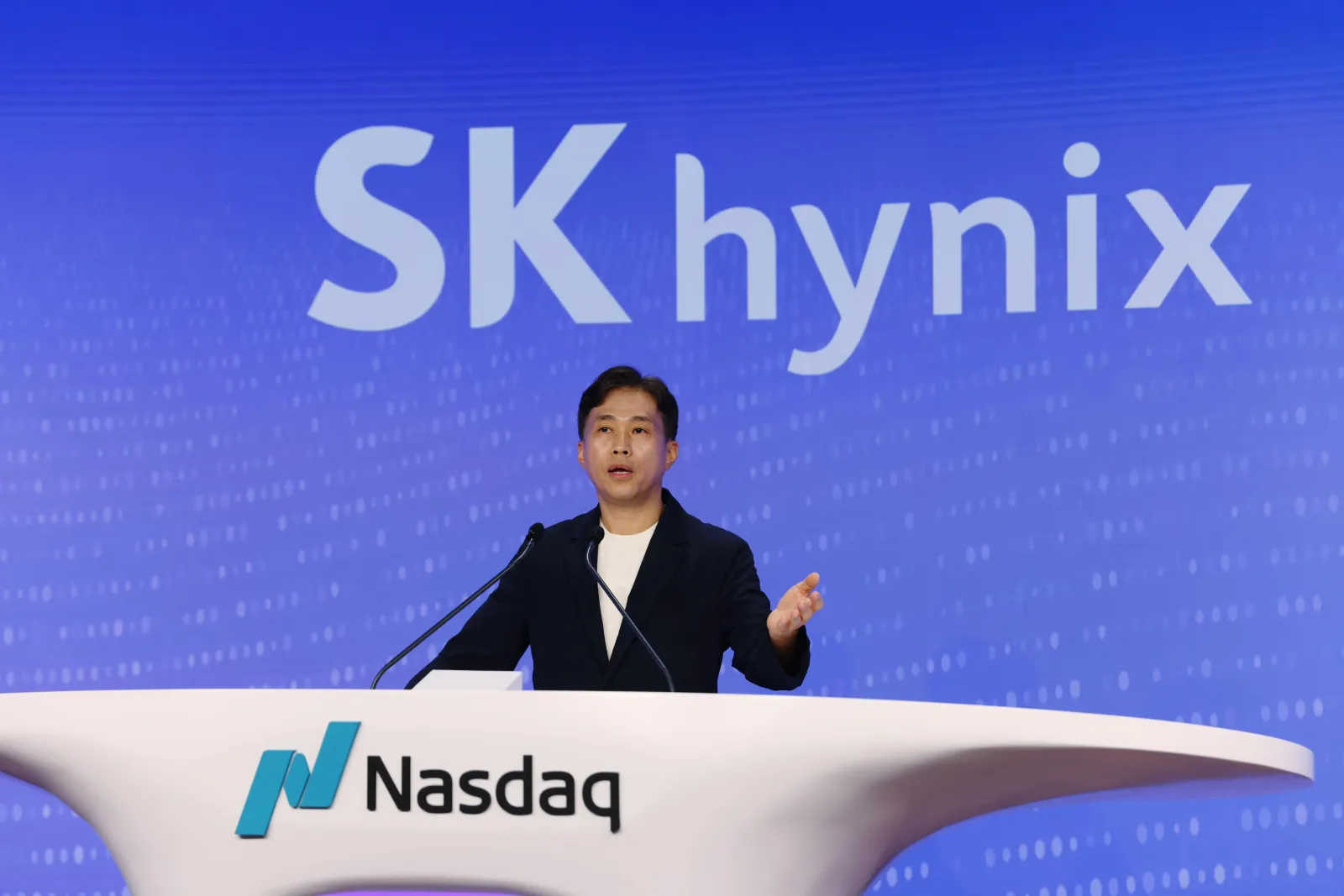
SK Hynix opens at $170, raises $26.5B, and tops foreign IPO records
In Friday's Wall Street debut, SK Hynix turns AI RAM demand into a $26.5B fundraising moment that rewrites comps.