
Roman Space Telescope targets August 30 launch, with 100x Hubble view ahead
NASA’s Nancy Grace Roman Space Telescope aims for August 30, promising 100 times Hubble’s field of view and new science throughput.
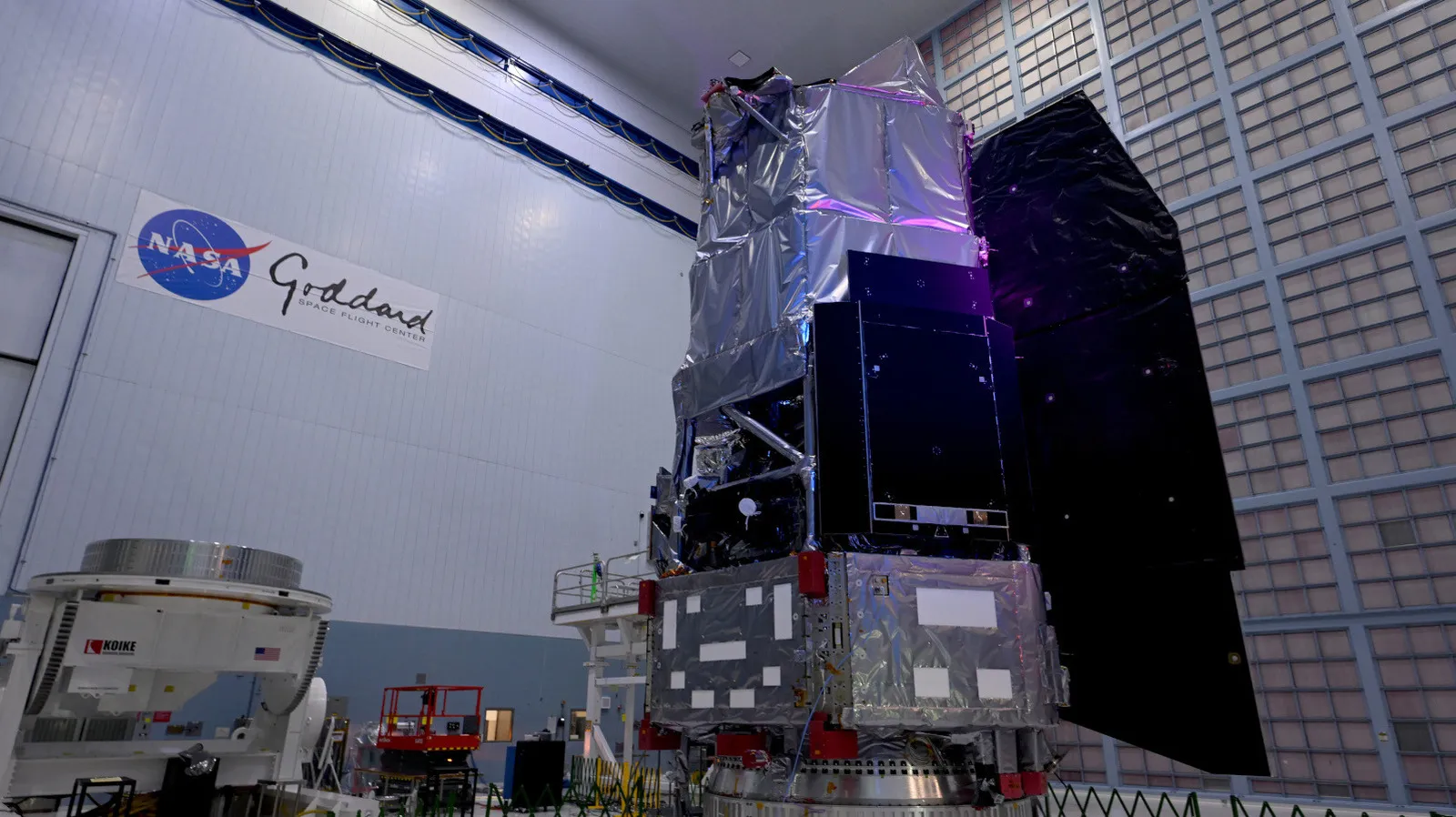
NASA is targeting an August 30 launch for the Nancy Grace Roman Space Telescope. Its planned capability, a field of view 100 times Hubble's, changes what researchers can observe and how quickly discoveries can stack up.
NASA is targeting an August 30 launch for the Nancy Grace Roman Space Telescope, and the headline capability is hard to ignore: it is designed to see 100 times the field of view of Hubble. Translation for decision-makers: this is not just a new telescope, it is a throughput upgrade. With a wider view, the Roman Space Telescope can cover more sky in less time, which matters because astronomy, like many businesses, is constrained by time and access to scarce observing opportunities.
That August 30 date is the anchor for everything that follows. Launch windows are finite, readiness is a go or no-go game, and a mission timeline forces planning across engineering teams, ground systems, and downstream science operations. When NASA says it is targeting August 30, it is signaling that the program is aligned enough to commit to a specific launch target. And because the mission’s field of view is 100 times Hubble’s, the benefits are not incremental. The science program is built around being able to image vastly larger portions of the sky, which should expand how many potential targets can be captured during each campaign.
If you are a founder, investor, or operator, the instinct is to treat this like a product launch with a feature list. That instinct is directionally right. Roman is essentially shipping a step-change in observation capacity. The field of view ratio, 100x Hubble, is the kind of metric that changes strategies. For astronomers, wider coverage reduces the tradeoff between area and depth that you constantly wrestle with when planning what to observe next. For the broader ecosystem, including mission planners and instrument teams on the ground, higher coverage also means different workflows, different data volumes, and a different cadence for turning observations into publishable results.
There is also a governance angle worth paying attention to. NASA space missions live at the intersection of engineering milestones and public accountability. That matters because telescope timelines are not only technical schedules, they are stakeholder calendars. A targeted launch date like August 30 is more than a timeline note. It is a coordination signal to everyone who depends on the mission: operations teams that must be ready for commissioning, scientists waiting to run observing programs, and the broader research community that will interpret early results.
From a market context perspective, Roman is part of the long-running “bigger sky, faster insights” trend in space science and remote sensing. The logic is straightforward: if you can observe more at once, you can detect more phenomena, measure more statistically robust samples, and reduce the time between hypothesis and evidence. That kind of improvement tends to ripple through the ecosystem. It can accelerate where grants flow, where hardware vendors invest, and how research partnerships form, because the observational advantage becomes a draw for collaboration.
Second-order implications show up in data and infrastructure planning. A telescope with 100 times Hubble’s field of view implies that mission operations will need to handle more sky coverage, which typically means more data processing effort and more intensive scheduling. Even though the source only states the launch target and the 100x field-of-view capability, the strategic reality is that missions with larger observational footprints require stronger end-to-end systems, from downlink to calibration to data products that others can actually use.
For executives and board members watching this kind of program, the key stake is how quickly a scientific platform can translate capability into outputs. Roman’s August 30 launch target is a milestone in a long chain, and the 100x field of view suggests the mission is built to maximize observation efficiency once it is operational. The strategic question for peers in space, data infrastructure, or any domain where sensing and discovery are central is simple: when a platform jumps in capability, who is ready in the ecosystem to capture the value immediately, not months later?
This story's Key Insights and Take-aways are locked.
Create a free account to unlock Executive Actions for one credit.
Register to UnlockAlways free for Executives Club members. Join the Club
More in Technology

OpenAI says 10,000 agents cracked a 90-year math problem in 88 hours
The company's claim is audacious, but one mathematician is pushing back. Here's what it means for AI-driven discovery.
Meta still serves child sexual abuse ads on Instagram in India - BBC report
A new report following the BBC Eye investigation says the ads are still there - what it signals for every platform with a self-serve ad engine.

White House yanks 'Build the Wall' game after Tetris Company copyright warning
The administration's arcade game vanished in hours - and the takedown playbook every brand can learn from.