

Royalty buyer builds Hong Kong hub as mainland biotech out-licensing hits record highs
What a new Hong Kong base signals about royalty financing becoming a go-to funding lane for Chinese drug developers.

The world’s largest buyer of biopharmaceutical royalties has opened its first Asia-Pacific base in Hong Kong. The move comes as mainland China biotech out-licensing deals reach record highs, making royalty financing a capital alternative as US investment restrictions loom.
The world’s largest buyer of biopharmaceutical royalties just opened its first Asia-Pacific base in Hong Kong, and it is not doing it as a symbolic beachhead. The SCMP report frames it as a response to a very practical shift in how mainland China biotech companies are funding development, as out-licensing deals by Chinese firms hit record highs.
Hong Kong is suddenly looking like a financial control room for life sciences, not just a global trading post. The royalty financing model matters here because it gives drug developers an alternative way to raise capital while, as an expert noted in the article, US investment restrictions loom. In other words, if traditional funding channels get harder or more constrained, royalty financing becomes a lever that drug developers can pull without having to rewrite their entire business from scratch.
To understand why this is a big deal, you have to know what royalties do in biopharma. A royalty financing arrangement typically means an investor or buyer provides upfront capital in exchange for a share of future revenue tied to a drug or drug portfolio. That can be attractive when the research is expensive, timelines are long, and the outcome is uncertain. It also changes the negotiating dynamics between developers and capital providers: instead of betting entirely on valuation at a specific funding round, the capital provider’s payoff is linked to commercial performance.
Now layer that on top of what the SCMP piece highlights: multinational pharmaceutical companies are also establishing offices in Hong Kong as mainland Chinese biotechnology out-licensing ramps up. This matters because out-licensing is one of the routes Chinese biotech firms can use to access distribution, development capabilities, and cash to keep pipelines moving. When out-licensing hits record highs, it tends to pull in more intermediaries, more deal-making infrastructure, and more sophisticated capital structures. A dedicated Asia-Pacific base for the largest royalty buyer is the kind of infrastructure move you make when volumes are not just growing, but staying high enough to justify a permanent footprint.
The article also connects this trend to geopolitics and regulation. It points to “US investment restrictions” as a timing and friction point, and it quotes an expert explaining that Chinese biotech firms would need royalty financing as that environment tightens. While the SCMP excerpt provided in the source stops mid-quote, the core claim is clear in the framing: restrictions on investment can shrink or alter access to funding, so companies look for financing options that can still support development.
In boardroom terms, royalty financing can be an operational workaround. It can help drug developers keep working through clinical milestones without relying solely on equity raises or debt that may be harder to structure in the current cross-border regulatory climate. It can also reduce some near-term dilution pressure, because royalty buyers typically do not behave like equity investors asking for ownership stakes that expand with each funding round. At the same time, royalties shift future economics. If a drug over-performs, the developer has less upside than it would with pure equity funding. If a drug under-performs, the developer has still benefited from capital during the risk period, which is the whole point.
There is another second-order effect executives should watch: when the largest royalty buyer lands in Hong Kong, it can accelerate deal velocity across the region. More local presence can mean faster underwriting, more frequent negotiations, and a clearer path for developers who want to understand how royalty terms will be priced for their specific assets. And because the SCMP report places this opening in a broader wave of pharmaceutical firms building Hong Kong offices, it suggests Hong Kong is being positioned as a hub for life sciences capital, not merely a location for headquarters and marketing.
For peers, the strategic stakes are straightforward. If your company is developing drugs in mainland China, the financing menu may look different than it did even a few years ago. Royalty financing is presented in the SCMP coverage as an answer to the combination of rising out-licensing activity and the looming constraints tied to US investment restrictions. The executives who win will be the ones who treat royalty financing as a mainstream tool, not a niche fallback, and who build their partnerships and pipeline economics around the realities of where capital can move fastest.
This story's Key Insights and Take-aways are locked.
Create a free account to unlock Executive Actions for one credit.
Register to UnlockAlways free for Executives Club members. Join the Club
More in Business
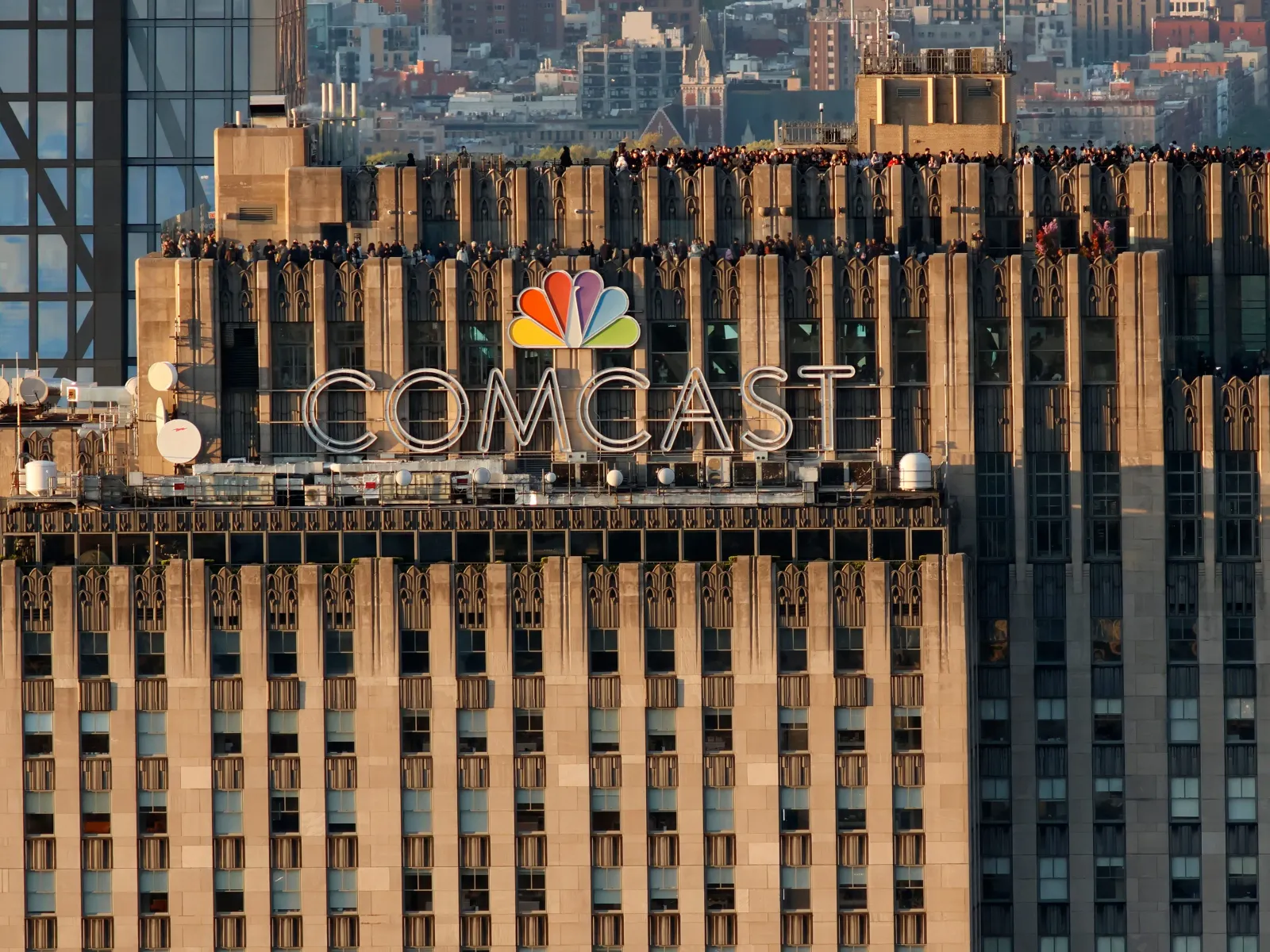
Comcast shares jump 25% as it plans to split NBCUniversal and Sky
The tax-free spin-off could reshape focus, funding, and competition across media and tech for years.

Bungie cuts most Destiny 2 staff as Sony says Marathon still matters
Herman Hulst confirms layoffs affecting most Destiny and some Marathon teams after Bungie admits Destiny fell short.

SK Hynix jumps 11% after seeking up to $29.4B in Nasdaq listing
The chip giant filed for a Nasdaq listing plan that could raise $29.4 billion, instantly reshaping investor expectations.