
Rubin Observatory starts 10-year cosmic time-lapse, turning a decade of data into answers
The Vera C. Rubin Observatory in Chile begins a landmark 10-year survey of a changing night sky.
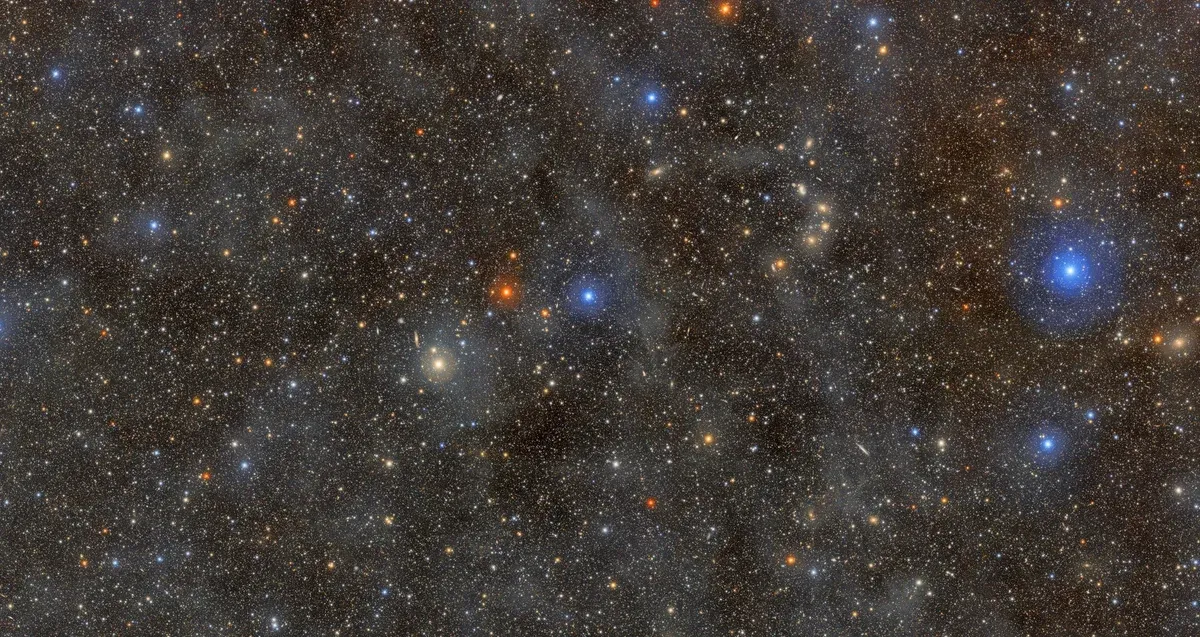
The Vera C. Rubin Observatory in Chile has begun a 10-year survey program to capture how the night sky changes over time. For decision-makers across science, funding, and data infrastructure, the move locks in a decade-long execution bet with compounding downstream value.
The Vera C. Rubin Observatory in Chile has started the 10-year survey that will capture a changing night sky like a time-lapse. This is not a short campaign or a “snapshot” mission. It is a sustained, multi-year operating commitment designed to repeatedly observe the cosmos, so patterns that unfold slowly can actually be seen.
That 10-year window matters because astronomy is often constrained by what you can observe in the time you have. Rubin’s approach flips that constraint. Instead of trying to infer change from scattered observations, the Observatory is now building a consistent, long-running record. The result is a dataset whose power increases as the survey accumulates nights, seasons, and years. In plain terms: the longer the project runs, the more likely it is to reveal signals that only show up when you look again and again.
Why should anyone outside astronomy care? Because large-scale science projects are, at their core, operational and data engineering programs. Rubin’s survey is a bet that the value of repeated measurement beats the value of one-off discovery. That is a recurring theme in modern tech and infrastructure: build systems that keep getting smarter with time, and let scale and cadence do the heavy lifting. The “changing night sky” framing signals the survey is tuned to variability and evolution, the same way many commercial platforms are designed to learn from ongoing streams rather than static inputs.
There is also a practical governance dimension. Observatories do not just deploy equipment and walk away. They must maintain operations, manage logistics, and ensure that data can be processed and archived reliably for years. A decade-long survey forces decisions about budget stability, staffing continuity, and technical roadmaps up front. When a project is this long, boards and funders look less for a single dramatic result and more for durability. The question becomes: can the organization keep execution steady through technological change, staffing turnover, and shifting priorities?
In that sense, the start of Rubin’s survey is a milestone that extends beyond the observatory itself. It marks the transition from construction and commissioning phases to long-run scientific operations. Once the survey begins, the institution effectively “locks in” a rhythm. That has second-order implications for any partners tied to analysis pipelines, data access, and downstream scientific use. Analysts and research communities can plan around a predictable cadence, rather than chasing irregular schedules.
And because this is being done in Chile, the program also sits within the broader reality of site operations for major observatories. Remote, high-altitude or otherwise challenging locations require careful coordination across infrastructure, safety, and continuous performance. While the source does not enumerate those details, the fact pattern is still clear: the Vera C. Rubin Observatory is operational and conducting a formal, long-duration survey from its site, meaning the operational system is now part of the science itself.
Zoom out further and you see why this kind of commitment reverberates across the wider ecosystem. When one major facility begins a decade-long time series of the night sky, it changes what researchers can expect from the sky as an information source. Other instruments, telescopes, and analysis efforts often adjust their planning to take advantage of what a flagship survey will provide. Even if they are working in different wavelengths or focusing on different targets, the presence of a consistent 10-year dataset reshapes how hypotheses are tested and how follow-up work is prioritized.
For executives and decision-makers, the strategic stake is straightforward: Rubin’s 10-year survey turns astronomy into a compounding data asset, not just a discovery moment. Starting now means the organization can accumulate credibility, results, and practical operational knowledge over time. The longer it runs, the more that ongoing record becomes valuable. That is the real promise behind the “largest cosmic time-lapse” framing: each additional observing night increases the odds of catching the universe in the act of changing.
This story's Key Insights and Take-aways are locked.
Create a free account to unlock Executive Actions for one credit.
Register to UnlockAlways free for Executives Club members. Join the Club
More in Science

Alaska's 1,580-foot tsunami had warning signs. Scientists just found them.
Rapid glacier retreat, heavy rainfall, and thousands of tiny tremors preceded Alaska's 1,580-foot tsunami, a warning for every coastal community in a warming world.

The rare mutation that lets high-risk brains dodge Alzheimer's
Scientists found a natural defense against protein buildup, opening a new path to preventive treatments.

3,000 steps a day may halve Alzheimer's decline, study finds
New research links a modest daily walk to less tau buildup and nearly half the cognitive and functional decline, even for those with early signs.