
Russia’s labor-shortage cure expands military hiring, squeezing long-term economic capacity
The demographic problem pushes the state to solve labor needs through the defense machine. The fix threatens the rest of the economy.

Foreign Policy frames Russia’s labor-shortage challenge as colliding with an ever-expanding military-industrial complex, creating a policy tradeoff that keeps worsening. For decision-makers, the consequence is simple: the more labor the defense sector pulls in, the more future growth gets crowded out.
Russia’s labor-shortage problem is no longer a background risk. Foreign Policy’s core question is blunt: what happens when a demographic crisis collides with an ever-expanding military-industrial complex? The “cure,” in this telling, is worse than the “disease” because the solution leans on the very structure that compounds Russia’s constraints.
Start with the logic. A demographic crisis means fewer available workers, and it hits across the economy, not just one industry. When the state responds by scaling defense production and defense-linked hiring, it doesn’t just allocate a portion of labor. It redirects scarce people toward one mission, at one set of priorities, with one set of timelines. Foreign Policy’s framing implies that this is not a neutral rebalancing. It is an extraction from civilian capacity, which is exactly the capacity Russia needs to keep the broader economy functioning as the demographic math worsens.
To understand why this matters to executives and boards, think in terms of incentives and constraints. In many countries, when labor becomes scarce, governments usually face a menu of options: raise participation, adjust immigration rules, change working conditions, automate, or subsidize training. The risk of choosing the “wrong” lever is that it treats labor as a tactical input rather than a strategic scarce resource. If the defense sector expands faster than the economy can replenish or reallocate labor, then civilian industries end up competing for fewer workers, which can raise costs, delay output, and reduce the resilience of supply chains. The second-order effect is not just slower growth. It can be slower growth plus higher stress on financing and operations, because labor shortages tend to be sticky. Once businesses lose workers and cannot backfill, productivity paths can bend downward.
This is where the military-industrial complex angle becomes central. A military-industrial complex is not only a set of factories. It is a system that coordinates procurement, production capacity, supplier networks, and employment decisions, often with political urgency and budgetary prioritization. When it expands, it can become a magnet for talent, capital, and managerial attention. Even firms not directly tied to defense can feel that gravitational pull through supplier demand swings and through competition for engineers and skilled labor.
There is also a regulatory and policy dimension, and it is typically less visible than factory output. Defense procurement and national security priorities often shape procurement rules, contracting structures, and the speed at which resources move from planning to execution. In a demographic downturn, “speed” can be seductive. But speed can also mean shortcuts that are rational in the short run and costly in the long run, such as underinvestment in civilian productivity, reduced training for non-defense roles, or weaker incentives for firms to modernize. None of that requires any dramatic scandal. It can be the default outcome when a state sees labor scarcity and answers with the fastest institutional channel it has.
For decision-makers, the strategic stakes are how this dynamic spills into the financial and operational decisions you are already making. If a defense-driven labor allocation model grows, it can shift domestic demand toward defense-aligned suppliers and away from civilian sectors. That changes where customers spend, where inventories build, and which projects get approvals. It also changes labor markets, which affects wages, retention, and hiring pipelines. At the board level, that means the risk framework has to widen. Labor shortages are no longer just a workforce planning issue. They become a capital allocation issue because the underlying labor distribution determines which parts of the economy expand and which parts shrink.
Foreign Policy’s headline framing, “The Cure for Russia’s Labor Shortage Is Worse Than the Disease,” is essentially a warning about opportunity cost. The state’s attempt to manage a demographic crisis through defense-sector expansion can create a feedback loop: the more labor the defense sector pulls in, the harder it becomes for the rest of the economy to adjust, innovate, and absorb shocks. In other words, a response built for near-term security can undermine the long-term economic capacity that security also ultimately depends on.
Executives and investors should take the takeaway seriously because this is not only a Russia story. It is a playbook of incentives under demographic strain: when the state prioritizes one mission, it can crowd out the broad labor and industrial base that drives resilience. If you are running a business in a labor-constrained environment, or allocating capital across regions with shifting demographics and security pressures, the question is the same as Foreign Policy’s: what happens when labor scarcity meets an ever-expanding set of strategic demands? The answer, as presented here, is that the “fix” can deepen the constraints that made the problem visible in the first place.
This story's Key Insights and Take-aways are locked.
Create a free account to unlock Executive Actions for one credit.
Register to UnlockAlways free for Executives Club members. Join the Club
More in Politics
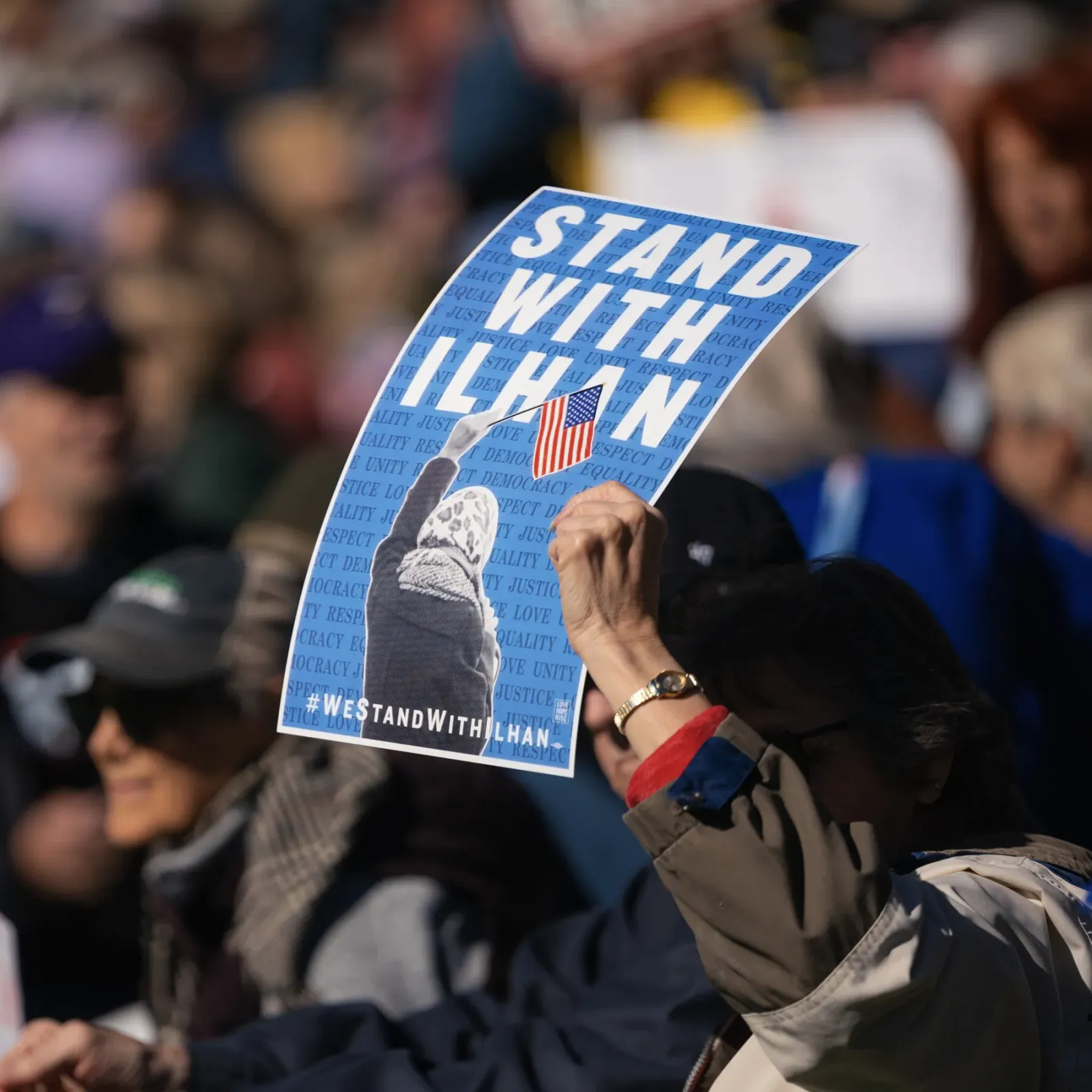
Obama Defends Ilhan Omar After Agents Search Her Home in Trump Inquiry
The former president's intervention raises the stakes in a federal probe into immigration paperwork that has put a prominent progressive lawmaker in the crosshairs.

Blair-era minister: cut welfare to fund youth job support
Alan Milburn's call for welfare cuts to fund employment support opens a Labour fight over benefits and the Neet crisis.

Hot September CPI: energy costs surge, voters feel the squeeze before midterms
The latest inflation print lands as Trump campaigns for GOP control of Congress, putting cost-of-living worries at the center of the midterm fight.