

Rust adds apartment rentals, then charges rent in scrap and lets you evict players
Facepunch’s latest update turns housing into a theft-friendly system, with a master key and a marketplace to match.
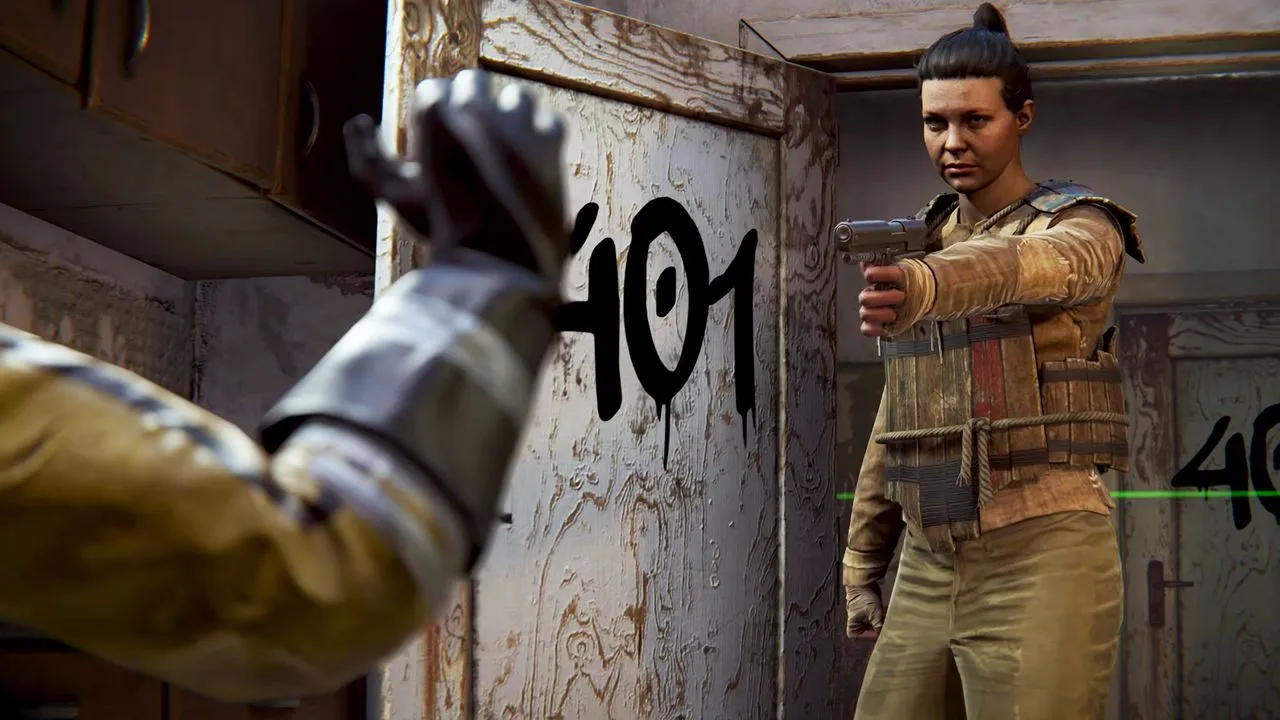
Facepunch Studios has added apartment rentals to Rust, including rooms you can rent, daily pressure to pay rent in scrap, and a master key system. For decision-makers, it is a sharp reminder that Rust’s “living world” mechanics directly shape player risk, retention, and the economics of in-game property.
Rust just made “getting a place to live” feel a lot less like comfort and a lot more like a hostage negotiation.
In its latest update, Facepunch Studios introduced a new apartment complex monument that “allows players getting started with a wipe to find a place to call home.” But the moment you rent, the game starts collecting payment in the most Rust way possible: “Once you've rented a room you'll need to insert scrap into the slot next to your door, otherwise you'll be evicted and all of your possessions will be seized.” It is not just decorative housing. It is recurring custody, enforced on a timer, with loot as collateral.
That design matters because it turns a “friendly” mechanic into a behavioral engine. In most games, housing systems either function as progression or cosmetic shelter. Here, the update makes apartments part of the economy of scarcity and control. The game explicitly tells players what the consequence is for being late: miss the rent by even a second and you lose everything, with the added twist that someone else can exploit the same system against you. This is Rust’s brand promise in mechanic form. The world is shared, the incentives are adversarial, and the penalties are total.
Facepunch also layered in a master key that connects apartments to classic Rust theft patterns. “There is a master key available somewhere on the island - find it and you can unlock access to any occupied room in the apartments for 5 minutes.” The key detail is that access is time-bounded, which changes the risk profile of raiding a rented room. You are not committing to an open-ended siege. You have a window. And because the game does not stop there, it even gives would-be burglars leads: “Need a hint as to what room to burgle? There might be a guard in the basement who has more information.” In other words, Rust is formalizing the intelligence pipeline inside the housing system itself.
The update then expands the same logic to commercial property, which is where executives should pay attention if they care about virtual economies. Rust’s apartment complex includes “a small marketplace of shops.” Each shop “can be purchased and run by players, allowing you to sell your wares to the residents of the apartment building.” That sounds like commerce and convenience. But Rust undercuts it fast: someone can “buy your shop right out from under you simply by paying more for it in scrap.” The game does not merely allow competition. It bakes in forced repricing, with scrap as the ultimate bargaining chip.
And the master key that enables apartment raids is also described as a threat to shop owners: “It also works on stores, so you're probably gonna get robbed by some jerk player, too.” Again, the system is internally consistent. Housing and businesses are both vulnerable because the same access-control tool applies. For decision-makers thinking about retention and engagement, that is a crucial point: the update creates more spaces where players can interact, fight, negotiate, and exploit, all while anchoring the loop to scrap payments and time limits. It is not neutral “content.” It is a new surface area for conflict.
Beyond apartments, the update includes changes to Rust’s “softcore” mode. Facepunch says there are “2x multipliers to resource gathering and raid windows that only allow base raids to occur between the hours of 6:00 and 9:00 pm local server time.” That is a regulatory-style constraint inside the game. It controls when raids can happen, effectively scheduling aggression and giving certain playstyles a predictable rhythm. Put apartments next to that and you get two different kinds of pressure: steady, mechanical pressure through rent eviction, and time-window pressure through raid scheduling. Add a “new clan system, improved animations, Twitch drops, and more,” and you can see how the update targets both social structure and audience growth loops.
If you are an operator, investor, or board member watching live-service games, the real story is not “apartments are coming.” It is how Facepunch is using property mechanics to amplify Rust’s core incentives. Apartments create recurring obligations (scrap rent), introduce controllable access (master key with 5 minutes), and generate micro-markets (shops purchased and re-bid in scrap). Those mechanics drive emergent behavior, which usually drives engagement in sandbox ecosystems. But it also increases the need for careful design clarity: players must understand the rules, the timers, and the consequences because the system is intentionally punitive.
In the end, Rust’s new housing isn’t a detente. It is just another way to turn the island into a competitive marketplace where shelter, commerce, and security are all up for grabs.
This story's Key Insights and Take-aways are locked.
Create a free account to unlock Executive Actions for one credit.
Register to UnlockAlways free for Executives Club members. Join the Club
More in Business

Comcast shares jump 25% as it plans to split NBCUniversal and Sky
The tax-free spin-off could reshape focus, funding, and competition across media and tech for years.

Bungie cuts most Destiny 2 staff as Sony says Marathon still matters
Herman Hulst confirms layoffs affecting most Destiny and some Marathon teams after Bungie admits Destiny fell short.

SK Hynix jumps 11% after seeking up to $29.4B in Nasdaq listing
The chip giant filed for a Nasdaq listing plan that could raise $29.4 billion, instantly reshaping investor expectations.