
Ryan Cohen says Sony stopping discs “doesn't matter at all” for GameStop
Cohen told Bloomberg TV software is under 12% of the business, as collectibles drive over half.

GameStop CEO Ryan Cohen argued in a July 16 Bloomberg TV interview that physical disc sales are “totally irrelevant” to his business. His stance is a loud bet that GameStop’s future cash flows are tied less to games and more to collectibles and trading-card-like commerce.
GameStop CEO Ryan Cohen did not just react to Sony’s plan to stop printing physical discs for new PlayStation games starting January 2028. In a July 16 interview with Bloomberg TV, he went further, insisting that the whole shift “doesn't matter at all,” because GameStop makes most of its money from collectibles rather than software. He said software “makes up less than 12% of the business,” while collectibles “makes up over half the business.” Then he underlined it with the kind of bluntness that tends to go viral in markets and fan communities alike: “It doesn't matter. It doesn’t matter at all.”
Cohen’s framing matters because the question Bloomberg TV put to him was straightforward: if Sony effectively shrinks the physical-disc pipeline for new releases, what happens to GameStop? Cohen’s answer was that, for GameStop’s revenue mix, the disc conversation is mostly noise. In other words, he is telling investors and customers that GameStop is no longer a pure video game retailer. Instead, it is positioned like a hybrid commerce platform that rides demand for items customers can trade, collect, and resell, with gaming software counting for relatively little. That is the core of why his comments landed: many people still view GameStop through the old lens of shelf space and disc volumes, while Cohen is pushing a new lens of category mix and store-level product economics.
Cohen also pointed to GameStop’s turnaround as evidence that his approach is working. He said the company “was on the brink of bankruptcy” and that “everybody was betting against it for good reason.” He then claimed that “now the company is making more money than it's ever made in its history.” That is a critical subtext for decision-makers. When you believe your revenue engine has changed, you treat industry-wide changes like Sony’s disc decision as less existential. Cohen is not debating whether physical discs are losing relevance in the market broadly; he is saying they are losing relevance specifically to GameStop’s income statement.
Still, the interview also highlighted how Cohen thinks about attention and priorities. When asked about Grand Theft Auto 6 potentially driving business, Cohen “completely ignored the question,” choosing instead to discuss his failed $55.5 billion bid for eBay back in May. He used that moment to reassert a control narrative, asking viewers whether they would bet on “an entrenched management team running the business” or on himself, “someone that went head to head against Amazon selling 30-pound bags of dog food, turned around a very tough situation at GameStop, and now the company is making lots of money.” Love it or hate it, that is boardroom politics playing out on TV. His message was less about GTA 6 and more about governance, influence, and who should steer a capital-light retail brand trying to reinvent itself.
Cohen’s “what we could be” pitch is also part of the same story. He offered an example of future sales channels, saying GameStop could “unlock live commerce” and use its physical stores for “same-day authentication.” He tied that to using eBay’s infrastructure to “build out an in-game, digital marketplace,” if the eBay deal ever goes through. The logic here is pretty simple: physical locations can be useful when they solve a trust problem and a transaction-speed problem, not when they serve as static inventory for new disc releases. Authentication and fast verification are a different kind of retail power. It suggests the company’s stores are meant to become high-touch nodes in a broader resale and digital commerce loop, rather than just places to buy the latest release.
The disc debate is happening against a backdrop of GameStop’s continued cost-cutting and experimental revenue attempts. Early in 2025, the company had around 2,325 locations in the U.S. By the end of the year, it had closed 590 of them. It then kicked off 2026 by closing even more stores to reduce costs. For years, critics have described GameStop as a dying bricks-and-mortar retailer, and Cohen’s latest comments fit into a broader effort to prove that the company is not dying, it is shifting. The record is messy in that shifting process: GameStop pulled out of crypto in August 2023, shut down its short-lived NFT marketplace a few months later, and then introduced Trade Anything Day, where customers brought “literally anything” for trade-in credit at local stores. Even when those moves do not fully land with the public, they show management chasing categories that can be monetized through store traffic and trade flows.
Zoom out and the second-order implication becomes clear for executives beyond GameStop. Sony’s January 2028 disc-printing shift is an upstream supply-chain decision that forces retailers to ask a painful question: what happens when the product you historically attached your business to starts moving away? Cohen is answering that by pointing to a changed mix and by trying to build a bridge to digital marketplaces. Whether his numbers hold, the strategic lesson is universal: if your revenue is not structurally dependent on a single format, you can treat format changes as operational adjustments, not an existential threat. For board members and senior operators at retailers, marketplaces, and platform-adjacent brands, the real risk is not just missing a trend like physical discs shrinking. It is clinging to old assumptions about what customers actually pay for, and what your stores are uniquely qualified to do when formats evolve.
This story's Key Insights and Take-aways are locked.
Create a free account to unlock Executive Actions for one credit.
Register to UnlockAlways free for Executives Club members. Join the Club
More in Business

Uber buys Delivery Hero for nearly $15B, vaulting to top food delivery outside China
The deal doubles Uber's dual-services footprint and pushes a ride-and-eats bundling play into 50 more markets.

Epic and Google drop settlement bid, forcing rival Android app stores by July 22
Google told the court it is ready to carry third-party app stores starting Wednesday, July 22.
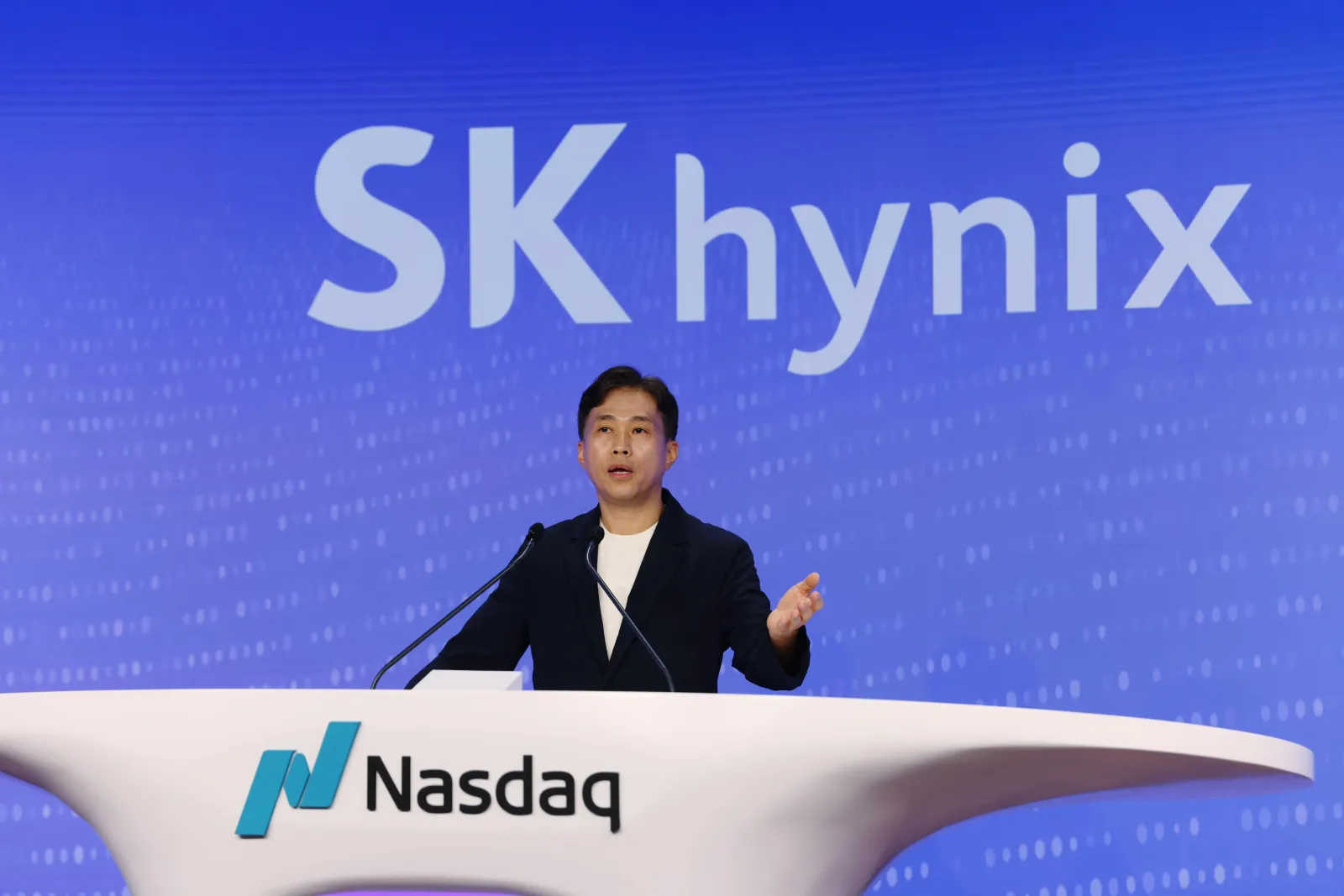
SK Hynix opens at $170, raises $26.5B, and tops foreign IPO records
In Friday's Wall Street debut, SK Hynix turns AI RAM demand into a $26.5B fundraising moment that rewrites comps.