
Ryan Serhant says ChatGPT nearly killed a $50M NYC penthouse deal at the 11th hour
The chatbot told both sides “too much” and “too little.” Here’s the real fix that saved it.
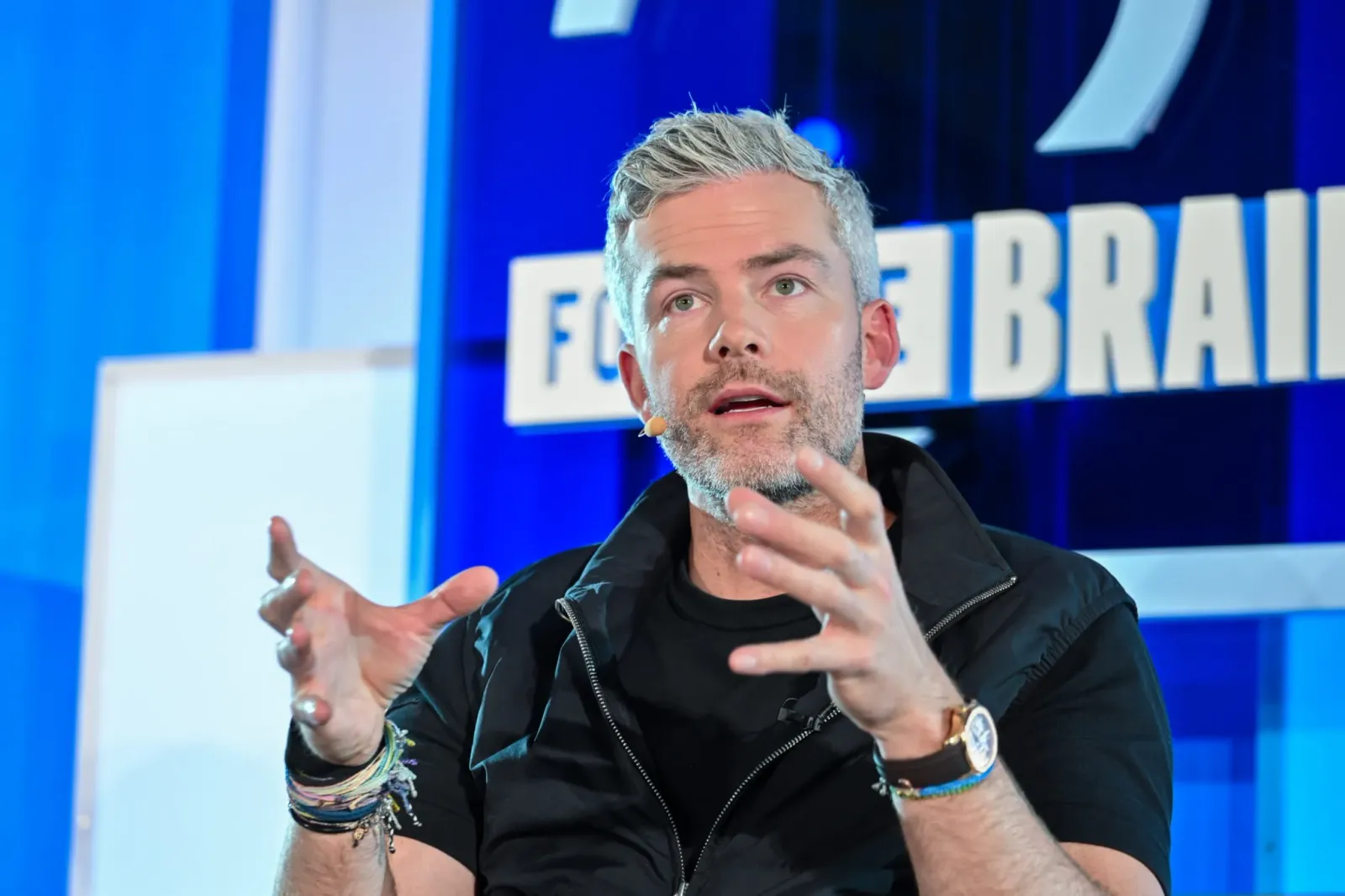
Ryan Serhant, founder and CEO of Serhant brokerage, says a buyer used ChatGPT during a contentious process and nearly walked away from a $50 million NYC penthouse deal. The near-miss is a case study in why high-stakes transactions still need human judgment, not just model confidence.
Ryan Serhant says a ChatGPT prompt nearly killed his $50 million New York City penthouse deal at the 11th hour. At Fortune’s Brainstorm Tech conference, the celebrity real estate agent explained that the sale was already in a “contentious” back-and-forth, with both buyer and seller pushing to win, until the buyer decided to ask a chatbot the simplest valuation question possible: “I’m looking to buy this, is $50 million too much?” The chatbot answered “yes,” and the buyer’s broker called Serhant to pull out of the deal because AI said it “wasn’t worth it.”
That is the part that should make anyone in dealmaking sit up: it was not that the property changed. It was not that the market moved in a way that justified a retreat. It was a model’s one-word style verdict, landing at exactly the wrong moment. Serhant recalled telling the buyer’s broker the decision was “dumb” and “stupid,” saying, “your client's incredibly smart and wealthy, isn't he using the data? He's like, ‘I don't know what to tell you, man. Super intelligence just told him, ‘Don't do this, it's not worth it.’” Then, Serhant had to deliver the bad news and watched the irony unfold when his buyer did what many people do when they feel blindsided: they asked again, but from the opposite angle. The client asked ChatGPT the inverse question, “I have a buyer that no longer wants to spend [$50 million] because you told him not to. Is $50 million too little?” This time, ChatGPT said the opposite, “You know what, you're right, it is.”
So the deal didn’t die because “AI is useless.” It nearly died because AI is confidently ambiguous when the question is ill-defined. Serhant’s point is essentially that valuation for trophy assets can be hard for humans, too. The penthouse deal was “infamously hard to price because it's impossible to find comparisons.” In normal market terms, the pricing challenge is about scarcity and context: micro-location, building details, buyer profile, timing, and deal structure. Large language models can sound persuasive, but they are not built to replicate the messy, proprietary, and sometimes off-market reality that makes a specific transaction make sense.
The fix Serhant described was not “use more AI.” It was old-fashioned research and deal hygiene, specifically “off-market context and data that LLMs can't scrape.” In other words, the resolution was not more prompts. It was the unsexy work of gathering the right information, then translating it into a narrative that both sides can defend. Both clients saw the video Serhant posted about the debacle, which he said racked up 3 million views in about three hours. Serhant said both clients “came back to the table” and the deal got done.
That outcome matters beyond one penthouse, because real estate is already a high-friction, high-judgment market. When information is scarce or hard to price, buyers and sellers lean harder on intermediaries. Serhant’s argument in the same conversation was that AI cannot replace what agents do for wealthier clients: not just data, but decision support, accountability, and the social comfort of being told what to do. He framed it in terms of human psychology: “People hate being sold,” he said, “But they love shopping with friends.” In his telling, agents act less like automated price engines and more like trusted guides through uncertainty.
This is also why he has been publicly debating whether AI amplifies real estate agents or replaces them. The broader industry tension has simmered for a couple of years, and Fortune tied the debate to a March 2024 quote from Andrew C. Spieler, a distinguished professor in business and finance at Hofstra University. Spieler argued that real estate agents are becoming more like travel agents, because information is more readily available than it used to be. Historically, agents were “gatekeepers” of information via MLS access that consumers couldn’t find on their own, so buyers were more dependent on agents to even start house hunting. Spieler’s claim is that as that information becomes easier to access, the intermediary role shrinks.
Agents disagree, and Serhant’s ChatGPT story is a practical, real-time counterexample to the idea that more searchable information automatically lowers the need for expertise. If a chatbot can flip the answer from “too much” to “too little” based on how the question is framed, it highlights a risk that boards and founders in adjacent sectors should recognize: AI can become an un-audited decision input. It can also create false certainty, because the model “knows the history of the internet” but, as Serhant put it, “they don't know the path forward, and they don't know what the internet, and Reddit, and Zillow and Realtor.com does not know.” For executives, that is a governance issue, not just a product issue.
Serhant’s conclusion is that the story should be told “as a win and not as a fail,” because the human response prevented the deal from breaking. But the underlying lesson is sharper: in high-stakes transactions, the failure mode is not whether AI can generate text. It is whether decision-makers treat AI as a final authority instead of a starting point. For anyone building workflows, compliance processes, or advisory services, this is a reminder that in the real world, the “best answer” is the one that survives scrutiny with context, not the one that sounds certain in a single prompt.
This story's Key Insights and Take-aways are locked.
Create a free account to unlock Executive Actions for one credit.
Register to UnlockAlways free for Executives Club members. Join the Club
More in Business

Anthropic's S-1 reveals $80.7B loss as it races OpenAI to IPO
The Claude maker files publicly for a Nasdaq listing under 'ANT,' exposing staggering losses and a world-altering ambition before it can beat OpenAI to the market.

A flaw in PHP just forced governments to pull their own sites offline
European agencies from Belgium to Germany took websites dark to patch a critical weakness in the language behind almost 70% of the web, and the blast radius extends far beyond government portals.

BioWare shuts down, Mass Effect 5 dead after $55B EA buyout
The legendary RPG studio's closure lands months after a $55 billion investment group buyout of EA, raising tough questions for gaming's biggest acquirers.