

S&P 500 pauses after best 3-day run in a year, SpaceX stock targets Amazon-sized gravity
A market cooldown meets a rocket-fueled valuation race, with the Fed as the weather system.

The S&P 500 is pausing after its best 3-day stretch in over a year, even as SpaceX stock continues to climb and eyes a potential pass of Amazon by market cap. For decision-makers, the combination signals shifting risk appetite and a looming rate decision that can quickly reprice both public and private expectations.
Markets are pausing. That is the headline you feel in your portfolio: the S&P 500 has just logged its best 3-day run in over a year, and now the market is taking a breath. The immediate question for investors and executives is simple, and slightly uncomfortable: if momentum just showed up, why are things not accelerating into the next week?
The answer, at least in this moment, is that markets rarely move in straight lines. After a sharp stretch, traders often rebalance, take profits, and wait for the next catalyst. In the same breath, the world is also watching another scoreboard. SpaceX stock is still soaring, and it is increasingly framed as a potential “pass of Amazon by market cap” story. When a private company gets priced in a way that makes public-company giants look vulnerable, it changes how people think about what “leadership” looks like, not just which stock is up.
Zoom out, and you can see why these two narratives matter together. The S&P 500’s recent strength tells you that investors have been willing to buy risk, particularly where earnings trajectories, innovation narratives, and liquidity expectations align. But a cooldown after a best-in-over-a-year run is also a reminder that risk appetite is not a switch you flip once. It is more like a thermostat. It reacts to inflation data, central bank communication, and the cost of money.
That brings in the other character in the title: the Fed looms. Even when markets are running hot, they often treat the Federal Reserve like a stormfront on the horizon. Higher-for-longer rate expectations can compress valuation multiples, especially for companies whose market stories rely on future growth being worth more today. And the reverse is also true. That is why the timing of a Fed-related catalyst can turn a pause into a selloff, or turn profit-taking into a buying opportunity.
Now look at SpaceX through the lens of how capital markets typically behave. SpaceX is not public in the usual way. It has been valued through a mix of fundraising rounds, secondary activity, and the opaque but still consequential mechanics of private market pricing. When media narratives start to quantify its stock as “eyes a pass of Amazon by market cap,” they are effectively translating that private-market pricing into the public-market language most executives already use: market capitalization as a shortcut for “how big is this bet getting?” If SpaceX keeps rising and the gap closes, it pressures public investors to revisit their assumptions about which companies are actually compounding at the fastest rate and how much of that compounding is priced in.
Second-order implications show up in boardrooms first, then in trading dashboards. For executives at large-cap tech and adjacent sectors, a SpaceX momentum story can reinforce two competing instincts. One is to double down on long-cycle innovation because markets are rewarding it, at least for now. The other is to worry that valuations tied to thematic growth can become fragile if the Fed tightens financial conditions or if rate expectations shift faster than revenue growth can. In other words, even if the innovation is real, the discount rate can still swing the outcome.
For decision-makers managing corporate finance, the S&P 500’s pause is a signal about timing. If the market is in “wait and see” mode, it can affect everything from cost of capital to how receptive investors are to new issuance, M&A, or earnings guidance. If you are planning a raise or a deal, you want to understand whether you are walking into a calm window or a volatility pocket. The Fed’s next move can decide that, often with minimal warning.
For investors, the combined story also changes portfolio construction. You might own the S&P 500 for broad exposure to economic momentum, but you also need to respect that pockets of valuation enthusiasm are not uniform. A best-ever 3-day stretch in the S&P 500 does not guarantee the next three days will behave the same way. Meanwhile, a SpaceX valuation run is not just about rockets. It is a proxy for how investors and private-market participants are willing to underwrite disruptive execution and monetize it through valuation.
So where does this leave everyone watching the tape? With two simultaneous lessons. First, markets can sprint and still need a reset, especially when a macro catalyst like the Fed is in the frame. Second, the private-to-public imagination gap is narrowing. When SpaceX stock starts to sound like it is angling for a market cap pass against a titan like Amazon, it is not just an interesting headline. It is a reminder that competitive threat and capital reallocation can come from places the old playbook underestimated. Executives should treat both signals as input into risk, timing, and how confidently they assume today’s pricing is tomorrow’s pricing.
This story's Key Insights and Take-aways are locked.
Create a free account to unlock Executive Actions for one credit.
Register to UnlockAlways free for Executives Club members. Join the Club
More in Business

A flaw in PHP just forced governments to pull their own sites offline
European agencies from Belgium to Germany took websites dark to patch a critical weakness in the language behind almost 70% of the web, and the blast radius extends far beyond government portals.

BioWare shuts down, Mass Effect 5 dead after $55B EA buyout
The legendary RPG studio's closure lands months after a $55 billion investment group buyout of EA, raising tough questions for gaming's biggest acquirers.
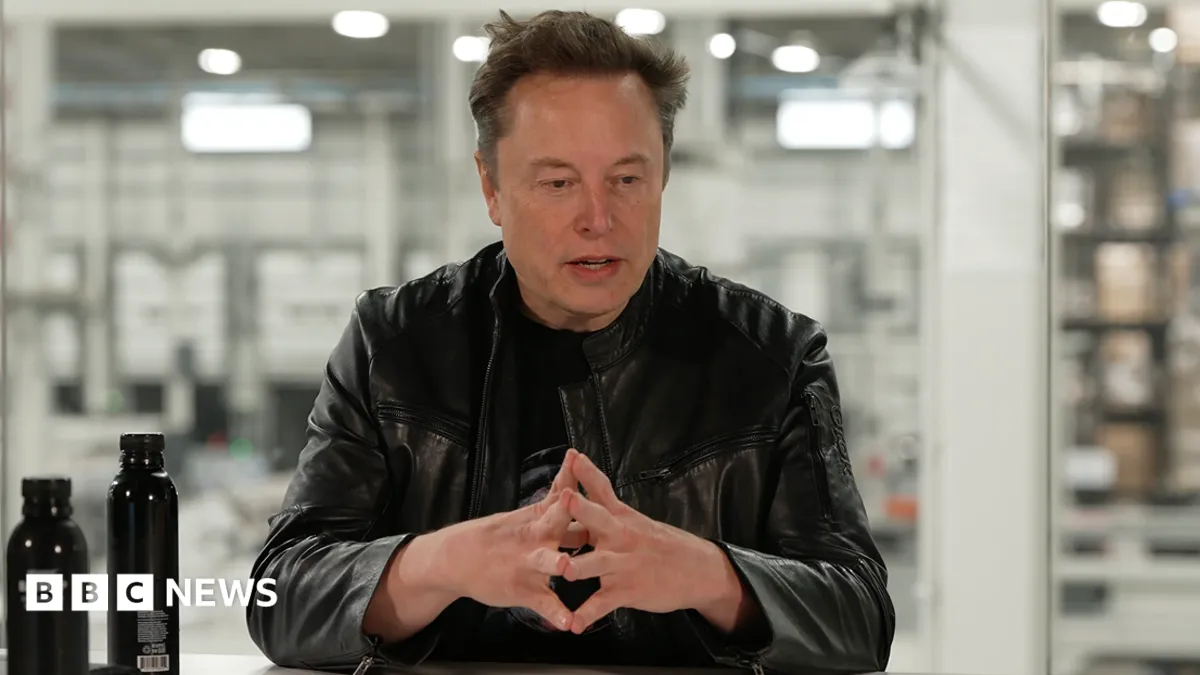
Musk weighs Tesla-SpaceX mega-merger as boards form review panels
Special committees at both companies will examine a tie-up that could fuse electric vehicles and space launch, forcing a fresh look at governance and valuation.