

Sam Altman floated 5% equity to a U.S. sovereign wealth fund
What it signals about OpenAI's ownership strategy, and why regulators will care.
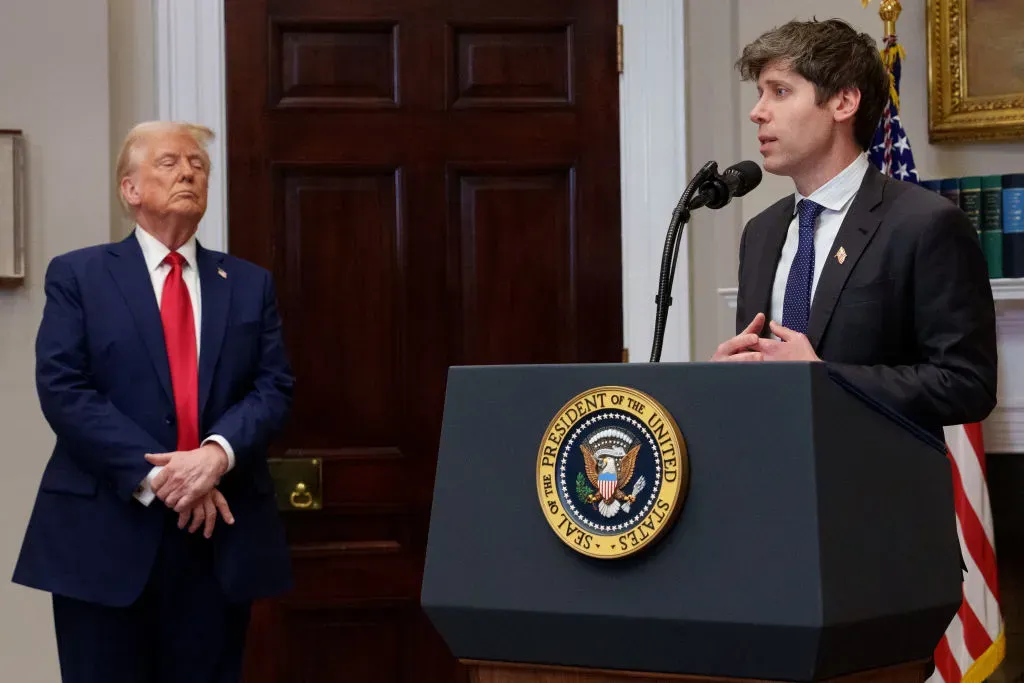
OpenAI CEO Sam Altman reportedly proposed donating 5% of the company’s equity to a U.S. sovereign wealth fund. For decision-makers, it revives the debate over whether the public should share in the upside from the AI boom.
OpenAI CEO Sam Altman has reportedly proposed a bold twist on how the AI windfall could be shared: giving 5% of the company’s equity to a U.S. sovereign wealth fund. In plain terms, the idea is that part of OpenAI’s future financial upside would flow through a public-state vehicle rather than sitting entirely in private hands.
That 5% number matters because equity is not pocket change. It is the lever that determines who benefits when a company scales, monetizes, and eventually exits or restructures. So even though the report frames it as a proposal, the signal is bigger than charity. It is about structuring incentives and ownership expectations as the AI industry continues to transform the economy, capture venture and enterprise capital, and draw scrutiny from policymakers.
To understand why this is landing with real weight, you have to remember how AI value is typically built and bottled. The modern AI boom has been financed by private investors, governed by boards, and rewarded through equity stakes. When those stakes concentrate wealth fast, the political question tends to arrive quickly: who gets the upside, and should society participate when the technology becomes foundational?
Sovereign wealth funds are one of the most direct answers to that question. They are state-linked investment vehicles designed to manage and invest public resources. The reported discussion revives an idea that has circulated more broadly in debates about public participation in tech gains: instead of treating the AI boom as purely private entrepreneurship, some argue that a portion of long-run benefits should return to the public via state investment structures.
This proposal also lands at an awkward time for OpenAI’s internal decision-making. The company operates in a landscape where governance and mission alignment are not abstract issues. The AI sector’s trajectory has made regulators, lawmakers, and the public increasingly sensitive to concentration of power and the incentives of the entities building frontier models. In that environment, any equity-related move is likely to be read as a governance statement as much as a financial one.
There is also the incentive math. Boards and founders have to balance near-term funding needs with long-term stability and credibility. If 5% of equity is carved out for a sovereign wealth fund, it changes the cap table dynamics and could influence how future investors view the company’s path. Even if the proposal does not immediately become reality, it can affect negotiation posture in fundraising, partner talks, and any eventual restructuring conversations that private companies in hot sectors often face.
For policymakers, the appeal is obvious: a sovereign wealth fund is a way to ensure gains from AI do not entirely sidestep the public interest. For critics, the concern is also predictable: using state-linked vehicles can raise questions about political influence, investment priorities, and how effectively those funds can operate at the speed required by fast-moving tech markets. That tension is why this kind of proposal tends to go beyond economics and become a referendum on the relationship between private innovation and public benefit.
Even the fact that this is described as reviving discussions is telling. It suggests the idea is not brand-new, but that the timing and credibility have shifted. As AI investment flows keep accelerating and the consequences of model deployment become more visible, more stakeholders want a seat at the table where economic upside and risk governance are decided.
For executives at other frontier AI firms, the second-order implications are straightforward: ownership structures are now part of competitive strategy. If OpenAI is willing to float a public-state equity-sharing concept, peers will have to think harder about how their boards communicate fairness, how they anticipate regulatory narratives, and how they align investor expectations with long-term legitimacy.
In short, Altman’s reported 5% equity proposal to a U.S. sovereign wealth fund is not just an ownership tweak. It is a signal about where AI value could go next, and it pulls the public, regulators, and capital markets back into the same room.
This story's Key Insights and Take-aways are locked.
Create a free account to unlock Executive Actions for one credit.
Register to UnlockAlways free for Executives Club members. Join the Club
More in Business

Comcast shares jump 25% as it plans to split NBCUniversal and Sky
The tax-free spin-off could reshape focus, funding, and competition across media and tech for years.

Bungie cuts most Destiny 2 staff as Sony says Marathon still matters
Herman Hulst confirms layoffs affecting most Destiny and some Marathon teams after Bungie admits Destiny fell short.

SK Hynix jumps 11% after seeking up to $29.4B in Nasdaq listing
The chip giant filed for a Nasdaq listing plan that could raise $29.4 billion, instantly reshaping investor expectations.