
Satellite mapping shows Venezuela’s twin quakes shifted Earth’s crust far more than expected
New imagery quantifies terrain changes after the twin earthquakes, reshaping how scientists and risk managers think about the ground.
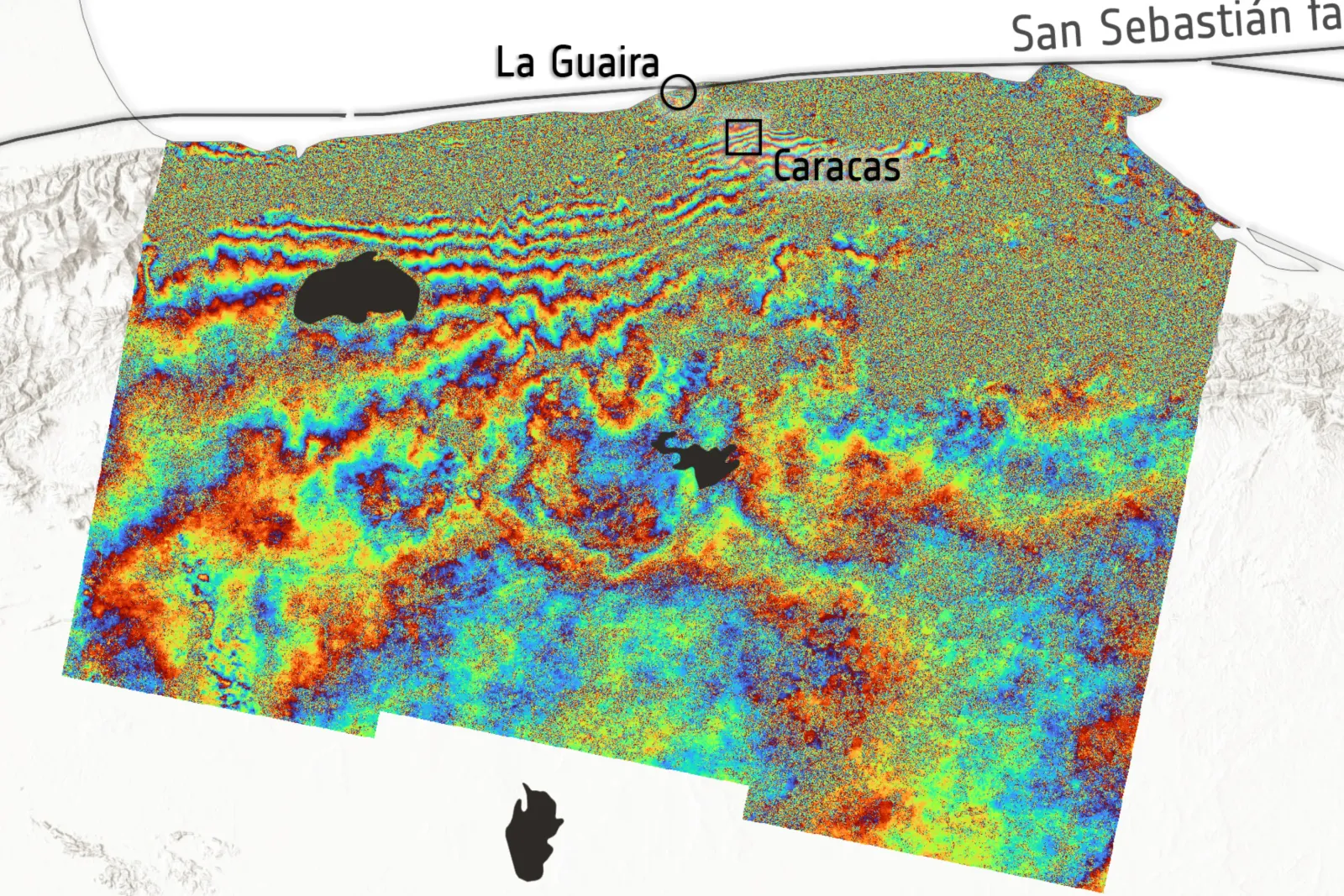
WIRED reports that new satellite imagery reveals how much terrain shifted after Venezuela’s twin earthquakes. For decision-makers, the scale and pattern of displacement changes the inputs behind hazard models, infrastructure risk, and planning assumptions.
Venezuela’s twin earthquakes did more than rattle buildings. New satellite imagery, reported by WIRED, shows just how much the terrain shifted in the aftermath, directly visible from space.
That matters because ground movement is not just an event recap. It is a measurable physical outcome that feeds every later decision about where people build, how utilities route, and how insurers and regulators price risk. The imagery WIRED highlights turns a headline aftershock story into hard numbers about crustal change, showing that the Earth’s surface can be reshaped in ways that are easier to miss at ground level than from orbit.
To understand why this satellite view is such a big deal for executives, start with how risk is managed. Most organizations do not wait for a next disaster to design smarter systems. They use hazard models, historical rupture assumptions, and prior geologic understanding to forecast what could happen and where. Those models are only as good as the underlying assumptions about displacement patterns, fault behavior, and how strongly the crust moves during an earthquake sequence.
When new satellite mapping reveals that terrain has shifted more than previously understood, it has a cascading effect on second-order work. Geospatial teams update baseline maps. Engineering teams revisit site conditions and slope stability assumptions. Asset owners re-check the alignment and resilience of roads, pipelines, transmission lines, and other linear infrastructure that can be sensitive to subtle but cumulative ground deformation. Even when the immediate earthquake damage is already documented, the ongoing implications for maintenance, inspection frequency, and remediation priorities can change.
There is also a regulatory and compliance layer, especially where seismic risk informs building codes, land-use planning, and environmental permitting. Regulators typically do not rewrite standards overnight. But new evidence from credible measurement sources, like satellite observation, can eventually pressure agencies to revise hazard maps and guidance, which then filters down into permitting requirements and engineering design envelopes. In other words, satellites do not just improve science. They create new friction in the system, forcing everyone who relies on “known” ground behavior to revalidate those inputs.
In Venezuela specifically, where tectonic activity and seismic history have long shaped the operating environment, the practical question for decision-makers is simple: how do you quantify the risk you are carrying? Twin quakes raise the stakes because they can imply complex fault interactions, uneven displacement, and multiple waves of damage or structural stress. If one quake shifts terrain in one pattern and a second follows with another, then a “single-event” mental model can underfit the reality. Satellite imagery helps expose what the surface actually did, which is critical for both short-term response and long-term risk governance.
For boards and executives overseeing capital-intensive portfolios, the business impact often shows up later, not immediately. Updated displacement patterns can affect the perceived reliability of risk scores. That can influence underwriting approaches, reserve calculations, and how aggressively companies fund retrofits or replacements. It can also change how stakeholders interpret due diligence for new projects. When the ground has proven it can move more than expected, the cost of being wrong rises, and the cost of waiting for consensus also rises.
There is another incentive angle here: information asymmetry. Ground surveys, eyewitness damage reports, and engineering inspections are essential, but they are constrained by access, speed, and coverage. Satellite mapping, by contrast, can observe broad regions, capturing a more complete displacement picture even when local conditions complicate fieldwork. That shifts the informational advantage toward those who can integrate geospatial updates quickly, using them to recalibrate decisions faster than competitors who remain stuck in earlier assumptions.
The WIRED reporting on how the twin earthquakes reshaped the Earth’s crust is a reminder that “what happened” is not a closed chapter. It is a new dataset, visible from above, that can reshape everything from hazard maps to capital planning. For leaders in geospatial-heavy, infrastructure-heavy, or risk-regulated industries, the strategic stake is clear: the Earth does not just break. It reveals. And when it reveals new displacement, the models used to govern the next decade of decisions must evolve accordingly.
This story's Key Insights and Take-aways are locked.
Create a free account to unlock Executive Actions for one credit.
Register to UnlockAlways free for Executives Club members. Join the Club
More in Technology

Nvidia's $89B data center quarter: the 9 companies cashing in
The AI buildout is minting fortunes beyond GPUs, and memory, cloud, and cooling suppliers are riding the same wave.

Google quietly links your phone number to every Android account on your SIM
Adding a SIM now ties your phone number to all Google accounts - and future accounts inherit it. Here's the security and privacy stakes.

Hijacker AI 'Skynet mode' runs 100,000 attack steps against exposed models
Symantec caught a criminal AI agent that borrows other models, steals data, and mines crypto; the only relief is no confirmed victims yet.