
Saudi Arabia must beat Cape Verde to keep World Cup 2026 alive
Green Falcons enter the final Group H match with 1 point, needing a win plus help from Spain-Uruguay.
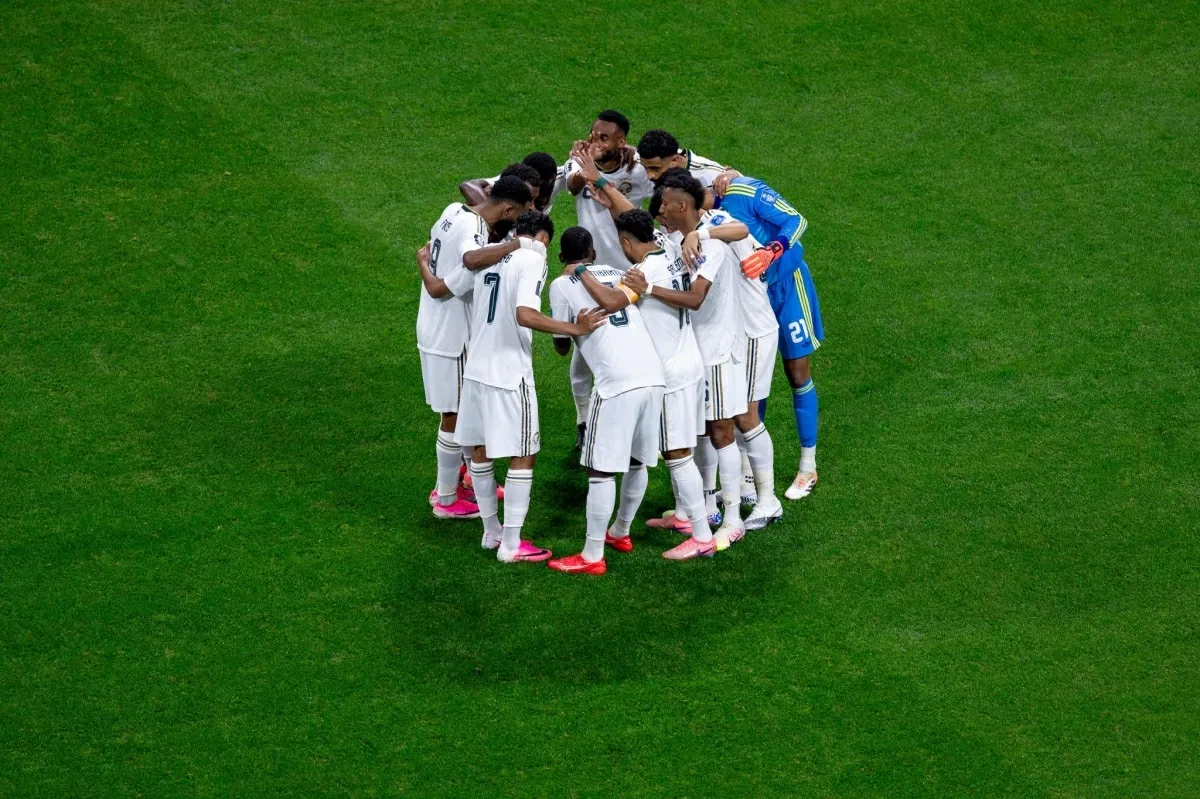
Saudi Arabia, coached by Georgios Donis, plays Cape Verde early Saturday in a decisive Group H match at Houston, with one point after draws and losses. For decision-makers, the scenario is a real-time test of performance under pressure, with qualification math hinging on other results.
HOUSTON - Saudi Arabia takes on Cape Verde early Saturday in a must-win Group H clash, because victory is the difference between staying in the World Cup 2026 conversation and watching it end. The Green Falcons enter their final group-stage match with one point, after drawing 1-1 with Uruguay and losing 4-0 to Spain. A win would keep them firmly in contention for qualification to the round of 32, and their final group position will depend on the outcome of the other Group H match between Spain and Uruguay.
The qualification math is the story inside the story. Group H is wide open: Spain leads with four points, while Uruguay and Cape Verde each have two points and Saudi Arabia has one, meaning all four teams still have a path forward. Saudi Arabia also remains in the race to qualify as one of the tournament's best third-placed teams, so this match is not just about pride. It is about building a results profile that can survive a complicated bracket scramble.
For executives and operators who live in risk scenarios, this is an unusually clean version of the “control what you can” problem. Donis and his squad can control one thing: how they perform against Cape Verde. They cannot control whether Spain and Uruguay trade points, or how other groups evolve. Still, the coaching message is clear. Donis framed the week after the Spain match as a reset aimed at restoring confidence, responsibility, and mental stability. Saudi Arabia completed its preparations on Thursday in Houston, with a final training session at Houston Dynamo's training ground. The session included warm-ups, possession drills, a half-pitch practice match, and set-piece work.
The human and institutional layer matters too. Minister of Sport Prince Abdulaziz bin Turki Al Faisal attended the team's final training session and met with the players ahead of the decisive encounter. Meanwhile, goalkeeper Abdulrahman Al Sanbi continued his rehabilitation program under the supervision of the national team's medical staff. In business terms, think of it as a reminder that performance is never just tactics. It is also staffing, health, and continuity, especially under time pressure.
On the field, Saudi Arabia's record in this group creates a specific problem to solve. The team opened its campaign with an impressive 1-1 draw against Uruguay, highlighted by a disciplined defensive performance and goalkeeper Mohammed Al Owais. Then came the second match against Spain, where Saudi Arabia conceded four goals, with defensive mistakes proving costly. Donis did not pretend the Spain game was a close-run thing; he acknowledged that what was missing was courage. His response for Cape Verde is a plan designed to manage risk, not gamble blindly.
Donis said Saudi Arabia wants to control the game, take calculated risks, and attack with confidence while remaining organized. He also insisted they would not abandon their tactical identity, noting that they have used the same system in four of their last five matches, which reflects his philosophy. That emphasis on consistency is important because Group H is a pressure cooker. When qualification depends on both your own result and another match’s outcome, teams often either tighten into predictability or chase chaos. Donis is signaling a third option: stable structure with purposeful aggression.
Cape Verde, making its World Cup debut, adds another layer of uncertainty. Donis called them one of the biggest surprises of the tournament, describing them as well organized, physically strong, and impressed him with their defensive structure against Spain and Uruguay. He also said they are dangerous on the counterattack. In other words, the match is unlikely to be a simple “favorite vs. underdog” script. Saudi Arabia has to expect resistance that is organized, not random.
Donis also directly addressed the psychological dimension. He dismissed suggestions that the pressure around the match would affect his players, arguing that there are matches where you do not need to mentally motivate players because they already understand the importance of the occasion. His job as a coach, he said, is to provide stability and confidence, and to have the team play with personality rather than fear.
Finally, there is the broader strategic stake for everyone watching Saudi Arabia: the 2026 tournament does not just reward best teams, it rewards teams that can navigate volatility. Saudi Arabia has not reached the knockout stage since its memorable run to the round of 16 at the 1994 World Cup in the United States, which remains the nation's best-ever performance on football's biggest stage. Getting back would not only change the narrative for the Green Falcons, it would recalibrate expectations for the program going forward.
In a Group H where all four teams still have a chance, one match can rewrite the entire decision tree. For peers managing high-stakes projects or boards monitoring performance under public pressure, the parallels are obvious: execute with structure, protect confidence after failure, and understand that progress sometimes means winning today while keeping an eye on outcomes you cannot directly control. Saudi Arabia's test begins in Houston, with Cape Verde the opponent and the clock already ticking.
This story's Key Insights and Take-aways are locked.
Create a free account to unlock Executive Actions for one credit.
Register to UnlockAlways free for Executives Club members. Join the Club
More in Entertainment

Russell Brand's accuser 'bewildered and confused' as he denies 7 sex charges
The criminal case against the comedian is a live test of how media companies manage talent risk when serious allegations go public.

'It's a Magic Trick': Ballet Experts Say Rosalía's SNL Pose Is Impossible
Three ballet experts tell Rolling Stone Rosalía's gravity-defying SNL stillness shouldn't be possible - and why the debate is now part of the show.

Activision CMO: GTA 6 Will Boost Call of Duty, Not Bury It
Activision's top marketer says Rockstar's blockbuster will drive players back to consoles and into Modern Warfare 4, even as the company admits its recent strategy failed.