
Science analysis traces St. Helena’s liberated Africans to West Central Africa childhoods
Strontium isotopes and teeth DNA show where at least 150 children lived before the Royal Navy freed them.
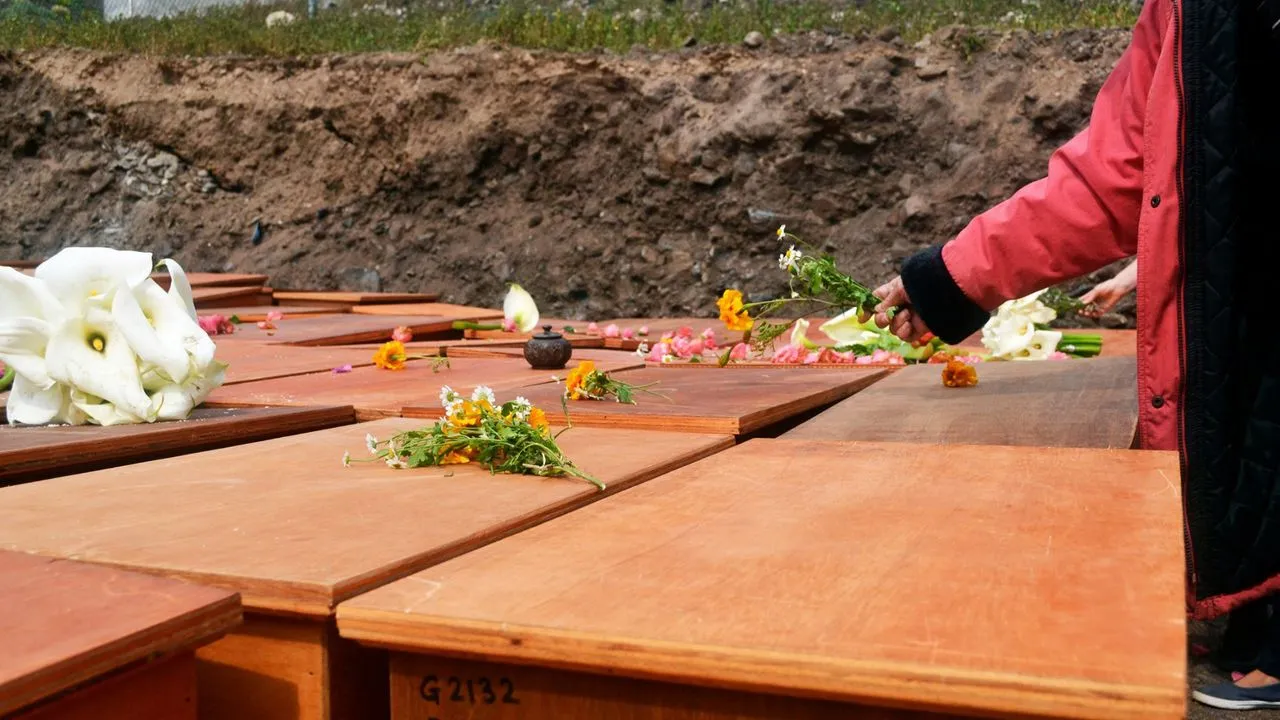
A new study in Science used chemical and dental analysis of 152 individuals from St. Helena to reconstruct where more than 150 liberated Africans spent childhoods in Africa. The findings quantify tragic early-life forced displacement tied to slavery and how little origin data exists compared with voyage records.
Thousands of liberated Africans were buried on St. Helena after the British Empire outlawed slave trading in 1807, but for centuries no one knew their childhood starting points. A new chemical analysis, published Thursday (July 16) in the journal Science, now identifies those origins for more than 150 people by reading the signature left in their teeth.
The study found that about 27,000 liberated slaves ended up on St. Helena after the Royal Navy enforced the ban on slave trading. Roughly 8,000 of those newly liberated people, described as malnourished and in poor health, died not long after landing. Archaeologists had already dug up the buried skeletons during an airport construction project carried out in 2007 and 2008, but this new analysis is what turns anonymous graves into geographic life histories.
Here is how teeth become maps. When a person’s teeth grow during childhood, strontium isotopes from the food and water a child consumes are incorporated into tooth enamel. Because strontium isotope ratios vary based on local geology, measuring those ratios in enamel can indicate where someone lived as a child. Researchers studied the teeth of 152 individuals, using strontium isotope ratios to determine origins. The headline result: many of the liberated slaves likely lived near the coast of West Africa, while others came from farther inland.
The team’s interpretation is blunt about what the data suggests. The study wrote that “most individuals likely came from coastal or near-coastal regions in western Central Africa,” and that “others appear to have originated much farther inland,” implying forced displacement over hundreds to thousands of kilometers before embarkation. One specific case illustrates the method’s power and the cruelty of the timeline: a man who died between ages 19 and 25 had been moved from inland Angola to the coast as a child between ages 7 and 9. Scientists detected this by comparing isotope signatures of his teeth that formed around age 7 versus around age 9. The researchers added in their paper that he may have been trafficked as a slave when he was between those ages.
That “between-ages” detail matters because it connects geography to a window of vulnerability. Study co-author Hannes Schroeder, an associate professor of molecular ecology and evolution at the Globe Institute at the University of Copenhagen, told Live Science by email that “possible” displacement during childhood could be connected with enslavement. He also noted an uncomfortable limit: “Unfortunately, we don’t know much else about this individual,” Schroeder said. In addition to the man’s story, the analysis found evidence that at least 10 of the liberated slaves had been transported as children or early adolescents, reinforcing the pattern that early movement was not an exception but part of the system.
To check the geography against other evidence, the team also used historical records and DNA analyses of 20 individuals. The DNA results “revealed affinities with present-day populations from Gabon and northern Angola, while also showing considerable diversity,” the team wrote. The study also said the DNA findings align with eyewitness accounts by Royal Navy personnel on the island, which reported multiple languages among the captives, including Congo and Benguela dialects, and match historical records from Angola, Cuba, and Brazil. For decision-makers who think in evidence pipelines, the approach is the takeaway: isotope data offers place during childhood, DNA and records add population context, and historical testimony bridges what physical remains alone cannot say.
Why should anyone outside a history lab care? Because the study highlights a recurring problem in regulated systems that run on paperwork: voyage logistics are often recorded better than human origin and lived experience. Steven Micheletti, a geneticist who studied the trans-Atlantic slave trade but was not involved, told Live Science that this work is impactful because it investigates slavery instances where “knowledge of individuals’ ancestors and descendants have been erased from history.” David Head, a historian at the University of Central Florida who also was not involved, praised the study for tackling what slave trader records do not answer: where people originated from and how they got to ports. He said, “We know a lot about the embarkation/disembarkation of enslaved people, thanks to slave traders keeping records of their business but less about where people originate from and how they got to the ports.”
For context, this kind of technique has limits that matter for the ethics and the conclusions. Alex Bentley, an anthropology professor at the University of Tennessee who wrote an article discussing the study in the journal, told Live Science in an email that strontium isotope ratios reflect local geology, but “they record a biologically available mixture of foods and water consumed while the tooth was forming during childhood,” so it is “rarely a unique geographic fingerprint.” Still, even with imperfect precision, the combined method can reveal patterns of coast versus inland origins, and the study’s results suggest the enslaved and liberated did not simply come from a single rural hinterland. They came from multiple places, including inland areas that required forced movement long before embarkation.
Finally, the remains were reburied in 2022 on St. Helena. The scientists and St. Helena community explored repatriation to African countries where the people came from, but no agreements were reached. The team noted in their paper that in some cases it would have been difficult to determine which country to return them to. That is not a footnote. It is the second-order implication of better forensics: improved evidence can intensify the ethical burden to act carefully, because once you know more, you also have more responsibility to get it right.
In the end, the study turns a forgotten burial site into a quantified map of disrupted childhoods. The numbers are stark: more than 27,000 ended up on St. Helena after 1807, about 8,000 died soon after landing, and at least 150 individuals now have evidence-based childhood origin regions. For modern leaders, the lesson is not just historical. It is about what remains legible when paperwork exists, what evidence is missing, and how technology can fill that gap while still refusing to hand over certainty too cheaply.
This story's Key Insights and Take-aways are locked.
Create a free account to unlock Executive Actions for one credit.
Register to UnlockAlways free for Executives Club members. Join the Club
More in Science

Alaska's 1,580-foot tsunami had warning signs. Scientists just found them.
Rapid glacier retreat, heavy rainfall, and thousands of tiny tremors preceded Alaska's 1,580-foot tsunami, a warning for every coastal community in a warming world.

The rare mutation that lets high-risk brains dodge Alzheimer's
Scientists found a natural defense against protein buildup, opening a new path to preventive treatments.

3,000 steps a day may halve Alzheimer's decline, study finds
New research links a modest daily walk to less tau buildup and nearly half the cognitive and functional decline, even for those with early signs.