
Scientists directly observe seafloor spreading in action for the first time
A process tectonics researchers know but could not watch is now documented, changing what future models can claim.
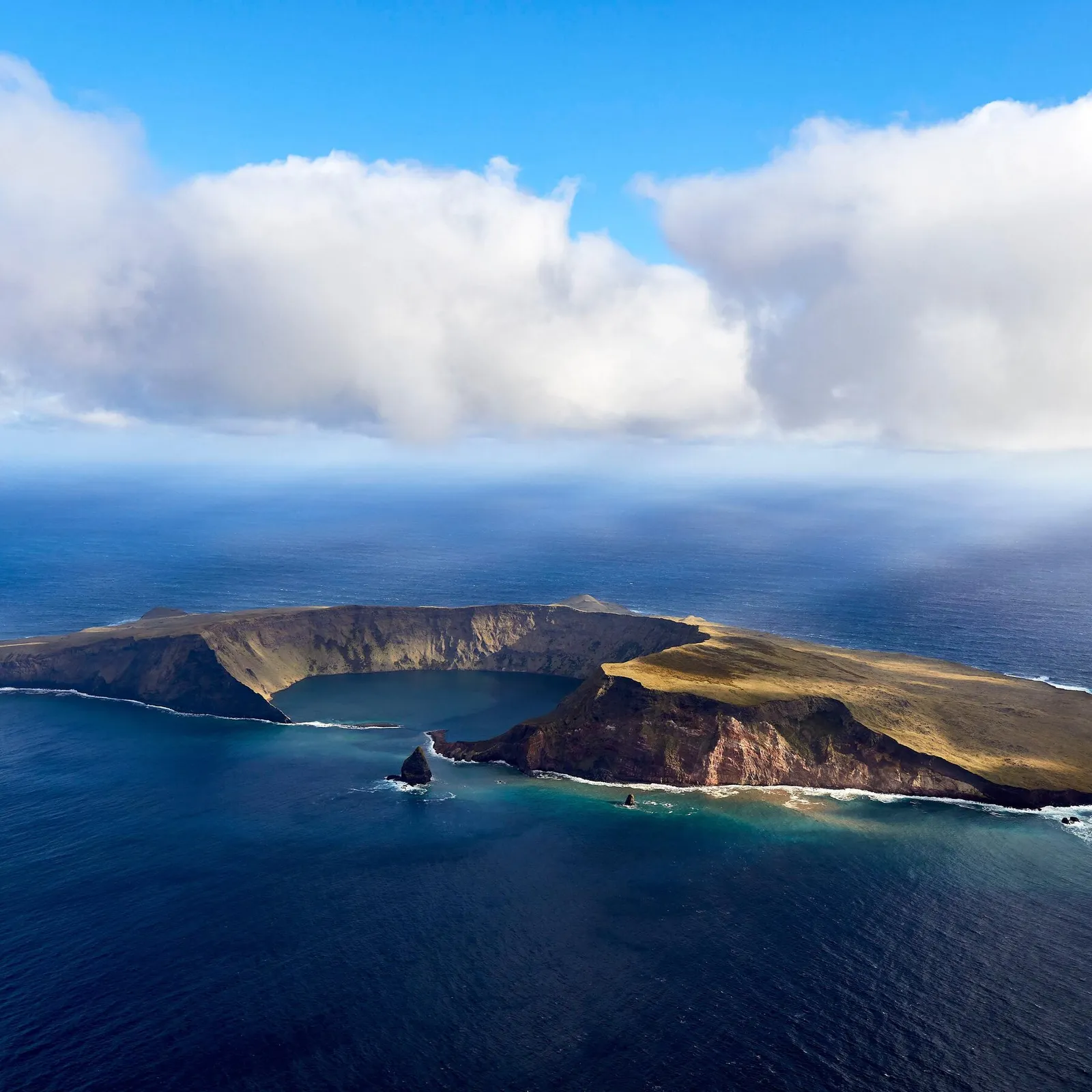
Scientists have documented for the first time how the ocean floor spreads as tectonic plates spread apart. For decision-makers, the breakthrough tightens the evidence behind models that guide everything from hazard planning to long-term risk estimates.
The spread of the ocean floor, driven by tectonic plates pulling apart, is a basic idea in geology. It is also famously hard to observe directly in real time. That is why today’s development matters: scientists have now documented the process in action for the first time.
In other words, the mechanism is no longer just something we infer from distant clues and long time scales. Researchers have now recorded the ocean floor spreading as plates move apart, turning a known concept into directly observed evidence. For anyone who has ever tried to convince a board, a regulator, or a skeptical technical team that “the model is right,” this is the clean kind of proof that reduces argument and increases confidence.
To understand why this is such a big deal, you have to remember how ocean-floor science typically works. The seafloor is not like a lab bench where you can watch a process under lights. It sits under kilometers of water, changes over time, and only rarely gives scientists a “window” into what is happening at the moment it is happening. Historically, much of what scientists know comes from indirect signatures: measurements taken at different times and locations, samples collected from the seafloor, and patterns inferred from plate geometry and rock records. Those approaches are powerful, but they also leave room for debate because they are reconstructive rather than directly cinematic.
So when a process that is “known but hard to observe” becomes directly documented, it upgrades the entire information stack. Models move from “best available explanation” toward something more like “watched happen.” That shift can sound academic, but second-order effects tend to show up where decisions get made. Hazard planning, coastal infrastructure underwriting, insurance risk frameworks, and long-horizon environmental assessments all rely on assumptions about how Earth systems behave. Even when those decisions are about humans, not rocks, the underlying confidence comes from how well the evidence maps to the mechanisms.
There is also an institutional angle here. Geoscience is the kind of field where timelines matter and scrutiny is constant. Regulatory processes and public-sector planning often require that claims be supported, repeatable, and based on evidence that survives pushback. Direct observation can help tighten the story when agencies and stakeholders ask, “How do you know this mechanism works, not just that it likely did in the past?” That question shows up in different disguises across government and industry, whether the topic is environmental permitting, offshore development planning, or safety and resilience requirements.
The capital markets angle is quieter but real too. Many risk models are only as good as the causal confidence behind them. When a model’s foundation is indirect, uncertainty persists and costs get priced in: more contingency, more sensitivity analysis, more caution. When the evidence becomes directly observed, uncertainty can shrink. That does not magically eliminate risk. The Earth still does what the Earth does. But executives who manage risk portfolios, long-duration assets, or compliance costs should care when the evidence base becomes sharper, because sharper evidence can translate into better quantification.
For boards and senior leaders in adjacent domains, the lesson is not “buy geology.” It is that evidence upgrades cascade. When scientists can document a hard-to-see process in action, it can change how downstream teams validate assumptions. In a world where teams often inherit models from prior studies, the first direct observation can become the new anchor. And once that anchor moves, people who rely on the old anchors have to update.
Bottom line: scientists have documented the spread of the ocean floor as tectonic plates spread apart for the first time. It is a deceptively simple headline with a consequential implication. The more directly we can observe Earth’s mechanics, the more we can replace inference with evidence, reduce disagreement, and improve the confidence behind models that inform real-world decisions.
This story's Key Insights and Take-aways are locked.
Create a free account to unlock Executive Actions for one credit.
Register to UnlockAlways free for Executives Club members. Join the Club
More in Science

Alaska's 1,580-foot tsunami had warning signs. Scientists just found them.
Rapid glacier retreat, heavy rainfall, and thousands of tiny tremors preceded Alaska's 1,580-foot tsunami, a warning for every coastal community in a warming world.

The rare mutation that lets high-risk brains dodge Alzheimer's
Scientists found a natural defense against protein buildup, opening a new path to preventive treatments.

3,000 steps a day may halve Alzheimer's decline, study finds
New research links a modest daily walk to less tau buildup and nearly half the cognitive and functional decline, even for those with early signs.