
Scientists find new monkey species with orange lips hiding in DR Congo forest
A face few knew existed is now documented, raising new questions about biodiversity, research priorities, and conservation funding.
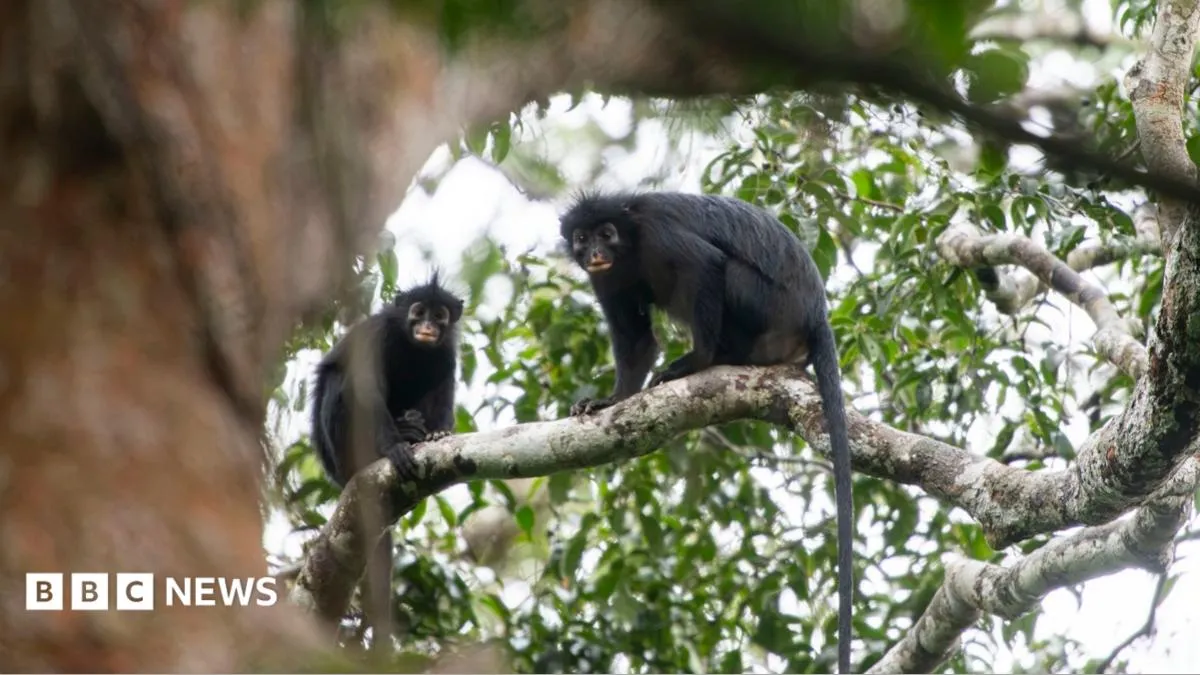
Scientists have described a new monkey species with orange lips that they say was likely hiding in a forest in the Democratic Republic of Congo. For decision-makers, the discovery highlights how much unknown biodiversity can exist and how that uncertainty should shape conservation and research spending.
In a rare wildlife win that feels like a plot twist, scientists have identified a new monkey species with orange lips in the Democratic Republic of Congo. The BBC reports this animal was “hiding” in the forest, meaning so few people knew it existed that even its most visible feature, its orange lips, stayed off the radar.
What makes the discovery matter is not just the novelty of a new species name. It is the implication that the region can still conceal distinct species that never made it into the baseline inventories used by researchers, conservationists, and funders. When scientists find a new primate like this, it is a reminder that “we have mapped the biodiversity here” is often less true than it sounds.
For executives and investors watching the nature and climate space, biodiversity is increasingly treated like infrastructure: you cannot manage what you cannot measure. The Congo Basin is a place where measurement is hard, field time is expensive, and access can be constrained. So discoveries like this are second-order signals. They suggest there is still biological upside, but also that there is still ecological risk. If species can remain undocumented, then habitat degradation can proceed without the full understanding of what is being lost.
The BBC piece also frames the research experience as an “amazing feeling” to look into the face of an animal that so few people knew existed. That human reaction is not fluff. It tells you why conservation science can move slower than politics. Field biologists typically do not set out to make headlines. They spend long stretches searching, comparing, and describing what they find, because accurate documentation takes care. In practice, this kind of work supports downstream decisions: whether an area gets prioritized, whether a conservation plan is written with enough specificity, and whether research funding is allocated to regions and species with clear data gaps.
There is also a governance angle. Democratic Republic of Congo conservation efforts often sit at the intersection of scientific exploration, land use pressures, and legal frameworks that can vary by region. New species discoveries can complicate land and resource planning, because they raise the bar for what “protected” means. If a species is newly described, regulators and conservation agencies may need to revisit assumptions about where it lives, what habitat it depends on, and what threats could be most urgent. That can mean additional surveys, updated maps, and more detailed monitoring.
None of that happens instantly. Scientific descriptions require specimens or observations that meet standards, and follow-up studies usually need time to establish population size, distribution, and behavior. From a board perspective, this creates a familiar reality: the discovery is real now, but the operational implications for protection can take months or years to fully translate into policy and on-the-ground programs. The smart move for decision-makers is to treat this as a signal of uncertainty, not a reason to freeze action.
There is a broader market and capital allocation implication too. In recent years, more capital has flowed toward conservation and sustainability initiatives, including those tied to carbon, land stewardship, and biodiversity outcomes. But biodiversity is not a checkbox. If scientists are still finding previously unknown primates, the diligence question becomes sharper: are projects based on robust ecological baselines, or on assumptions that could shift with the next field survey? New species findings can change how boards evaluate risk, additionality, and the strength of monitoring and reporting frameworks.
So for leaders in conservation NGOs, impact funds, insurers, and corporate sustainability teams, the real takeaway is about responsiveness. The world is still capable of delivering scientific surprises from under-studied forests. When those surprises are as vivid as orange lips on a new monkey species, it is a reminder to build programs that can adapt as data improves. The Congo forest did not just hide an animal. It highlighted the cost of missing data, and it raises the strategic stakes for anyone allocating money, policy attention, or credibility to biodiversity protection.
This story's Key Insights and Take-aways are locked.
Create a free account to unlock Executive Actions for one credit.
Register to UnlockAlways free for Executives Club members. Join the Club
More in Science

Alaska's 1,580-foot tsunami had warning signs. Scientists just found them.
Rapid glacier retreat, heavy rainfall, and thousands of tiny tremors preceded Alaska's 1,580-foot tsunami, a warning for every coastal community in a warming world.

The rare mutation that lets high-risk brains dodge Alzheimer's
Scientists found a natural defense against protein buildup, opening a new path to preventive treatments.

3,000 steps a day may halve Alzheimer's decline, study finds
New research links a modest daily walk to less tau buildup and nearly half the cognitive and functional decline, even for those with early signs.