
Scientists hunt cooling beyond air conditioning as heat rises, after Nature’s warning
Nature frames why current building cooling tools strain, and what materials innovation could change for regulators and boards.
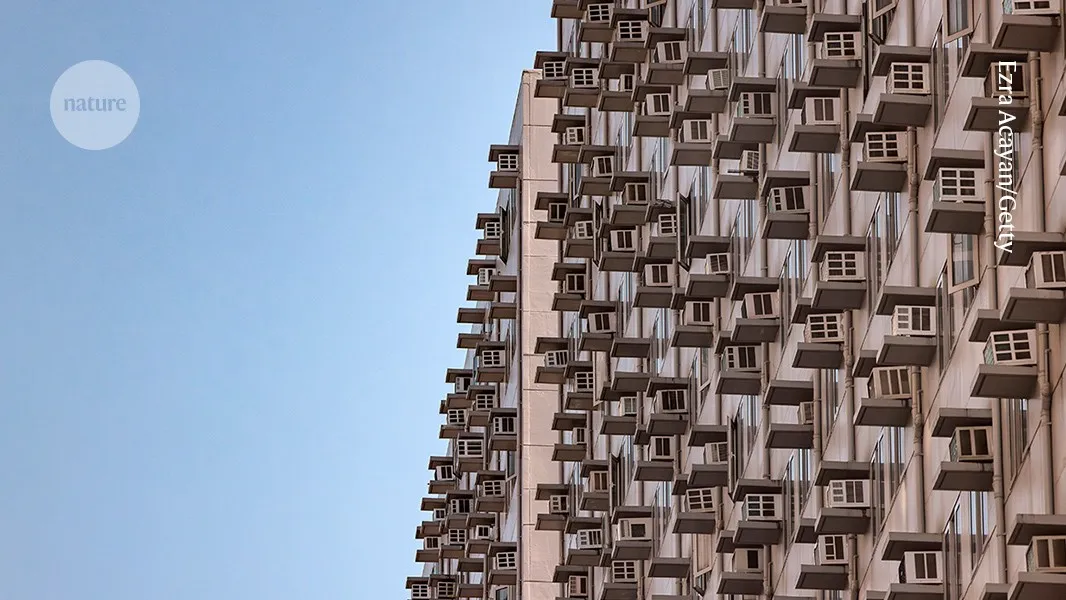
Nature highlights that air conditioning is not enough to keep people cool as temperatures rise, and points to advances in materials as a path toward better building cooling. For decision-makers, the piece signals a shift in how cooling risk, infrastructure needs, and standards may be written.
Nature’s July 22, 2026 report puts a blunt line in the sand: air conditioning is not enough to keep people cool as temperatures rise. The article, published online with DOI 10.1038/d41586-026-02273-2, frames an urgent materials question for the built environment: if the air gets hotter, how do buildings remove heat without leaning on the same electricity-heavy playbook everyone already uses?
That first point matters because “cooling” is not just comfort anymore. It is grid load, energy cost exposure, public health risk, and regulatory attention, all stacked together. The Nature brief says advances in materials now allow buildings to be cooled as temperatures rise, which is essentially a bet on a different mechanism than classic air conditioning alone. Instead of treating the problem purely as an equipment upgrade, the materials angle suggests buildings could become more effective at resisting heat gain or shedding heat, making the cooling job easier even when the baseline temperature is climbing.
To understand why executives should care, zoom out to how cooling demand typically behaves. As outside temperatures rise, building cooling loads increase. That means more compressor runtime, higher electricity consumption, and often more peaks on hot days. When a large share of a city or region chases the same cooling response at the same time, the consequences show up quickly: stressed infrastructure, higher marginal electricity prices, and in some places, reliability concerns. Even where air conditioning exists everywhere, the system can still be “not enough” when heat waves outpace capacity or when energy constraints limit what can be delivered to occupants.
This is where the materials push becomes more than a lab curiosity. The Nature article ties its argument to “advances in materials,” implying that new building surfaces, coatings, insulation systems, or other material innovations can help manage heat flow and reduce the burden on mechanical cooling. The practical implication for decision-makers is simple: if you can reduce how much cooling a building needs in the first place, you can lower energy intensity, reduce peak demand, and improve resilience during extreme weather. In other words, the alternative is not necessarily “no air conditioning.” It is likely “less reliance on it,” which changes both cost structure and operational risk.
Regulation is a second-order driver that often moves before executives feel it in their balance sheets. Building performance standards, energy codes, and resilience rules tend to tighten when public agencies decide that heat risk is a mainstream safety issue, not a niche weather event. When Nature flags that materials enable buildings to be cooled as temperatures rise, that kind of framing can shape which solutions policymakers treat as credible. Boards and CFOs should watch not only for updates to energy codes, but also for procurement guidelines, disclosure expectations, and incentive programs that reward reduced demand or improved thermal performance.
There is also a capital allocation angle. Cooling upgrades are expensive, and they compete with other priorities like retrofits, safety systems, and tenant-driven improvements. If the pathway shifts toward materials that reduce heat gain or make cooling more efficient, that could affect project selection and timing. A portfolio that previously optimized for HVAC replacement might need to add a new category of investments: building envelope and materials that work with, rather than against, rising temperatures.
Finally, consider the reputational and human-stakes layer. When cooling fails, it is not an abstract metric. It hits people directly, especially occupants with health vulnerabilities and facilities that must maintain strict indoor conditions. Nature’s framing reinforces that “keeping people cool” is the outcome, not the technology. As temperatures rise, decision-makers in real estate, infrastructure, industrial operations, and public institutions will be judged on whether their buildings remain safe, functional, and affordable to run under heat stress.
For peers, the strategic takeaway is to treat cooling as an evolving systems challenge. Nature’s July 22, 2026 news note points to a practical frontier: materials advances that can help buildings cool as temperatures rise. The executives who adapt early will likely be the ones with fewer grid surprises, smoother peak management, and better alignment between what regulators expect and what assets can deliver.
This story's Key Insights and Take-aways are locked.
Create a free account to unlock Executive Actions for one credit.
Register to UnlockAlways free for Executives Club members. Join the Club
More in Science

Alaska's 1,580-foot tsunami had warning signs. Scientists just found them.
Rapid glacier retreat, heavy rainfall, and thousands of tiny tremors preceded Alaska's 1,580-foot tsunami, a warning for every coastal community in a warming world.

The rare mutation that lets high-risk brains dodge Alzheimer's
Scientists found a natural defense against protein buildup, opening a new path to preventive treatments.

3,000 steps a day may halve Alzheimer's decline, study finds
New research links a modest daily walk to less tau buildup and nearly half the cognitive and functional decline, even for those with early signs.