
Scorsese on AI: Why Hollywood Directors Are Embracing the Tech
Martin Scorsese's new advisory role at Black Forest Labs signals a major shift in creative production, fundamentally changing the economics and workflow of filmmaking.
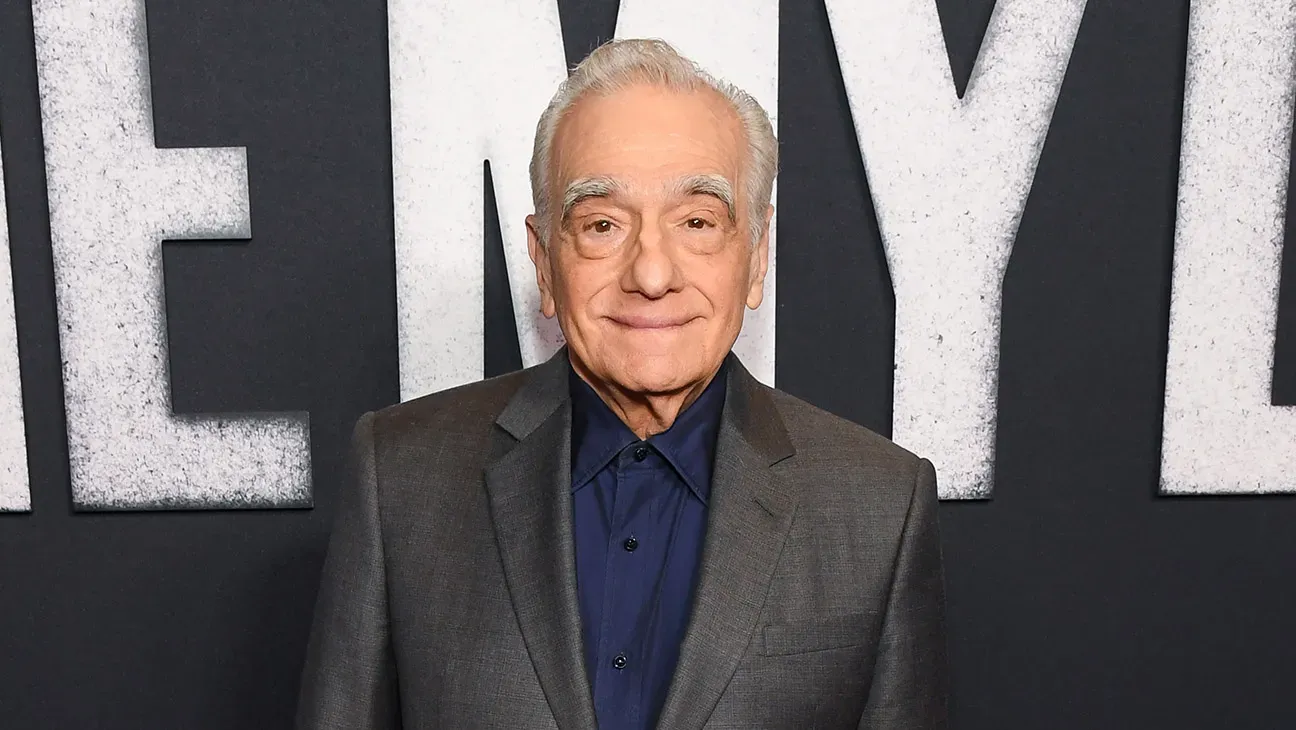
Martin Scorsese has taken on an advisory role with Black Forest Labs, publicly endorsing AI's utility in creative processes, specifically for storyboarding. This signals a rapid industry acceptance of generative AI tools, forcing studios and production houses to reassess their creative pipelines and labor models.
Martin Scorsese's new advisory role with Black Forest Labs places him among the most high-profile Hollywood directors to publicly endorse the use of artificial intelligence in creative workflows. His endorsement is not merely academic; he specifically highlighted how AI tools allowed for a dramatically faster pace of work, particularly in the storyboarding phase of filmmaking. This move is a significant signal that the industry's creative gatekeepers are actively integrating generative AI into their pre-production processes, moving beyond mere curiosity and into operational necessity. For decades, the storyboarding phase was a highly specialized, labor-intensive bottleneck, requiring skilled artists and significant time to visualize complex narrative beats. Scorsese's comments suggest that AI is not just a novelty, but a functional tool that fundamentally alters the economics of concept development, allowing directors and writers to iterate on visual ideas at a speed previously unimaginable. This speed advantage is the core value proposition he is promoting, suggesting that the bottleneck is no longer human capacity, but the speed of iteration itself.
This embrace of AI by a figure of Scorsese's stature-a director known for his meticulous, deliberate, and often challenging artistic vision-lends immense credibility to the technology. It suggests that the integration of AI is not compromising the artistic integrity of the final product, but rather enhancing the process that leads to it. The shift is subtle but profound: AI is being positioned as a co-pilot for the creative mind, handling the mechanical, time-consuming visualization tasks (like generating dozens of storyboard options for a single scene) so that the human creative team can focus on the higher-level narrative and emotional architecture. The implications ripple outward, touching everything from the roles of concept artists and storyboard artists to the entire studio budgeting process, which must now account for both the cost savings and the new infrastructure required to manage these tools.
To understand the gravity of this shift, one must look at the historical context of Hollywood's creative pipeline. Traditionally, a film's pre-production involved a linear, sequential process: script development, followed by storyboarding, followed by concept art, and finally, set design. Each stage had its own skilled labor pool, and the handoffs between departments were often points of friction, delay, and cost overruns. The time taken to get a cohesive, visually approved storyboard package could stretch for months. By introducing AI into the storyboarding process, Black Forest Labs and its partners are essentially collapsing several weeks of manual labor into hours of computational output. This doesn't just mean 'faster'; it means 'more options' and 'less risk.' A director can now test ten different visual interpretations of a single action sequence in the time it used to take to test two, allowing for a level of creative risk-taking that was previously too expensive or time-consuming to justify.
This technological adoption is happening at a moment of intense industry flux. The economics of filmmaking are already being reshaped by the massive investment in virtual production, LED volumes, and advanced CGI. Adding AI to the mix creates a powerful compounding effect. Studios are not just buying cameras or rendering farms; they are buying speed and volume of creative output. The decision to adopt AI is therefore not just an artistic one, but a deeply financial one. It promises to lower the barrier to entry for ambitious, mid-budget projects that might otherwise struggle to secure the necessary pre-production time and resources. For the major studios, it means optimizing their massive overhead by making the creative ideation phase more efficient, thereby maximizing the return on their star talent and director payrolls. The ability to rapidly prototype a film's visual language is the new currency of pre-production.
Furthermore, the regulatory and labor implications are massive and remain largely unsettled. While the source focuses on the creative benefit, the underlying tension involves intellectual property (IP) rights, the training data used by these models, and the displacement of specialized human labor. The industry is currently grappling with how to compensate the artists whose work trained the AI, while simultaneously benefiting from the speed the AI provides. Scorsese's endorsement, therefore, is a public statement that the utility of the tool outweighs the current labor anxieties, at least in the eyes of the creative elite. This signals to the market that the perceived value of speed and volume is currently outweighing the perceived value of traditional craft time, a dynamic that will shape union negotiations and studio contracts for years to come.
For the broader executive audience, the takeaway is clear: AI is moving from the R&D lab to the operational core of content creation. Companies that treat AI as a mere 'nice-to-have' feature will be structurally disadvantaged against competitors who integrate it into their core workflows. The strategic imperative is to build internal feedback loops that allow creative teams to rapidly test, fail, and iterate on concepts using AI-generated assets, thereby drastically shortening the time from 'idea' to 'approved visual treatment.' This requires not just purchasing software, but fundamentally restructuring creative department workflows and investing heavily in the specialized talent that knows how to prompt, curate, and refine AI output into a cohesive, director-approved vision. The future of Hollywood, and indeed all high-end visual content creation, belongs to those who master the prompt, not just the camera.
This story's Key Insights and Take-aways are locked.
Create a free account to unlock Executive Actions for one credit.
Register to UnlockAlways free for Executives Club members. Join the Club
More in Entertainment

Christopher Nolan’s “The Odyssey” posts his biggest Tuesday haul, surpassing “The Dark Knight’s” record
The film’s Tuesday breakout reframes Nolan’s box-office ceiling and forces competitors to rethink timing, budgets, and release strategy.

Kacey Musgraves cancels Aug. 20, 29, Sept. 2 Middle of Nowhere shows
Ticketmaster emails are telling fans refunds are coming, while the tour still starts Aug. 21 in Chicago.

Billie Joe Armstrong launches Epiphone Les Paul Junior and Marshall 1959BJA signature gear
Two limited releases turn decades of Green Day’s tone into branded hardware, including Marshall’s first artist amp in 14 years.