

SCOTUS upholds birthright citizenship, ending the term with a constitutional reset
The Court’s final-day ruling locks in birthright citizenship and reshapes election energy in Colorado’s Denver House primary.
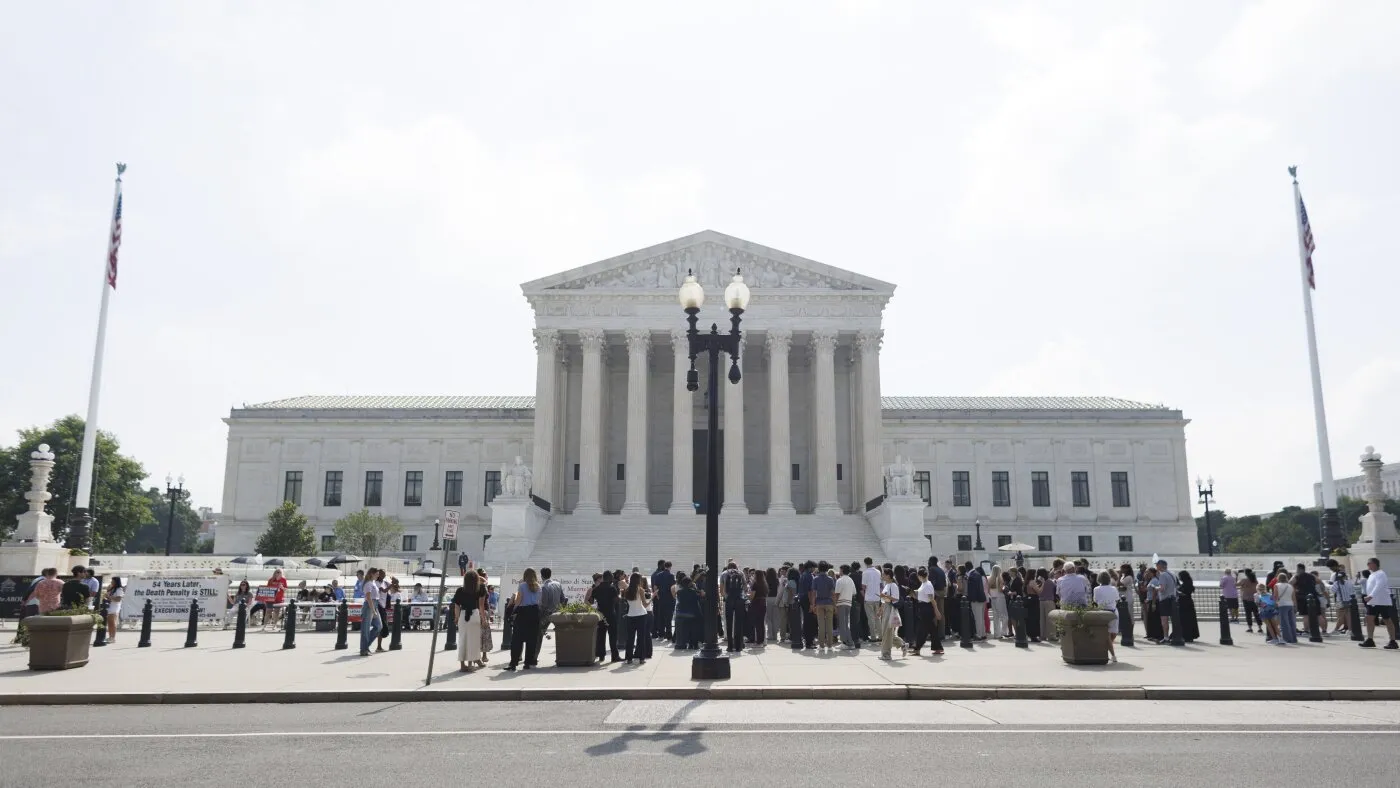
The Supreme Court upheld birthright citizenship on constitutional grounds on the last day of its term. In Denver, a Democratic socialist won the Democratic primary for a U.S. House seat.
The Supreme Court upheld birthright citizenship on constitutional grounds on the last day of its term. That timing matters. “Last day of the term” is not just trivia for legal nerds. It signals the Court chose to land a major, nationwide rule at the moment when headlines and attention are already shifting, leaving lower courts and policymakers to digest it quickly and move on.
In the same news cycle, Colorado’s primary results added a very different kind of political signal: a Democratic socialist won the Democratic primary for a U.S. House seat in Denver. So in one update, you get a constitutional decision that clarifies rights for everyone, and a local political outcome that clarifies what Denver voters want next from their congressional representative.
Put those together and you see the real executive-level stakes. Legal rules do not just change court opinions; they change how governments structure policy, how agencies interpret authority, and how organizations plan for compliance and risk. When the Supreme Court resolves a constitutional question, it reduces ambiguity. Ambiguity is expensive. It creates patchwork implementation, repeated litigation, and uncertainty in planning across public administration. With the Court’s choice grounded in constitutional grounds, the ruling is aimed at the bedrock issue: whether citizenship by birth is protected under the Constitution.
For decision-makers, the immediate “so what” is that the government, and any systems that interact with it, can no longer treat birthright citizenship as an open question that can be scaled, delayed, or redirected with changing executive preferences. Even where implementation details remain, the core authority is set. The second-order effect is that future policy debates shift away from the fundamental “can we?” and toward the administrative “how do we apply and enforce?” That is a big deal for anything touching immigration-adjacent processes, identity documentation, and eligibility determinations, because it compresses the range of plausible legal strategies.
The second half of the update, Denver’s Democratic primary, is a reminder that political incentives move just as fast as legal incentives. A Democratic socialist winning a House primary means the district’s electorate rewarded a particular ideological flavor of Democratic politics. That is not abstract. In the House, committee work, legislative priorities, and coalition-building depend on who voters send through the door. A candidate’s ideological framing can influence what issues become “non-negotiable” in messaging, what negotiations look like in caucus discussions, and how the representative positions the district on national debates.
Why executives and boards should care about a House primary outcome? Because it shapes the legislative environment that companies and institutions operate in. When a district elects someone whose approach aligns with socialist-leaning policy priorities, it can raise the likelihood of aggressive attention on topics like labor, healthcare, public spending, and regulation. Even without knowing the platform details beyond the descriptor from the primary result, the direction of electoral support tells you where political pressure will likely concentrate in the next Congress cycle.
Now zoom out to the combined signal. SCOTUS upheld birthright citizenship at the end of its term, anchoring constitutional interpretation. Then voters in Denver chose a Democratic socialist in their primary, signaling a preference for a more assertive style of policy leadership in at least one congressional seat. Together, these developments reinforce a common pattern: courts can lock in foundational rules, while elections determine how those rules get lived in legislation and oversight. In the short term, compliance and administration respond to court clarity. In the long term, legislatures respond to electoral mandates.
Strategically, peers in government, regulated industries, and mission-driven organizations should treat this as two timelines overlapping. The legal timeline is about interpretation and enforcement. The electoral timeline is about political leverage and agenda-setting. When both move at once, planning horizons get tighter. You cannot wait for the next news cycle to understand your constraint set. The Supreme Court has already clarified the constitutional direction, and Denver voters have already chosen a nominee path that will likely influence how national proposals are debated. If you are making decisions in roles that depend on policy stability, legal risk, or government interaction, this is the kind of update that should go straight onto the agenda.
This story's Key Insights and Take-aways are locked.
Create a free account to unlock Executive Actions for one credit.
Register to UnlockAlways free for Executives Club members. Join the Club
More in Politics

Glacial collapse, not rain, killed 180 in Nepal's Himalayan flood
The Himalaya's extreme geography hid the true cause of Nepal's catastrophic flood, a glacial collapse that turned a geological battleground into a mass-casualty zone.

Iran’s Esmail Baghaei says Oman talks start shipping via Hormuz, not US talks yet
Temporary route plans with Oman aim to restart commerce while Tehran says Washington dialogue is not on the table.

Standards watchdog opens probe into Reform UK deputy leader Richard Tice over interests
The parliamentary standards commissioner says it began an investigation on 28 July into a possible undeclared interest.