
Secret SpaceX stake buyers in China included an entity tied to military contractors
A private investor list from ProPublica shows overseas bets in SpaceX before IPO, raising regulatory and geopolitical alarms.
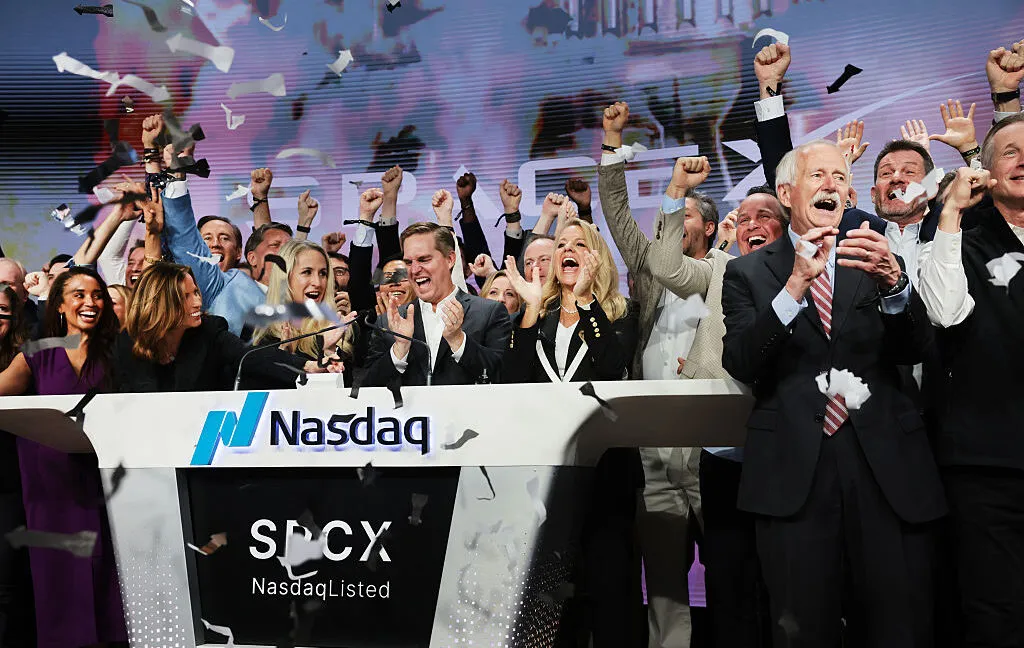
An entity with ties to Chinese military contractors was among overseas investors that acquired SpaceX stakes before the company went public. Separate details from ProPublica’s private investor list also show involvement tied to the Qatari royal family.
SpaceX barred investors from China and Hong Kong from buying shares in its IPO last week due to “regulatory and compliance risks.” And yet, according to newly reported details, some of the people who got in earlier, when SpaceX was still private, were from places tied to some of the most sensitive parts of the global tech and defense supply chain.
The new reporting, based on a private investor list obtained by ProPublica and discussed by Ars Technica, identifies a businessman with ties to Chinese military contractors as one of the overseas investors who acquired stakes in SpaceX while it was private. The list also describes an entity linked to the Qatari royal family taking a stake. The headline stakes for executives are straightforward: the “who” behind ownership matters just as much as the “what,” especially when a company builds its business off sensitive US government work, including making spy satellites for the Pentagon.
Why does this land with a thud for decision-makers? Because SpaceX is not a generic consumer-tech company. It built its business off sensitive US government work. That changes how governments view the company’s capital structure, who can influence it, and what risk exposures might follow from foreign investment. The source notes that there is no ban on Chinese investment in US military contractors, but that such investment is heavily regulated. In other words, China money can be legal, but it is typically scrutinized, conditioned, and monitored like a live wire.
The reporting frames the issue through the lens of the US government’s concerns about China’s strategy. The US government alleges that China has a strategy of using investments in sensitive industries for espionage and to gain access to cutting-edge technology. Whether someone agrees with the breadth of that allegation is beside the operational point. For a company selling rockets into defense-adjacent missions and sensitive contracts, government concerns shape compliance expectations, transaction approvals, and the acceptable perimeter of investors.
That is where SpaceX’s IPO move becomes the key contradiction executives cannot ignore. Last week, Bloomberg reported that SpaceX barred investors from China and Hong Kong from buying shares in its initial public offering due to “regulatory and compliance risks.” The Ars Technica summary connects this sensitivity to the broader question of who previously bought in, and how those investors were able to acquire stakes before the IPO. If the goal was to reduce regulatory and compliance risk at the public entry point, the question becomes: what risk profile existed before the ban, and how did it evolve?
Another second-order issue is governance and signaling. In private rounds, investors often come in under different due diligence, documentation, and timing constraints than those that apply at an IPO. A private investor list obtained by ProPublica changes the information environment after the fact, making it harder for any board or executive team to assume that “we followed the rules” is the same thing as “we controlled the narrative.” When regulators worry about access to sensitive technology and espionage pathways, the mere presence of investors tied to Chinese military contractors can become a reputational and compliance stress test for the company and for any partners involved in defense-adjacent work.
There is also a market structure angle. IPO restrictions are a blunt tool: they restrict participation at a single moment, but they do not rewrite the history of earlier private ownership. Public market investors, journalists, and regulators can look backward and connect dots: who invested when SpaceX was private, and whether those investors overlap with jurisdictions associated with heightened national security concerns. That is exactly what the ProPublica-sourced investor list appears to enable.
And then there is the broader competitive and capital allocation lesson for peers. SpaceX’s business depends on sensitive US government work. That means its cost of capital and its shareholder composition are not purely financial variables. They are geopolitical variables too. Boards at any company touching defense, intelligence, satellite infrastructure, or cutting-edge dual-use technology will recognize the pattern: capital that is allowed, but heavily regulated, can still trigger stricter constraints later, especially once the company moves into the public spotlight.
For executives deciding how to manage investor access, the practical takeaway is uncomfortable but useful. SpaceX’s IPO ban on China and Hong Kong investors due to “regulatory and compliance risks” shows how fast the compliance perimeter can tighten. Meanwhile, the previously unreported details about overseas stakes before the IPO, including ties to Chinese military contractors and an entity linked to the Qatari royal family, show that the ownership story does not start at the IPO. It starts in the private rounds, long before the company is ready for public scrutiny.
This story's Key Insights and Take-aways are locked.
Create a free account to unlock Executive Actions for one credit.
Register to UnlockAlways free for Executives Club members. Join the Club
More in Business
Accenture’s $4.18bn play fails as AI fears spark a 20% worst-ever stock plunge
On Thursday, Accenture hit its biggest one-day drop on record after forecasting worries that AI could hollow out consulting.

SpaceX stock jumps 3% after it overtakes Amazon’s market cap
CNBC says SpaceX’s shares surge following its IPO Friday, forcing investors to reprice what “space” and “AI” are worth.
SpaceX’s first options day breaks U.S. records after a $85B IPO win
Big IPO, bigger options debut: what it means for investors, risk teams, and anyone benchmarking market appetite.