

Serena Williams wins at Queen's after 1,375 days away
Her return delivers an immediate answer to how sharp she is, and what comeback risk looks like when it pays.
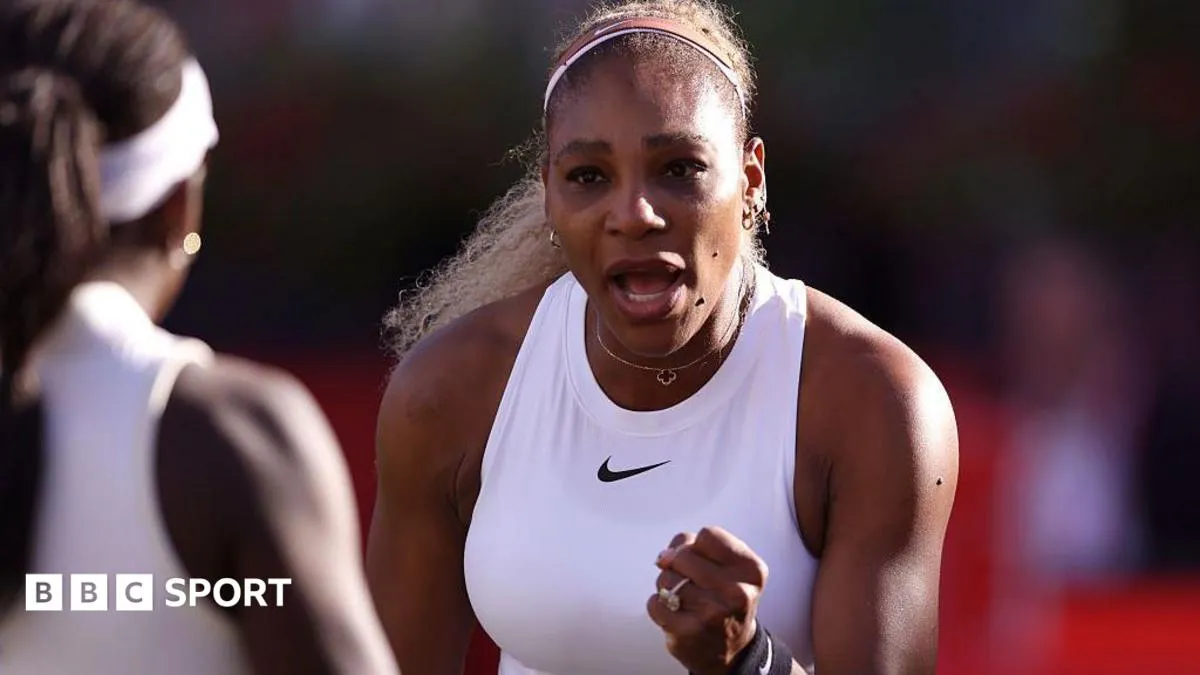
Serena Williams won at Queen's in a comeback performance after 1,375 days away from tennis. For decision-makers watching sports credibility, sponsorship value, and competitive momentum, the consequence is a clear signal: the return is not just symbolic, it is measurable.
Serena Williams rolled back the years at Queen's with a winning performance after 1,375 days away from tennis. That is not a gentle hiatus number. It is long enough that rankings, routines, and match rhythm can shift under a player, and short enough that the comeback feels like it has to be “real” now, not later.
The simple fact that she won matters more than it sounds. A comeback victory changes the story from “will she be able to compete again?” to “how good is she right now?” That is the question the Williams return puts on the table immediately, because Queen's is not a novelty event. It is a competitive stage where execution is visible, and where a win signals that preparation translated into match results, not just headlines.
If you zoom out, a long absence is one of the highest-risk situations in elite sport. Athletes are not just playing against opponents. They are also playing against time: timing in rallies, movement patterns under stress, and the small, hard-to-train instincts that only show up in live points. When someone returns after 1,375 days away, the market tends to treat it like a calibration problem. You are trying to determine whether the athlete’s competitive “operating system” restarted cleanly.
There is also a business layer that often stays off the highlight reel. Serena Williams is a globally recognized figure, which means a comeback has ripple effects beyond the court. Every win can affect attention, media cycles, and fan engagement. In modern sports, attention is currency. It helps sponsors justify spend, helps broadcasters justify coverage, and helps organizers justify slotting marquee names into prime slots. A win at Queen's is the kind of outcome that makes it easier for stakeholders to defend the logic of investing in the return.
Now add the competitive reality. Tennis is a sport where opponents adapt. A return after years away does not arrive into a vacuum. The field you face has new tactics, new rhythms, and new expectations. So when Williams returns and wins, it implies more than fitness. It suggests she can handle the on-court variables that show up in real matches: pressure, timing, and the flow of points against players who are not waiting for a legend to catch up.
There is another second-order implication for anyone who watches how sports careers and brands evolve. Comebacks often get treated as narrative arcs, but the court forces accountability. A comeback can be inspiring and still underperform. Williams winning at Queen's turns the narrative toward evidence. It tells observers that the return is not purely ceremonial and not purely “for the fans.” It is functioning in the competitive ecosystem, with results to match.
For boards, sponsors, and executives tied to high-profile athletes, that kind of evidence reduces uncertainty. Uncertainty is expensive. It can delay decisions, cool enthusiasm, and complicate partnership planning. A measurable win, right away, makes it easier to underwrite confidence. Not every return will land this way. But the Williams example shows how quickly a comeback can move from speculative to verifiable when the first outing produces a victory.
So the stake for peers is straightforward: if Serena Williams can win at Queen's after 1,375 days away, it reshapes what “still capable” means in elite tennis. It raises the bar for how quickly people evaluate returns, and it reminds decision-makers that the best comeback proof is not nostalgia. It is a winning performance when the points matter.
This story's Key Insights and Take-aways are locked.
Create a free account to unlock Executive Actions for one credit.
Register to UnlockAlways free for Executives Club members. Join the Club
More in Entertainment

Entertainer Russell Brand denies 7 sex charges amid accuser's 'couldn't breathe' claim
The alleged victim's account sharpens the reputational and legal stakes for Brand, his platforms, and any business tied to a public figure under criminal scrutiny.

Russell Brand's accuser 'bewildered and confused' as he denies 7 sex charges
The criminal case against the comedian is a live test of how media companies manage talent risk when serious allegations go public.

'It's a Magic Trick': Ballet Experts Say Rosalía's SNL Pose Is Impossible
Three ballet experts tell Rolling Stone Rosalía's gravity-defying SNL stillness shouldn't be possible - and why the debate is now part of the show.