
SFC: Hong Kong wealth assets hit US$5.38T, up 20% as China appetite returns
The SFC says HK firms managed HK$42.2T in 2025, beating the prior peak and sharpening Hong Kong vs Switzerland.
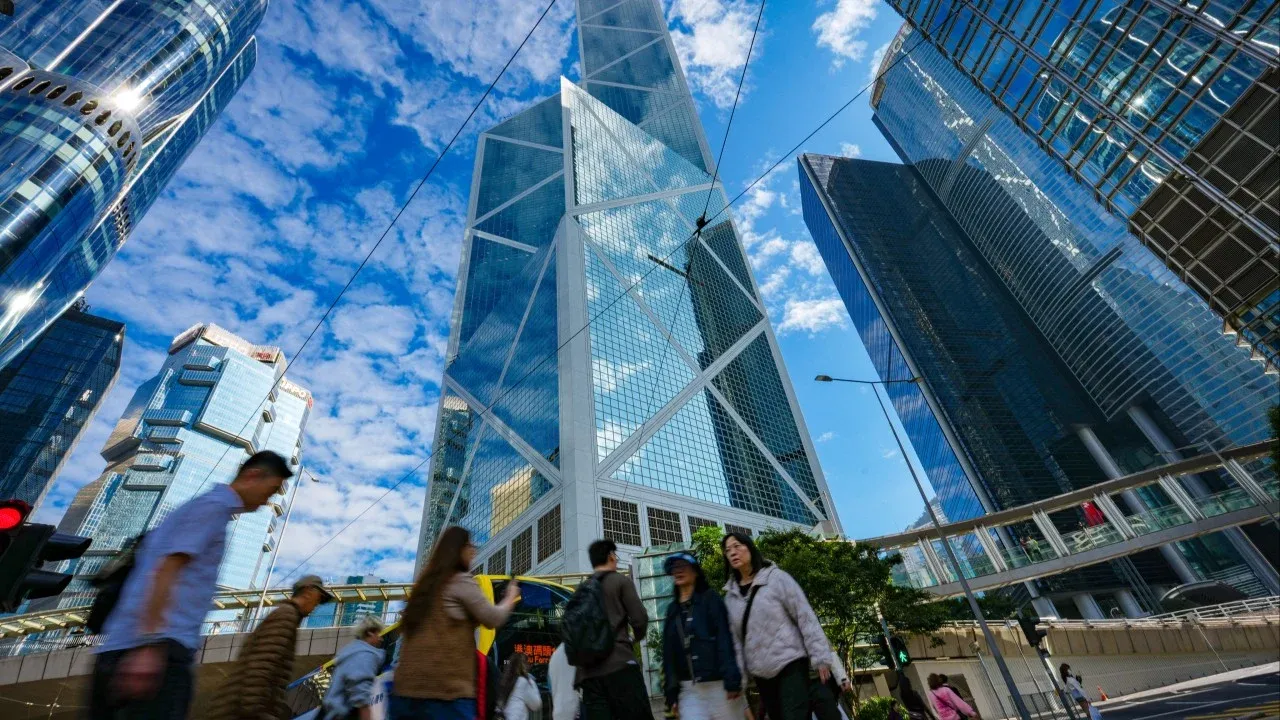
Hong Kong’s financial firms managed HK$42.2 trillion (US$5.38 trillion) in assets and wealth under management last year, according to a Securities and Futures Commission (SFC) report released on Thursday. The figure rose 20% versus the previous peak of HK$35.5 trillion in 2024, driven by renewed global investor appetite for Chinese assets.
Hong Kong’s assets and wealth under management just printed a record number: HK$42.2 trillion, or US$5.38 trillion, last year, the Securities and Futures Commission (SFC) said in a report released on Thursday. That is a 20% jump from the previous peak of HK$35.5 trillion in 2024. The headline is not subtle. Money flowed back into Hong Kong, and it flowed in a way that tracks a bigger story: global investors returning to Chinese assets.
This matters because assets under management are not an abstract stat for regulators or bankers. They are the pipeline that supports fees, staffing, product distribution, custody activity, and the whole ecosystem of brokers, asset managers, and wealth platforms. If HK$42.2 trillion is real momentum, Hong Kong is effectively flexing its advantage as a wealth hub at precisely the moment offshore investors want exposure to China but still want the infrastructure, liquidity, and accessibility they get from a major financial center.
The SFC framing is also worth reading carefully. The report ties Hong Kong’s surge to “renewed China appetite” among global investors. In plain English, it is describing a demand swing. When international capital wants Chinese markets, it still needs a place to park assets, structure products, and manage risk. Hong Kong has long competed with other wealth centers, and the story line in the SFC report makes the comparison explicit by saying Hong Kong’s edge over Switzerland as a wealth hub is underscored.
Why Switzerland gets dragged into this kind of conversation: historically, it has been synonymous with cross-border private wealth, asset management, and a strong regulatory and banking reputation. Hong Kong’s advantage is different. It sits closer to the asset story investors actually want, particularly China. So when global investors ramp up exposure to Chinese assets, Hong Kong can translate that interest into local flows faster than a more distant hub. The record at HK$42.2 trillion suggests that translation mechanism is working again, and it is doing so at scale.
The growth rate is the other part executives should not gloss over. The jump from HK$35.5 trillion in 2024 to HK$42.2 trillion last year is a clear step up, not a rounding error. A 20% increase implies that multiple parts of the system were benefiting at the same time, which typically happens when investors are broadly allocating, not just placing a small bet. In wealth management, that kind of simultaneous uplift often means distribution channels and product offerings are meeting demand, and compliance and operating models are coping with the surge.
There is also a timing nuance embedded in the way regulators report these numbers. The SFC is a supervisory body for Hong Kong’s securities and futures markets, and its reports are a signal to the market about where activity is clustering and how the jurisdiction is performing. When the SFC releases a report on Thursday highlighting a record peak, it is essentially giving boards and industry leaders a checkpoint: the ecosystem is not just “busy,” it is hitting measurable milestones. That can influence internal planning, staffing, risk appetite, and how firms calibrate everything from client onboarding capacity to marketing spend.
For executives inside Hong Kong financial firms, the second-order question is not “did assets rise?” It is “what kind of rise is this, and how durable is it?” The SFC says the driver is renewed China appetite. That gives you a directional clue. China-related allocations tend to move with global sentiment, macro conditions, policy expectations, and risk management cycles. So if you are a CFO or board member, you should treat the record as both a win and a stress test. Wins attract competition, and sudden inflows can pressure operations, compliance workflows, and investment governance.
For executives at firms considering where to concentrate wealth, distribution, and product capabilities, the peer implication is direct: the gap between Hong Kong and traditional wealth hubs does not stay theoretical when AUM numbers do what they just did. The SFC’s report ties the surge to China exposure demand and explicitly mentions Hong Kong’s edge over Switzerland as a wealth hub. If your strategy assumes the market will keep routing China-linked wealth somewhere else, this is the kind of data point that forces a rethink.
The strategic stake is simple. Record HK$42.2 trillion in assets under management is the clearest version of a market telling you where it wants to do business. The SFC’s update also gives decision-makers an accountability moment. If your firm is under-allocated to the channels that capture China-linked demand, you risk missing the next wave. If you are heavily exposed, you need to be ready to service it with the same discipline that earned the record in the first place.
This story's Key Insights and Take-aways are locked.
Create a free account to unlock Executive Actions for one credit.
Register to UnlockAlways free for Executives Club members. Join the Club
More in Business
Comcast shares jump 25% as it plans to split NBCUniversal and Sky
The tax-free spin-off could reshape focus, funding, and competition across media and tech for years.

Bungie cuts most Destiny 2 staff as Sony says Marathon still matters
Herman Hulst confirms layoffs affecting most Destiny and some Marathon teams after Bungie admits Destiny fell short.

SK Hynix jumps 11% after seeking up to $29.4B in Nasdaq listing
The chip giant filed for a Nasdaq listing plan that could raise $29.4 billion, instantly reshaping investor expectations.