

Shark Week 2026 runs July 26-Aug. 1 with 20 specials nightly on Discovery, 8 p.m. ET/PT
Here’s the full U.S. schedule and what each night’s shark science is actually trying to prove.
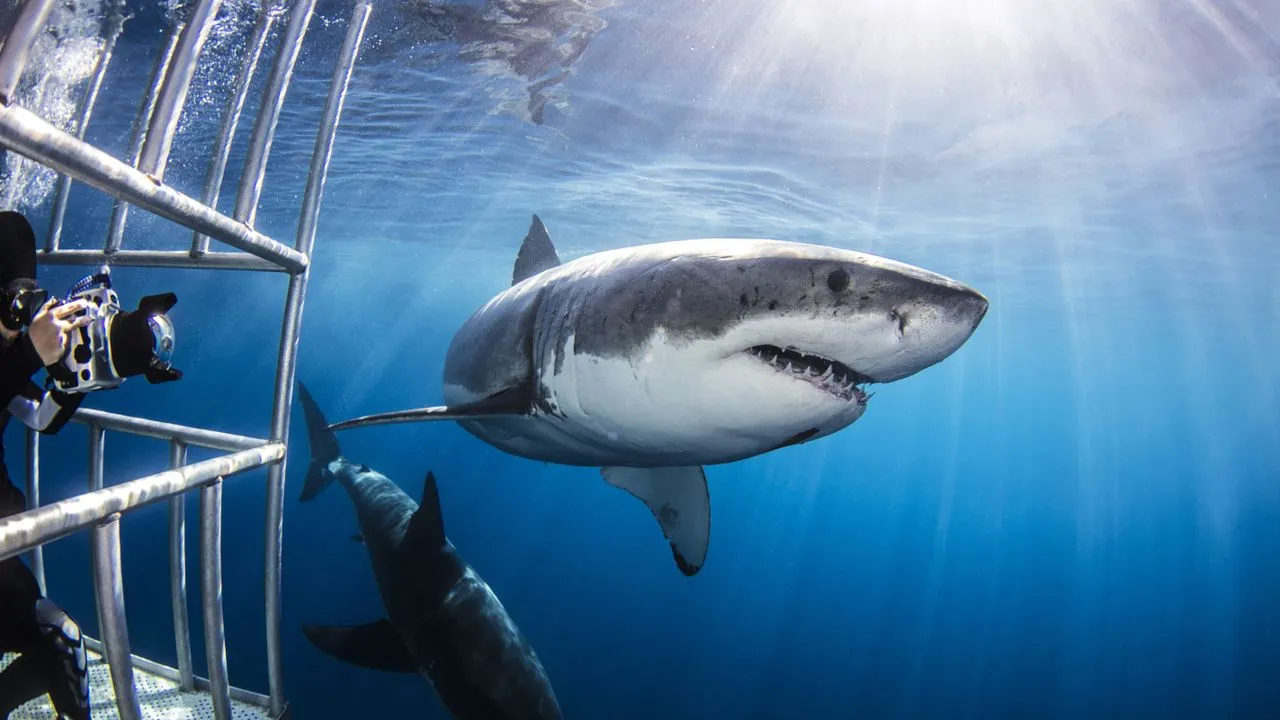
Shark Week 2026 runs Sunday, July 26 to Saturday, August 1 on Discovery, airing 20 brand-new TV specials every evening at 8 p.m. ET/PT. For decision-makers, it is a rare moment where media packaging meets real marine science topics that challenge familiar “mindless killer” narratives and hint at ocean stability risks.
Shark Week 2026 is not a one-week vibe. It is a seven-night sprint, Sunday, July 26 to Saturday, Aug. 1, with 20 brand-new TV specials airing across the evenings on Discovery. The shows start nightly at 8 p.m. ET/PT, then keep going through 9 p.m. and 10 p.m. as the lineup escalates from “intelligent predator” experiments to daring field operations and new tech like tagging. Live Science says the slate is built around moments that challenge the familiar “mindless killer” myth, instead framing sharks as intelligent, highly specialized predators whose decline could destabilize the world’s oceans.
If you are trying to plan around it like a business meeting, the U.S. scheduling is straightforward: Discovery (US) every evening at 8 p.m. ET/PT, July 26 through Aug. 1. In case you do not have cable, Live Science also lays out streaming access points for U.S. viewers: YouTube TV, DirecTV, Hulu + Live TV, and HBO Max. The key stake is simple: this is not just entertainment scheduling, it is how a major media franchise packages science and technology narratives into a bingeable storyline, which means executives in media, partnerships, and even data-driven product teams should pay attention to what formats win attention.
Start with the Sunday, July 26 opening triple, because it sets the tone. “K-Pop Shark Heroes” has actor and comedian Ken Jeong teamed with Grammy-nominated singer and lifetime shark lover Rei Ami to reshape perceptions of sharks across East Asia and around the globe, powered by K-pop. Then “Air Jaws: Red, White and Breach” leans into a new great white behavior captured on film breaching in California, featuring filmmaker Jeff Kurr, marine biologist Alison Towner, and cinematographer Andy Casagrande. The night closes with “Invasion of the Mega Sharks,” where shark researcher Neil Hammerschlag and Shark Week expert Paul de Gelder track down Big Rose, a record-breaking great white believed to be among the largest predators in the North Atlantic. They use innovative tagging technology and field operations aiming at a newly discovered shark hotspot off Nova Scotia.
By Monday, July 27, the lineup shifts toward what triggers shark behavior and how people interpret risk. “Bull Shark Dinner Bell” pairs shark attack survivor and advocate Paul De Gelder with apex predator specialist Rosie Moore in Jupiter, Florida to investigate what triggers giant bull sharks to confront humans, including testing the roles of human behavior in the ocean, extreme weather events, and prey preferences. “House of Sharks” takes viewers off the coast of New Zealand, where three distinct groups of great whites organize into competing “houses” around seal feeding grounds, with marine biologist Tristan Guttridge and underwater cinematographer Kina Scollay exploring the theory that these predators may be rival dynasties rather than solitary hunters. “Biggest Mako on Earth” targets a rumor turned testable question: whether massive 15- to 20-foot-long (4 to 6 meters) mako sharks off Southern California are real, with Tristan Guttridge, conservationist Kendyl Berna, and shark tagger Keith Poe investigating hunting in coastal waters of Santa Catalina using new footage and a recently published photo.
Tuesday, July 28 leans hard into both technology and conflict between species narratives. “Jurassic Sharks” is a Shark Week first: revolutionary CGI resurrects Jurassic sharks from 201 million to 143 million years ago, guided by rare living sharks that once shared their seas, blending real-world expeditions with visual effects. “Jaws vs Orca” frames a challenger emerging in the apex predator storyline, with sharks washing ashore with livers removed and orcas targeting sailboats in the Strait of Gibraltar by ramming hulls, crippling rudders, and sinking vessels. “Chum Island: Catching a Killer” adds a “whodunnit” structure to the biology, when a rare surge of highly aggressive shark attacks hit a tight-knit community off Australia’s southern coast. Marine biologist Riley Elliott finds and tags suspects, then builds the world’s first “chum island” to lure them in and uncover whether a new elusive shark population is responsible.
Wednesday, July 29 begins another technology-forward arc with “Expedition X: Atomic Sharks,” featuring Phil Torres and Heather Amaro traveling 5,000 miles (8,000 kilometers) west of the U.S. to the rem, but the source cuts off mid-sentence there. Still, Live Science’s earlier framing gives you the through-line to watch for across the week: camera systems, tagging technology, and experiments are being used to make sharks legible to people who default to fear or folklore. In that sense, the show is working like a narrative lab. It takes behaviors that are often misunderstood, then tries to quantify them, film them, and connect them to ecosystem consequences.
Now zoom out to the “how to watch” mechanics, because distribution is part of the story executives should care about. Live Science notes that “Shark Week” programming typically airs on Discovery Plus in the U.K. at a later date, and at the time of publication, plans for the 2026 slate in the U.K. were under wraps. For U.S. travelers or anyone outside the region, Live Science recommends using a VPN, explaining what a VPN does in plain terms: it can alter your device’s digital location to unlock geo-restrictions on streaming platforms. It specifically mentions Surfshark as a VPN example and includes an 85% discount deal for Surfshark VPN in its promotional sections, including a “Save 85% off Surfshark VPN Shark Week still packages its science…” style of marketing language. Separately, the subscription costs it lists for U.S. streaming are: YouTube TV usually costs $82.99 per month and comes with a free trial plus $15 off each of your first five months; DirecTV MyEntertainment genre pack costs $42.99 per month after a 5-day free trial; Hulu + Live TV costs $89.99 per month after a 3-day free trial; and HBO Max starts from $10.99 per month. If you are a board member or operator, the practical takeaway is that viewer access, not just content, drives what gets watched, shared, and remembered.
The strategic stakes for peers are quietly big. A franchise that positions sharks as intelligent specialized predators and links their decline to ocean stability is not only selling a spectacle. It is reinforcing a worldview that can influence public support for conservation and, by extension, what funding, regulation, and corporate partnerships get easier over time. And when media uses tagging technology, field operations, and CGI to make complex behavior feel immediate, that sets a template competitors may try to copy. Shark Week 2026 is scheduled with precision, distributed across major streaming options, and built around science themes that aim to do more than entertain.
This story's Key Insights and Take-aways are locked.
Create a free account to unlock Executive Actions for one credit.
Register to UnlockAlways free for Executives Club members. Join the Club
More in Science

Alaska's 1,580-foot tsunami had warning signs. Scientists just found them.
Rapid glacier retreat, heavy rainfall, and thousands of tiny tremors preceded Alaska's 1,580-foot tsunami, a warning for every coastal community in a warming world.

The rare mutation that lets high-risk brains dodge Alzheimer's
Scientists found a natural defense against protein buildup, opening a new path to preventive treatments.

3,000 steps a day may halve Alzheimer's decline, study finds
New research links a modest daily walk to less tau buildup and nearly half the cognitive and functional decline, even for those with early signs.