

Sheikh Hasina sets a return timeline for Bangladesh, even as arrest looms
Her planned homecoming signals high-stakes political risk that could reshape who dares what next.

Former prime minister Sheikh Hasina has set a timeline for her homecoming to Bangladesh, despite the threat of arrest. For decision-makers, the move raises immediate questions about detention risk, legal leverage, and how quickly political space can shift.
Sheikh Hasina, Bangladesh's former prime minister, has set a timeline for her return home, even as arrest threatens her. That matters because timelines are not just personal plans in politics. They are signals to courts, security services, political allies, and opponents about when and how confrontation might become unavoidable.
A “homecoming” is also never purely symbolic, especially when the threat is explicit. The key detail is the combination: a stated schedule paired with an arrest risk. That pairing changes the math for everyone watching, because it turns a distant political scenario into something with a countdown. If authorities decide to move first, they can disrupt her ability to mobilize supporters, contest the legal case in public, or negotiate from a position of momentum. If she does manage to arrive without being taken, the timeline effectively functions like proof of leverage, whether legal, political, or logistical.
To understand why this single decision can ripple outward, it helps to remember how politics and governance typically work when legal risk is part of the scenario. In many countries, the credibility of a threat to arrest depends on procedures, enforcement capacity, and political will. When a former head of government announces that she is coming back on a timetable, it pressures the state to respond in a specific window rather than indefinitely. States often prefer ambiguity in these situations because it keeps options open. A declared timeline collapses that ambiguity. It forces actors to either follow through or publicly absorb the consequences of not following through.
This is where the second-order effects kick in for executives and other decision-makers, even if you are not embedded in Bangladeshi politics. Markets and institutions react less to the ideology and more to the predictability of the environment. When the risk shifts from “possible” to “time-bound,” that predictability can deteriorate quickly. Investors planning for regulatory stability, business continuity, or operational risk tend to translate political timelines into planning assumptions: What is the likelihood of sudden disruption? How quickly will legal outcomes crystallize? Will security operations change in a way that affects movement, logistics, or access to key stakeholders?
Regulatory framing is also part of the story. Arrest threats, especially involving a former prime minister, usually sit at the intersection of criminal or legal claims and broader governance contests. That intersection can generate a feedback loop. Legal actions can be interpreted by supporters as politically motivated, while opponents can interpret them as necessary accountability. Either interpretation can intensify mobilization, which then increases the odds of enforcement actions. A timeline announcement can therefore become the spark that turns procedural questions into street-level realities.
Boardrooms and cabinet-level equivalents elsewhere often treat major political events as “macro” until they suddenly are “operational.” The operational angle can include changes in how companies interface with regulators, whether permits and inspections continue smoothly, and whether rule enforcement becomes erratic or more aggressive during heightened periods. Even when business does not directly intersect with a political figure, compliance teams tend to care about law and enforcement patterns. If legal risk becomes publicly time-linked, compliance regimes may be updated faster, costs can rise, and contingency planning moves from quarterly review to weekly action.
So what should peers and decision-makers take away from Hasina's timeline, paired with the threat of arrest? First, the move signals intent and urgency, not hesitation. Second, it implies that she is willing to accept personal risk for a planned moment of political impact. Third, it elevates the risk for anyone who expects the situation to drift. Political processes do not always move in straight lines, but a declared return date can accelerate decision-making across institutions, because officials cannot indefinitely delay when a prominent figure sets a schedule.
In short, this is not just a personal story about a former leader thinking about home. It is a high-stakes public act: Sheikh Hasina has set a timeline for her homecoming despite arrest threats. The immediate question is whether the state will enforce the threat. The wider question is what that enforcement, or lack of it, will do to the tempo of politics in Bangladesh and the risk posture of anyone trying to plan through the next phase.
This story's Key Insights and Take-aways are locked.
Create a free account to unlock Executive Actions for one credit.
Register to UnlockAlways free for Executives Club members. Join the Club
More in Politics
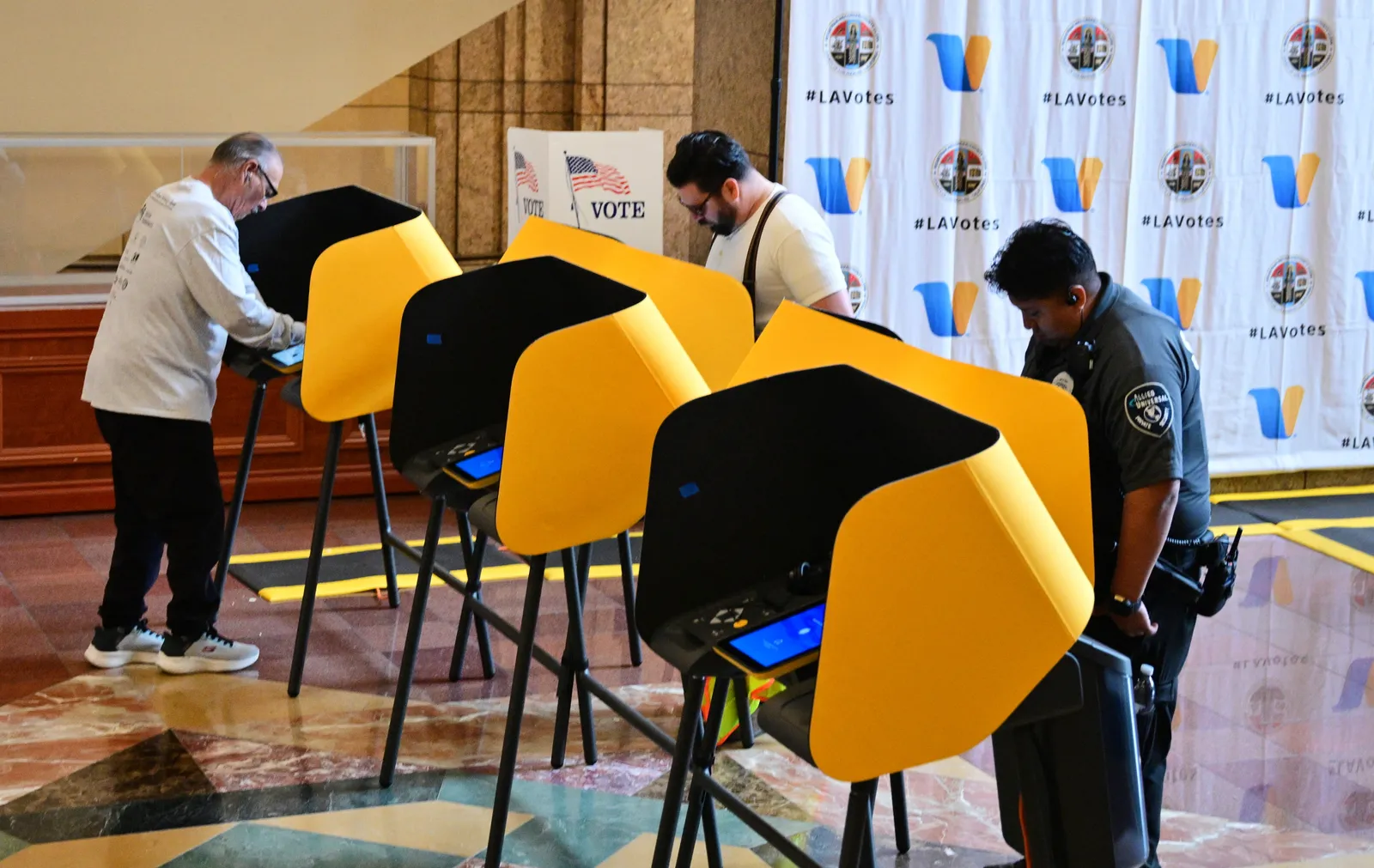
LA County: DOJ's 20,000 'noncitizen' voter list is 'unreliable,' includes U.S.-born
Preliminary review by Los Angeles County election officials finds errors in the federal list, raising the stakes for voter roll integrity ahead of November.

Trump's $1.5B Pentagon chip investment lands in North Carolina
A $1.5 billion defense infusion for North Carolina chipmaking signals a new era of Pentagon-backed reshoring - here's what it means for the industry.

Nigeria confirms first Ebola case in Abuja, a woman just off a Uganda flight
Health Minister Muhammad Ali Pate says the patient flew in from Uganda, putting Africa's latest outbreak on Nigeria's doorstep.