
Sheryl Sandberg’s $10M leads AI vehicle inspection startup built on smartphone damage scans
Sandberg’s investment backs a 2021 service that uses enterprise smartphone scans to identify vehicle damage at scale.
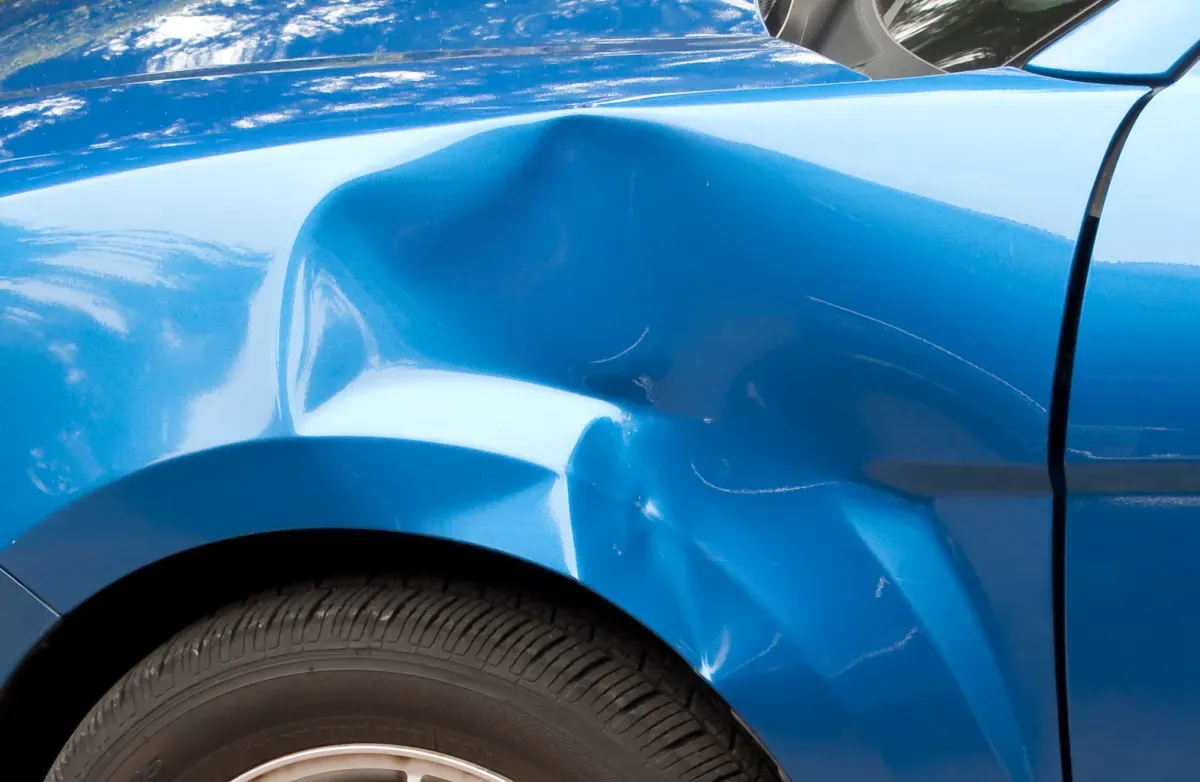
Sheryl Sandberg is leading a $10 million investment in an AI-powered vehicle inspection service, TechCrunch reports. The startup, founded in 2021, uses enterprise customers' smartphones to scan and spot vehicle damage.
Sheryl Sandberg is leading a $10 million investment in an AI-powered vehicle inspection service, TechCrunch reports. The startup, founded in 2021, is built for a simple but operationally brutal problem: identifying vehicle damage quickly and consistently, using smartphones from enterprise customers.
Here is the core idea that matters for decision-makers. Instead of routing every inspection through slow, manual workflows, the service lets enterprises use smartphone scans to spot vehicle damage, then applies AI-powered inspection to make those assessments scalable. That means the $10 million is not just a bet on software. It is a bet on digitizing an everyday logistics and insurance bottleneck where speed and consistency directly impact cost.
To understand why this is a big deal, you have to zoom out one level. Vehicle damage assessment sits at the intersection of multiple high-volume industries: logistics, fleet operations, insurance claims, and any business that needs to record condition accurately after incidents. In these environments, human inspection is expensive, hard to standardize across geographies, and vulnerable to time pressure. Even small delays can ripple through claims processing, repair scheduling, and operational planning. A smartphone-first model changes the economics because it piggybacks on hardware people already have, while still trying to centralize the “judgment” through AI.
That business model also aligns with how enterprise tech typically wins. Enterprises rarely want a brand-new device or an entirely new process. They want integration into existing workflows. A smartphone-based approach can be rolled out quickly across teams and locations, which matters when the real product is speed-to-decision. If inspections can be done in the field and then converted into standardized data, that data can become the feedstock for AI improvements over time, and for analytics that help operators reduce disputes and minimize “rework” in claims and repair cycles.
Now let’s talk capital and board dynamics, because the Sandberg angle is not just branding. When a well-known operator leads a meaningful check, it usually signals that the company is aiming for more than a niche tool. A $10 million lead implies there is an expectation of either rapid customer acquisition, meaningful product differentiation, or both. In a category like vehicle inspection, differentiation often comes down to accuracy under messy real-world conditions: different lighting, different angles, varying phone cameras, and damage types that do not look like clean textbook examples. Investors paying attention here are effectively asking: can AI perform reliably enough that enterprises use it as a real operational input, not just a convenience?
Regulatory framing also looms in the background, even though the source does not list specific regulations or compliance steps. Vehicle damage inspection is tied to downstream decisions that can be sensitive, including insurance claims and repair authorization. In practice, that means accuracy, documentation, and auditability can matter. When inspection outputs are automated, the operational question becomes: how do enterprises preserve traceability so that a decision can be reviewed when needed? Investors and boards in adjacent sectors typically pressure-test models for consistency, error rates, and how exceptions are handled, because the cost of being wrong is not just technical. It can become financial and legal.
For the AI layer, there is another second-order implication: data and iteration. A service that enables enterprise customers to scan and spot vehicle damage can generate a continuous stream of examples. Over time, the startup can refine detection and classification performance, potentially improving both the speed and reliability of inspections. That creates a feedback loop where usage drives model improvement, and model improvement drives more usage. The board-level bet behind a $10 million lead is that this loop can become defensible, either through better accuracy, better user workflows, or better integration into enterprise claims or maintenance processes.
The strategic stakes are clear for other executives and investors watching this space. If a smartphone-based AI inspection workflow becomes “good enough” for enterprise use, it can compress inspection timelines and standardize assessments across distributed operations. That can shift bargaining power in insurance-adjacent workflows, reduce labor intensity in claims pipelines, and create new expectations for how quickly damage is evaluated after an incident. For founders, it is a reminder that distribution and operational fit matter as much as model performance. For boards and investors, it is a prompt to evaluate not just whether AI can detect damage, but whether it can survive the messy, real-world workflow where enterprises actually decide what to do next.
This story's Key Insights and Take-aways are locked.
Create a free account to unlock Executive Actions for one credit.
Register to UnlockAlways free for Executives Club members. Join the Club
More in Business

Uber buys Delivery Hero for nearly $15B, vaulting to top food delivery outside China
The deal doubles Uber's dual-services footprint and pushes a ride-and-eats bundling play into 50 more markets.

Epic and Google drop settlement bid, forcing rival Android app stores by July 22
Google told the court it is ready to carry third-party app stores starting Wednesday, July 22.
SK Hynix opens at $170, raises $26.5B, and tops foreign IPO records
In Friday's Wall Street debut, SK Hynix turns AI RAM demand into a $26.5B fundraising moment that rewrites comps.