

Shokz’s new open earbuds cut weight, price, and ear fatigue
The company’s OpenDots 2 and cheaper OpenDots Air show how comfort, price, and awareness are becoming real product battlegrounds in earbuds.
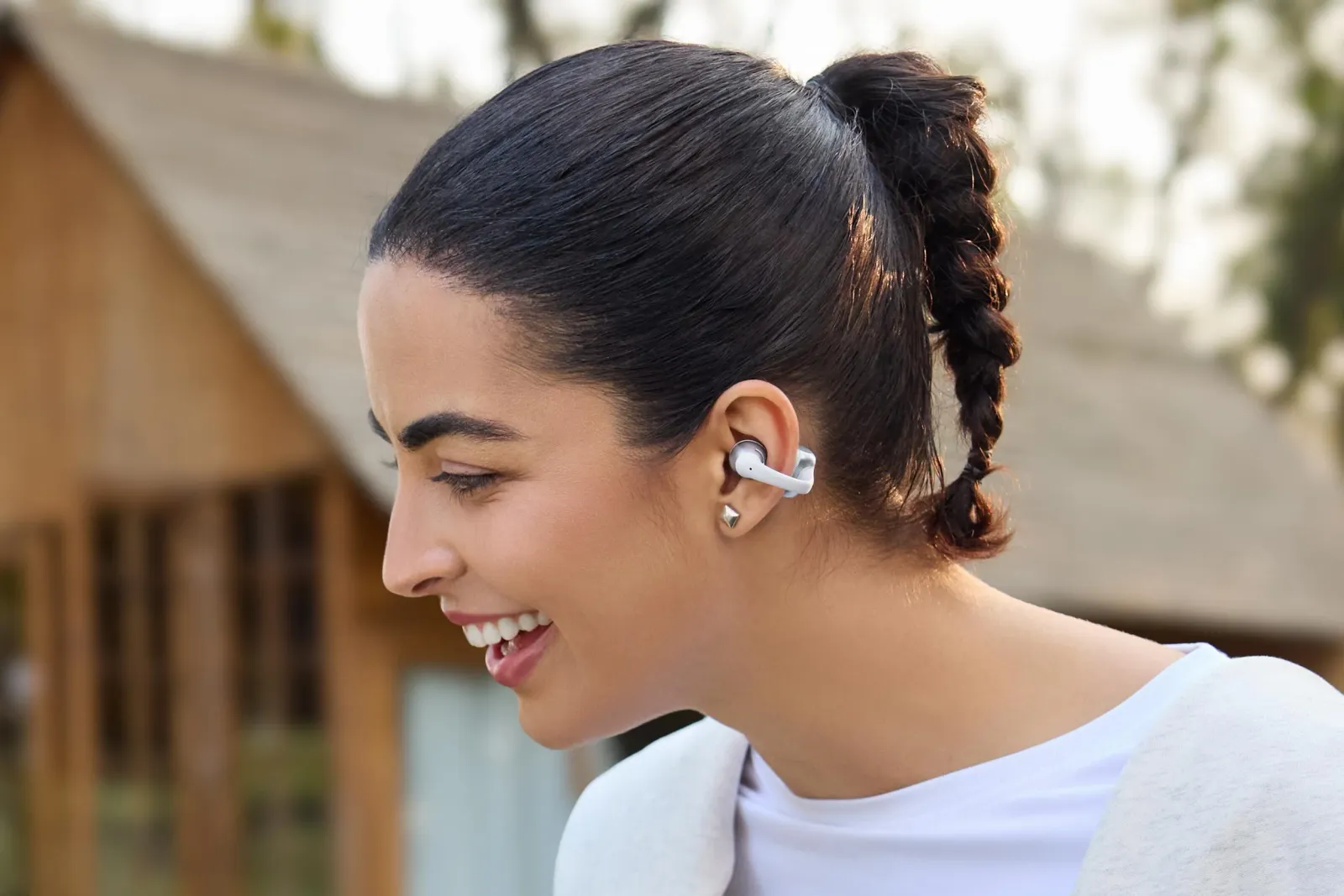
Shokz has announced two new open earbuds, the OpenDots 2 and OpenDots Air, both built to clip behind the ear and project sound without sealing off the ear canal. For product teams and consumer-device executives, the move underscores how differentiation is shifting toward comfort, transparency, and price segmentation in a crowded audio market.
Shokz has introduced two new versions of its open earbuds, the OpenDots 2 and OpenDots Air, and the pitch is simple: make earbuds feel less like a sealed-off commitment. Both models are designed to clip to the back of the ear, with drivers positioned to project sound toward the ear canal without blocking it. That matters because the design is meant to be more comfortable than traditional wireless earbuds that sit inside the ear, while also preserving environmental awareness. In plain English, you can listen without fully shutting out the world around you. For anyone who has spent hours in standard earbuds and felt the familiar pressure, that is the whole bet.
The business detail hiding inside the launch is just as clear. The OpenDots Air are the entry-level model, available in black or daybreak purple for $129.95, which is more than $70 cheaper than the original. That price gap is not just a discount, it is product segmentation in real time. Shokz is signaling that it wants to widen the audience for open-ear audio, not just sell a niche comfort upgrade to early adopters. The OpenDots 2 sit alongside that lower-priced option, giving the company two shots at the same broad category: one aimed at affordability, the other at a more premium version of the same idea. In a market where earbuds are often a race to add more noise cancellation, more battery life, or more features no one asked for, Shokz is leaning hard into a different kind of value proposition, one that says comfort and awareness are the product.
That positioning makes sense because open-ear audio lives in a different lane from the usual wireless earbud fight. Traditional earbuds try to seal out the world. Shokz is doing the opposite, and that is the point. For consumers, the appeal is obvious enough: less intrusion, more awareness, and potentially a better fit for people who dislike the sensation of something sitting inside the ear. For companies, the implication is broader. When a category becomes crowded, brands often stop competing only on raw specs and start competing on use case. Here, the use case is not just listening, it is listening while staying aware of what is happening around you. That is a meaningful distinction for commuters, workers moving through offices, and anyone who wants audio without full isolation.
There is also a strategic lesson in the fact that Shokz is expanding the line with two versions at once. The company is not betting on a single perfect product to define the category. It is testing how far it can push the same basic concept across price points and feature sets. That is a familiar playbook in consumer hardware: build a recognizable form factor, then create tiers so more buyers can find an entry point. In this case, the entry point is unusually tied to comfort and awareness, not just sound quality. The original OpenDots One launched in May 2025, so this is still a young product family, which makes the rapid follow-on launch notable. It suggests Shokz sees enough demand, or enough opportunity, to move quickly before the open-ear niche gets crowded by copycats and broader audio incumbents.
The source does not lay out the full feature list for the OpenDots 2 and OpenDots Air, and that is fine because the underlying business signal is already visible. Shokz is using design as a wedge. Clip-on, open-ear audio is easier to explain than a pile of technical specs, and easier to defend if the core promise is something consumers can feel immediately: comfort. It is also a reminder that in wearables, ergonomics can be a moat. A product that people forget they are wearing can be more persuasive than one that claims bigger numbers on a sheet. That is especially true in categories where the difference between “I use this every day” and “I abandoned this in a drawer” comes down to whether it feels good after 20 minutes, not 20 seconds.
For decision-makers watching consumer hardware, the larger takeaway is that Shokz is quietly reframing the earbud conversation around friction reduction. If the company can make open-ear listening feel normal, not specialized, it may expand the total market instead of fighting only for share within it. The lower-priced OpenDots Air, at $129.95 and in black or daybreak purple, is the clearest sign of that push. It lowers the cost of trying the form factor, which can matter as much as any hardware spec when a category is still educating buyers. For executives, the lesson is simple and a little uncomfortable: in a mature-seeming category, the winning feature may not be the loudest one. It may be the one that makes the product easiest to live with.
This story's Key Insights and Take-aways are locked.
Create a free account to unlock Executive Actions for one credit.
Register to UnlockAlways free for Executives Club members. Join the Club
More in Technology

OpenAI says 10,000 agents cracked a 90-year math problem in 88 hours
The company's claim is audacious, but one mathematician is pushing back. Here's what it means for AI-driven discovery.

Meta still serves child sexual abuse ads on Instagram in India - BBC report
A new report following the BBC Eye investigation says the ads are still there - what it signals for every platform with a self-serve ad engine.

White House yanks 'Build the Wall' game after Tetris Company copyright warning
The administration's arcade game vanished in hours - and the takedown playbook every brand can learn from.