

Simone Biles says “almost dying” after a health scare
The seven-time Olympic champion details a near-death experience, and it reframes how we think about athlete safety, risk, and recovery.
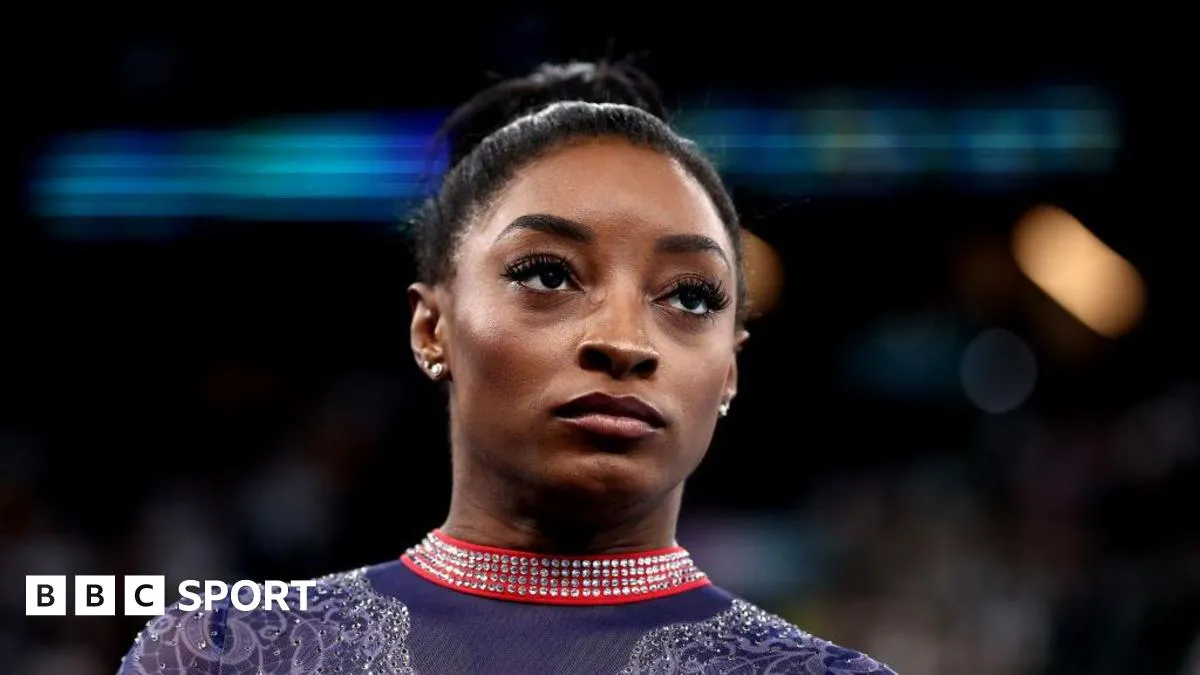
Simone Biles, the seven-time Olympic champion, revealed she suffered a health scare and described it as “almost dying”. For decision-makers in elite sports and adjacent health and risk programs, it raises urgent questions about monitoring, response, and the cost of underestimating health risk.
Simone Biles, the seven-time Olympic champion, has revealed that she suffered a serious health scare. She described the experience as “almost dying,” making clear that this was not a routine bump on the road, but a moment where the stakes were existential.
In other words, the story is bigger than a headline and bigger than one athlete’s personal narrative. When a figure like Biles says she was nearly at the point of death, it becomes a stress test for how elite sport handles medical risk, how teams respond in real time, and how organizations communicate about safety without minimizing what happened.
To understand why this matters beyond the gymnastics floor, it helps to zoom out on how elite athletics works. Athletes live inside a high-performance system that is built to optimize training, competition schedules, and recovery cycles. That system often runs on tight margins: a missed session can affect timing, selection, and readiness. But medical reality is not an optimization problem. A health scare can break patterns instantly, and the most important decisions have to happen before the next training block, not after a press cycle.
There is also a governance angle. In sport, responsibility is typically shared across athletes, coaching staff, team medical personnel, national federations, and event operators. When a health scare becomes public at this level, it forces boards, leadership teams, and medical directors to ask hard, practical questions: What was being monitored? Were there red flags? How quickly did someone treat the risk as urgent? And importantly, what policies existed to ensure that athletes could pause competition or training when their bodies demanded it?
Regulatory and compliance frameworks do not always keep up with the speed of real-world risk. Elite sport is governed by layers of rules and medical standards, but implementation varies widely. Some organizations take a conservative, protocol-driven approach. Others rely more on practitioner judgment and the athlete’s own ability to articulate symptoms. A disclosure like Biles’s can push organizations toward stronger, more standardized protocols for assessment, escalation, and follow-through, because reputational risk and athlete welfare risk grow together.
Second-order implications are where executives should pay attention. When a superstar athlete shares that she felt she was “almost dying,” it can change expectations across sponsors, broadcasters, and fans. Sponsors increasingly want credible athlete welfare commitments. Broadcasters and media partners need to handle health disclosures responsibly, without turning trauma into entertainment. And internal teams, including performance staff and medical staff, may face pressure to prove that the response was adequate and that learning is built into the system.
There is also the human factor, which should not be treated like a soft issue. High-performing athletes are conditioned to push through discomfort, follow training plans, and treat setbacks as solvable. Yet a health scare can be a different category of problem entirely, one that requires attention that is not measured in muscle recovery timelines. When someone with Biles’s track record and resilience says she was almost dying, it signals that even elite performers can face unpredictable threats that demand immediate, sometimes life-first decisions.
For peers in leadership roles across sport, this becomes a strategic stakes question. The athletes might be the ones taking the physical risk, but the organizations are the ones building the system that either catches danger early or allows it to escalate. Biles’s disclosure, as reported, is a reminder that athlete safety is not a slogan. It is a set of operational choices, made under uncertainty, with consequences that can become permanent.
Biles did not provide more details in the source beyond the fact that she suffered a health scare and described it as “almost dying.” Still, that alone is enough to elevate the urgency of how organizations think about medical readiness, communication, and escalation pathways. If elite sport is serious about protecting athletes, leadership teams should treat this kind of disclosure as a prompt for review, not a distraction for spin. In a world where performance plans are built around certainty that never exists, health risk is the one variable nobody can afford to ignore.
This story's Key Insights and Take-aways are locked.
Create a free account to unlock Executive Actions for one credit.
Register to UnlockAlways free for Executives Club members. Join the Club
More in Entertainment

Entertainer Russell Brand denies 7 sex charges amid accuser's 'couldn't breathe' claim
The alleged victim's account sharpens the reputational and legal stakes for Brand, his platforms, and any business tied to a public figure under criminal scrutiny.

Russell Brand's accuser 'bewildered and confused' as he denies 7 sex charges
The criminal case against the comedian is a live test of how media companies manage talent risk when serious allegations go public.

'It's a Magic Trick': Ballet Experts Say Rosalía's SNL Pose Is Impossible
Three ballet experts tell Rolling Stone Rosalía's gravity-defying SNL stillness shouldn't be possible - and why the debate is now part of the show.