

SK Hynix raises $26.5B in US share sale ahead of Nasdaq debut Friday
The South Korean chipmaker’s mega offering lands on Nasdaq Friday, setting a new bar for foreign listings.
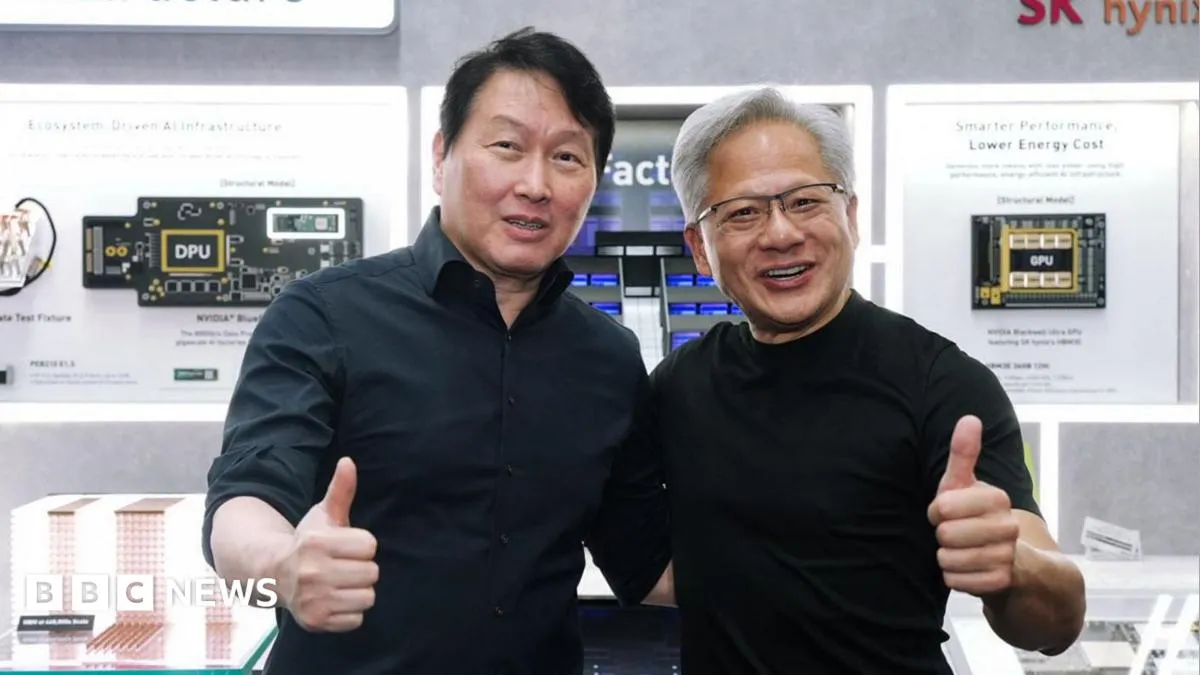
SK Hynix, the chip giant, is raising $26.5 billion in a mega US share sale. The company’s shares begin trading on Nasdaq on Friday, in what the BBC describes as the largest ever debut by a foreign firm.
SK Hynix is raising $26.5 billion in a mega US share sale, and its shares are set to start trading on Nasdaq on Friday. The BBC notes this will be the largest ever debut by a foreign firm. In plain terms: this is a big global capital event for a company that sits at the center of computing’s supply chain, and it is happening on a US exchange where market attention is the highest.
For decision-makers, the immediate question is not just “how much did it raise,” but “what does this signal” for access to US capital and for investor appetite for large foreign tech issuers. The Nasdaq debut timing also matters operationally. Trading begins Friday, meaning the offering is landing into a specific market mood, liquidity conditions, and risk appetite in real time. When a foreign company attempts a market-moving debut like this, the market is effectively voting on both the company and the listing structure.
To understand why this kind of debut is a headline-grabber, remember how foreign listings typically work. Large issuers weigh costs and benefits across home market access, investor base, regulatory burdens, and how index providers and brokers treat liquidity. A Nasdaq listing is not just a venue change. It is a shift in where institutional investors find the stock, how research coverage is organized, and how index and benchmark tracking can amplify demand.
On the regulatory side, the US capital markets framework is built to encourage transparency while still allowing issuers to compete for capital. When a foreign firm lands in the US market with a transaction of this size, it also highlights the gatekeeping role of regulators and exchange rules. Those rules are meant to reduce the information gaps that can spook investors. The tradeoff is cost and time. The fact that SK Hynix is doing this at scale suggests the issuer believes the benefits of US access outweigh the complexity.
Now zoom in on the corporate finance reality for a company like SK Hynix. A $26.5 billion raise is a massive deployment of risk capital, and it usually connects to priorities like manufacturing investments, technology upgrades, and balancing the cash needs of a cyclical semiconductor industry. Even if today’s BBC report focuses on the sale and debut, the underlying logic is hard to miss: scale in semiconductors often demands scale in financing. When global capacity and demand swing, companies need a funding plan that can keep them competitive across cycles.
There is also a governance and investor-relations angle board members should care about. A mega debut puts a company under a spotlight from day one. The market expects crisp communication, consistent reporting, and a credible path for how the raised funds connect to strategy. Large offerings are often interpreted as a confidence signal by insiders and as a stress test by outsiders. If the pricing and debut generate strong early liquidity, it can lower the perceived cost of capital. If not, it can complicate future fundraising.
Finally, think about the second-order effects. If this will be the largest ever debut by a foreign firm, it sets a reference point. Other non-US issuers considering US listings will watch how investors respond, how the stock trades immediately after the start date, and how quickly coverage expands. Peer CEOs and CFOs will also notice the competition for underwriting and investor attention. Large US debuts can pull liquidity toward the featured issuer and temporarily affect the relative attractiveness of other foreign listings or secondary offerings.
For SK Hynix, Friday is not just a trading day. It is a credibility moment. For boards and finance leaders at peer chipmakers, it is a live case study in how far foreign companies can go to tap US capital markets, and what it takes to make a Nasdaq debut land as a landmark, not just another ticker change.
This story's Key Insights and Take-aways are locked.
Create a free account to unlock Executive Actions for one credit.
Register to UnlockAlways free for Executives Club members. Join the Club
More in Business

AstraZeneca $27B wipeout as Wainua late trial misses cardiovascular target
A failed late-stage heart study triggered a swift market punishment, forcing investors and boards to reset timelines and risk.
Comcast shares jump 25% as it plans to split NBCUniversal and Sky
The tax-free spin-off could reshape focus, funding, and competition across media and tech for years.

Bungie cuts most Destiny 2 staff as Sony says Marathon still matters
Herman Hulst confirms layoffs affecting most Destiny and some Marathon teams after Bungie admits Destiny fell short.