

Skeletor steals the show in Masters of the Universe reboot, and it’s not an accident
Jared Leto’s Skeletor hits the rare balance of meme-funny and genuinely threatening, proving longevity beats seriousness.
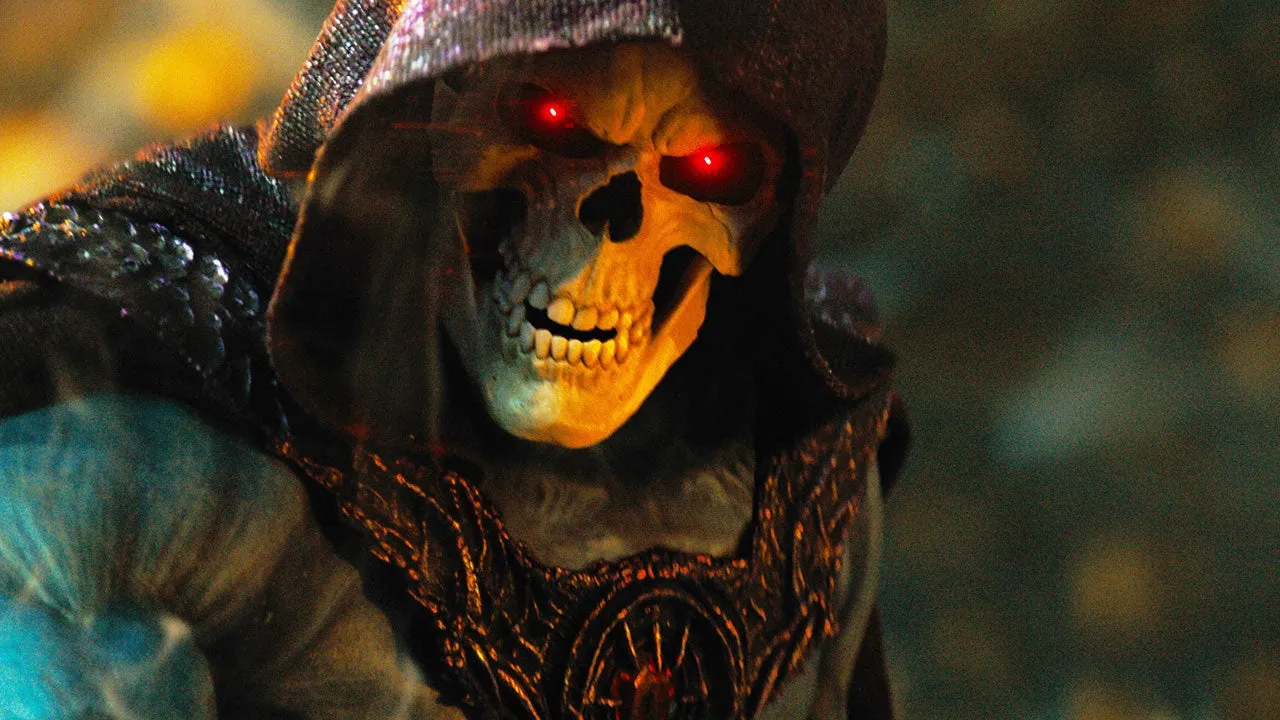
IGN says Masters of the Universe in theaters nails its reboots biggest advantage in Jared Leto’s Skeletor, delivered with a tuned mix of goofy and menace. For decision-makers, it’s a case study in how tone management and character consistency can keep a 50-year toy franchise culturally sticky.
Warning: Spoilers follow for Masters of the Universe. The long-gestating reboot of Mattel’s sword and sorcery franchise is in theaters now, and IGN’s Clint Gage gave it an 8/10. His take, per the review, is that the best way to add to a 50-year-old franchise that’s about toys as much as anything else is to not take it too seriously. But the film’s most reliable “win” is not He-Man, played by Nicholas Galitzine. It’s Skeletor, played by Jared Leto.
According to IGN, Skeletor lands the rarest tonal trick in the whole movie: he’s the funniest character while never losing his threat level. That balance shows up immediately. In Skeletor’s introduction scene, he overthrows King Randor (James Purefoy), Adam/He-Man’s father and ruler of Eternia, while Adam is still a boy. The point is not subtle, and IGN notes you don’t need the full film to see it, since a clip was made available online before release. The scene gets attention because it captures Skeletor as a goofball and a menace at the same time, and IGN specifically calls out stellar VFX work on Skeletor’s expressions. That matters because most villains that lean too hard into absurdity stop feeling dangerous. Skeletor does the opposite: comedy and treachery become the mechanism of fear.
The “how” is partly performance, partly animation craft. IGN points out that Director Travis Knight’s animation background pays off because Skeletor’s face has more malleability than many live actors, even though the character is literally a skull. That visual flexibility lets Skeletor express goofy impulses and sinister intent in the same breath. And it also explains why he stands out even with a stacked cast. IGN mentions Galitzine as a likable lead, Camila Mendes as the “one sane person” among the heroes, and Idris Elba and Alison Brie as charming and watchable as Man-At-Arms and Evil-Lyn. But it’s Skeletor’s screen presence that wins the comparison: the character can take advantage of visual possibilities that a human face cannot cover as easily.
Then the review stacks sequence after sequence where Skeletor’s personality does the work of a punchline and a plot threat. IGN describes him refusing to be baited into a 1-on-1 fight with He-Man because he “doesn’t want to.” He repeatedly fails to activate the Sword of Power’s power despite striking the signature pose and delivering the iconic lines. And he comments on He-Man’s physique, including references to his “glorious thighs” (Happy pride?). In other words, the movie is not trying to sanitize the silliness. It’s weaponizing it. Even in the final battle, Skeletor enters Adam’s mind and participates in flashbacks to his life on Earth, including lifting weights at a gym and berating him at the office while wearing a suit and tie.
This is where the story stops being just about one great villain and starts acting like a blueprint for how franchises survive. IGN frames why audiences are pleased: the new film’s Skeletor behavior harkens back to the classic interpretation from the original He-Man cartoon, which established the persona for decades. Skeletor also has deeper cultural penetration than other He-Man characters, reaching modern consciousness through clips, gifs, and meme images that have spread widely for years. The review’s point is important: the humor does not require warping Skeletor into something else. He’s already “a cheeky bastard” with goofy mannerisms, and he berates his henchmen with hilarious insults. The memes cement status because they preserve identity rather than replace it.
For executives thinking about reboot risk, this is the core lesson IGN lands on: Skeletor is both an extremely powerful archvillain and a sassy diva, without either aspect undercutting the other. IGN notes that, in many fantasy or sci-fi works, making a primary nemesis too silly can damage narrative credibility. It cites characters like Sauron, Darkseid, or Thanos as examples of villains that are not positioned as funny. Skeletor succeeds by hitting a specific tonal register that fits the Masters of the Universe brand and even strengthens it by adding the franchise’s most dynamic character. That’s not a random vibe call. It’s a design philosophy.
Toy-centered franchises often build heroes and villains around physical features and combat gimmicks, and IGN says that’s not an insult, just a fact of the design philosophy. Skeletor breaks that mold because he is arguably the most well-known supervillain who can be the franchise’s ultimate antagonist and its funniest character at the same time. The review then ties that to long-term cultural cachet, arguing that no other He-Man character has that level of specificity, which helps explain why the brand never reached the long-term cultural hold of other toy properties like Barbie, LEGO, or Transformers. A straightforwardly menacing Skeletor with dramatic gravitas but no comedy “just wouldn’t feel right,” according to IGN’s framing, with a comparison to Frank Langella only as an “absolute legend” hypothetical.
So what’s the strategic stake here? It’s tempting to read this as “Skeletor is hilarious,” but IGN’s deeper claim is that tone is product-market fit. The movie can be goofy without going weightless, and it can be absurd without going unserious. That’s exactly the kind of “reboot success” that matters to decision-makers: it reduces the risk of alienating existing fans while giving a new audience a reason to show up beyond nostalgia. If you’re a founder, investor, or operator watching how legacy IP gets remade, Masters of the Universe is effectively telling you that the most important “feature” might be character consistency at scale, not technical spectacle alone. In a crowded attention economy, the franchise’s MVP is not the hero in motion. It’s the villain whose comedic timing is engineered to preserve threat.
This story's Key Insights and Take-aways are locked.
Create a free account to unlock Executive Actions for one credit.
Register to UnlockAlways free for Executives Club members. Join the Club
More in Entertainment

Ali G's 'stooge' says he was in on joke, outplayed Sacha Baron Cohen
A 54-year-old aspiring actor says he recognized Sacha Baron Cohen mid-shoot, kept his MAGA act up, and let the film-makers think they had fooled him.

Entertainer Russell Brand denies 7 sex charges amid accuser's 'couldn't breathe' claim
The alleged victim's account sharpens the reputational and legal stakes for Brand, his platforms, and any business tied to a public figure under criminal scrutiny.

Russell Brand's accuser 'bewildered and confused' as he denies 7 sex charges
The criminal case against the comedian is a live test of how media companies manage talent risk when serious allegations go public.