
Slate’s $24,950 EV truck bets Americans want simpler rides, not $50K defaults
A Bezos-backed startup is pricing down to $24,950 by stripping features, and it claims every sale is profitable from day one.
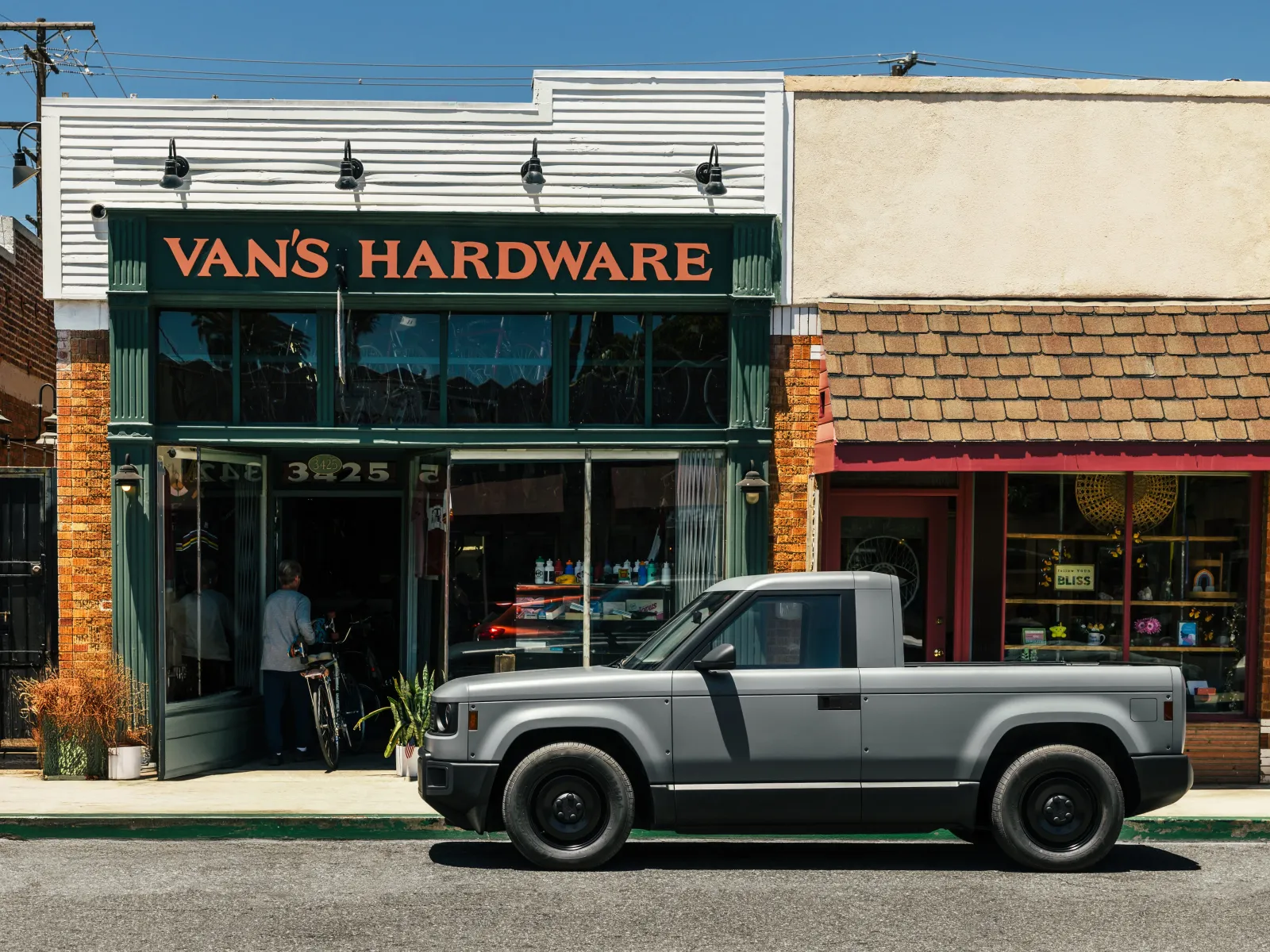
Slate, a Jeff Bezos-backed startup, says its tiny electric pickup will start at $24,950 and will be profitable from the start. If its bet holds, it pressures automakers and investors who keep teasing cheaper EVs but struggle to reach profitable volumes.
Slate’s tiny electric pickup is starting at $24,950. That price point is the whole story: the average new US car transaction price was $50,900 this spring, up 3.3% since December, according to CarGurus data shared with Business Insider.
So Slate is essentially betting against the market’s default settings. While the US is still buying expensive cars quickly, the company is building a “forgotten” product for drivers who want an EV truck that does not feel like a $50K tech bundle on wheels. The truck is 14.6 feet bumper to bumper, and Slate stripped out features that have become standard: manual crank windows, two doors, two seats, no infotainment screen, and no speakers for music. Even air conditioning was debated internally, before the company ultimately decided to include it on the production vehicle.
This is not just a pricing decision, it is a business model that tries to dodge one of the most painful EV realities. For years, automakers have teased lower-cost electric vehicles that would broaden access, but few have shipped something both affordable and profitable. Tesla’s promised $25,000 car never became the clean-sheet vehicle Elon Musk described. Nissan planned a less expensive version of its new Leaf, then dropped that trim after launch. Chevrolet brought back the sub-$30,000 Bolt only as a limited-time return. Volvo targeted a $35,000 base price for the EX30, then raised prices after tariff pressure and discontinued the model in March. Meanwhile, legacy automakers have taken billion-dollar write-downs when EV demand did not meet expectations.
Slate’s counter-position is blunt. The company told CNBC that every truck it sells will be profitable from the start. And Slate told Business Insider that more than 10,000 people placed nonrefundable $300 preorders in the first four hours after its website opened, before any test drives were available. Nonrefundable deposits do two things for a startup: they filter out tire-kickers and they provide a cleaner early signal to plan production and cash needs.
The product design is built around that same philosophy of subtraction. Slate is not leaning into consumer-AI debates, not trying to turn climate controls into a touchscreen maze, and not getting pulled into the endless Apple CarPlay fights. Instead, it sticks to analog controls. Drivers control fan speed with analog buttons and dials. Then Slate lets buyers add “more” after delivery via an accessories catalog. That includes SUV and second-row seat kits, and even $50 door-mounted armrests. In other words, the base truck gets you into the price neighborhood, and personalization becomes a second-stage business rather than a headline cost.
Zoom out and the market context gets even sharper. CarGurus data says there are now more vehicles on dealer lots priced above $50,000 than below $35,000. And expensive models still move fast. The $122,000 Cadillac Escalade and the $84,000 Toyota Sequoia spend an average of 30 days on dealership lots before finding a buyer, compared with the industry average of normally about 60 days. Demand has not stalled simply because the sticker price is high. JD Power and GlobalData forecast Americans will buy more than 1.3 million new vehicles in June, up 3.6% from the same month last year.
So why does Slate think “cheaper” still has a runway? Part of it is cultural, and the source is pretty clear about that internet signal. Tiny trucks and analog interiors are having an obsession moment online, with “kei trucks” and decades-old subcompact US pickups collecting cult followings. Kei trucks are small, slow pickups from Japan that shoppers can import into the US if they are more than 25 years old. Older American favorites like '90s-era Ford Rangers, Chevy S-10s, and Toyota Tacomas also draw fans. Slate’s bet is that this nostalgia translates into willingness to pay for a modern electric version, but only if the monthly payment math does not demand luxury-level pricing.
Competition does exist, and Slate is not operating in a vacuum. Ford is working on a lower-cost EV platform that could eventually produce a truck with automatic windows in Slate’s pricing neighborhood. Rivian’s smaller R3 could move Rivian closer to the mid-$30,000 range, though it is still years away. That leaves Slate in a relatively lonely position: it is not the only company chasing cheaper EVs, but it is the only one in the source that is “confident it will make money immediately.” That confidence is a strategic advantage, but it also raises the bar. If Slate cannot scale profitability as it builds, the whole “sub-$25k EV without write-downs” narrative starts to look like wishcasting.
For boards and investors, the second-order question is uncomfortable but important: if the US market keeps rewarding expensive vehicles on dealer lots and still buys big cars quickly, what does that mean for EV strategies that rely on lowering MSRP? Slate is trying to prove a narrower thesis: that product simplification, analog-first design, and aggressive base pricing can unlock a profitable segment even when the broader market is going the other direction. If it works, it could force competitors to rethink whether “affordable EV” is primarily a marketing promise, or whether it can actually be engineered into a sustainable cost structure without sacrificing demand.
This story's Key Insights and Take-aways are locked.
Create a free account to unlock Executive Actions for one credit.
Register to UnlockAlways free for Executives Club members. Join the Club
More in Business

Bungie cuts most Destiny 2 staff as Sony says Marathon still matters
Herman Hulst confirms layoffs affecting most Destiny and some Marathon teams after Bungie admits Destiny fell short.

SK Hynix jumps 11% after seeking up to $29.4B in Nasdaq listing
The chip giant filed for a Nasdaq listing plan that could raise $29.4 billion, instantly reshaping investor expectations.

Micron revenue hits nearly $42B as AI memory lifts gross margins above 81%
Fiscal Q3 results crush estimates, prove AI memory is rewriting Micron's margins, and change the momentum math for the whole chip stack.