
Slay the Spire 2 patch kills a Neow's Bones RNG prediction exploit after 8-hour proof
Mega Crit swaps its RNG approach, fixes a seed correlation bug, and reshapes Act 3 with a new boss.
Mega Crit shipped a major Slay the Spire 2 balance patch that fixes an RNG bug tied to Neow's Bones predictions, after a player’s “eight-hour descent into madness” investigation was credited in the patch notes. For decision-makers, it is a reminder that seemingly tiny determinism quirks can become exploitable product defects overnight.
Slay the Spire 2’s latest major balance patch includes a targeted fix for an RNG bug that let players predict outcomes tied to Neow's Bones. The issue surfaced because user tckmn on the subreddit published an “eight-hour descent into madness” manifesto, credited in the patch notes, to prove the problem existed. Mega Crit’s response is blunt on the stakes: “Rest assured that your suffering is now truly random!”
Here’s the core of what got fixed. Neow's Bones is a starting option where you take on two starting relics in exchange for a curse. That curse can be a dead card or something that can “utterly spoil the economy of your run,” like Debt. The discovery was that the game did not distribute those outcomes randomly in the way players assumed. Specifically, when you started in the Underdocks, Neow’s Curse was 54% likely to give you the Debt curse. That kind of skew is the exact thing players test with spreadsheets and pain. And the dev explanation makes clear why it happened: Slay the Spire 2, like “Most games, including STS2,” uses pseudo-random number generators (PRNGs). PRNGs are fed a seed value, and with the same seed you get the same sequence. Mega Crit expected different PRNGs, fed different seeds, to be unrelated. “But we were wrong,” the patch notes explain, “and it turns out that our strategy allowed players to predict outcomes given knowledge of unrelated parts of the game.”
This is one of those bugs that sounds like nerd trivia until you remember it changes user behavior and trust. In a roguelike, the entire business model is built on replayability, the promise that every run is its own chaotic story. If a subset of runs is meaningfully more likely to roll a specific curse because of correlated decimals used elsewhere, then the “randomness” becomes a partially legible system. Players do not need to break the game to feel cheated. They only need enough evidence to suspect the math behind their losses is not fully invisible.
Mega Crit pinpoints the mechanism with a simple explanation that should matter to anyone shipping games, not just turn-based ones. The decimals governing which Act 1 you got also correlated to your Neow’s Bones curse. The dev notes offer an example: “For example, if our act roll is >0.5 (we’re in the Underdocks), then it’s highly likely that our Neow’s Bones curse roll will be But rest assured, ”your suffering is now truly random!”” The patch moves to a swapped system that is “far less predictable.” In other words, it is not just a small tuning adjustment. It is a change in how the game avoids cross-linking “unrelated parts of the game” through shared structure in how randomness is generated.
And yes, the patch is bigger than the RNG fix. It also includes a pile of balance changes. The Regent is impacted most of all, with some cards moved upward, others dialed back. The Monarch's Gaze gets a bump, while Reflect is nerfed slightly. This matters commercially because balance patches are usually the part players feel in the first hour. But RNG fixes are the part players talk about for months, because they challenge the fairness narrative. When both show up in one release, it signals a studio actively managing both game feel and the invisible rules that shape decision-making.
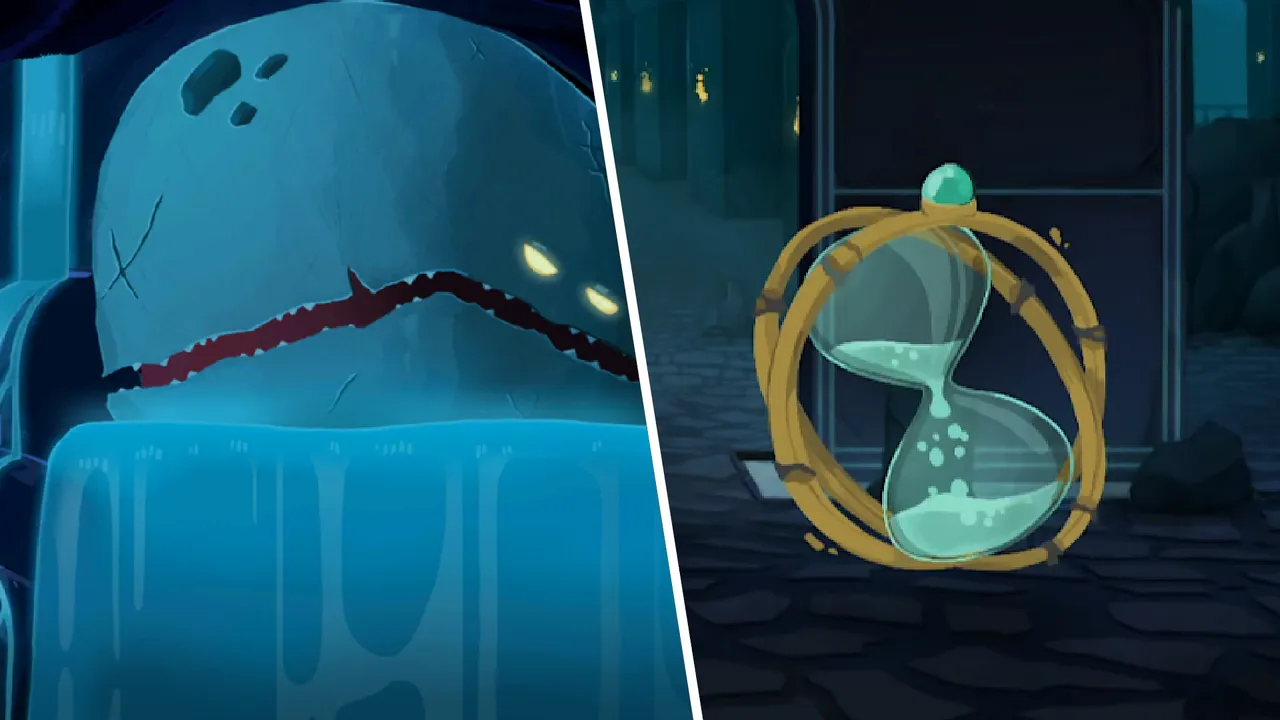
The Act 3 boss situation also got a restructure, and the reason is refreshingly candid. Mega Crit says Doormaker was over the complexity threshold and had “lingering issues.” It references an earlier beta patch brought the change, then explains: “We decided that starting over fresh will let us hit what we actually want for an Act 3 boss.” Doormaker is replaced by the Aeonglass, described as a “fearsome boss” that functions like a DPS race. It pumps Wither curses into your hand that deal damage to you, and ramps rapidly whenever the boss upgrades them. That’s a mechanical shift that affects how players plan runs, including how they value defensive lines and curse management, and it will ripple into community guides and deck archetypes.
Second-order implication for executives and operators: RNG bugs can become public product risk faster than you expect. The tckmn investigation was not a drive-by complaint. It was a long-form proof that the “math” of a roguelike was not behaving as promised. When patch notes explicitly credit that work, you learn something about governance and customer feedback loops. It is not just that bugs get fixed; it is that player-led research can materially influence engineering priorities. The ROI of listening is high when the bug is systemic and trust-sensitive.
For boards and leadership teams in adjacent categories, this is also a reminder that “predictable randomness” is a design surface. Even without regulators, there is an implicit consumer protection angle: fairness perceptions. The source does not mention any regulatory action, but the logic is universal. When outcomes are advertised (or inherently expected) to be random, the underlying implementation becomes part of the promise. Mega Crit’s move to make the system “far less predictable,” plus the explicit explanation of PRNG seeding correlation, is a textbook example of turning a tricky technical defect into a clear customer-facing resolution.
This story's Key Insights and Take-aways are locked.
Create a free account to unlock Executive Actions for one credit.
Register to UnlockAlways free for Executives Club members. Join the Club
More in Business

A flaw in PHP just forced governments to pull their own sites offline
European agencies from Belgium to Germany took websites dark to patch a critical weakness in the language behind almost 70% of the web, and the blast radius extends far beyond government portals.

BioWare shuts down, Mass Effect 5 dead after $55B EA buyout
The legendary RPG studio's closure lands months after a $55 billion investment group buyout of EA, raising tough questions for gaming's biggest acquirers.

Musk weighs Tesla-SpaceX mega-merger as boards form review panels
Special committees at both companies will examine a tie-up that could fuse electric vehicles and space launch, forcing a fresh look at governance and valuation.