
Social media is fueling a booming children’s skincare market girls risk losing
The rabbit hole is getting bigger, and experts warn the long-term impact could be worse than the glittery routines look.
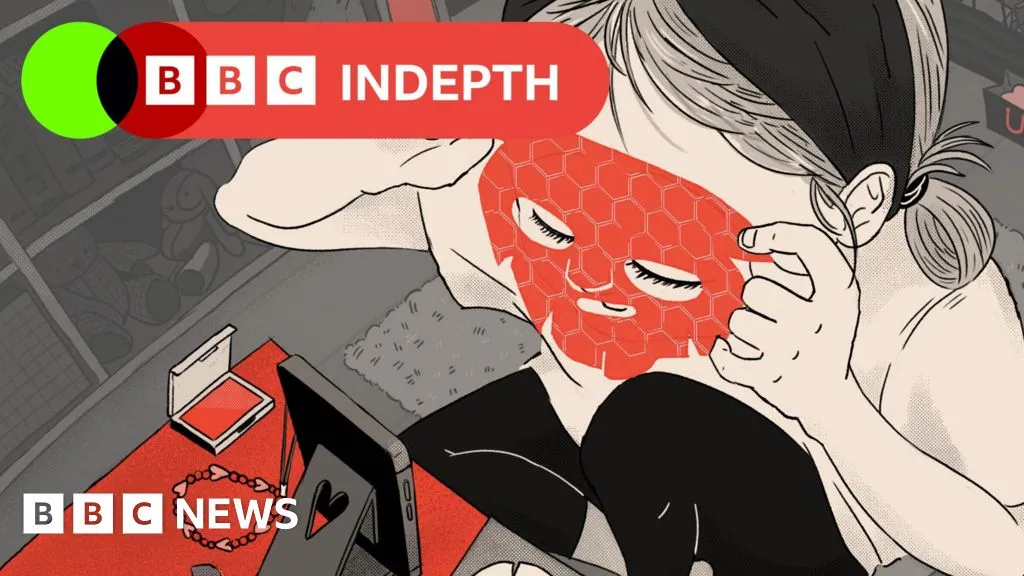
BBC News reports that social media is fueling a booming market for children's skincare. Experts fear the long-term impact on girls.
Social media is fueling a booming market for children's skincare, and experts fear the long-term impact on girls. That is the core of the story BBC News brings into focus: skincare routines are no longer just an adult habit or a teen phase. They are becoming a pre-teen default, complete with product stacks, before-and-after culture, and the constant pressure to “fix” skin that is still developing.
The uncomfortable part is not that kids are using moisturizers or trying to feel confident. It is the scale and the direction of travel. BBC News frames how the market is expanding in tandem with social media attention, turning skincare into content, identity, and a sales engine. Experts, as the report notes, fear the long-term impact on girls, which is where the second-order consequences start to matter to decision-makers. When an entire category is built on repeated exposure and perfection cues, the outcome is rarely confined to the bathroom shelf.
To understand why this is happening, it helps to look at what social platforms do best. They compress time and reward consistency. A skincare routine becomes a repeatable format: post the steps, show the results, signal seriousness, and collect engagement. That loop creates an incentive for brands to tailor products and messaging for younger users, not because the science demands it, but because the attention market does. In other words, the product is not just a product. It is a vehicle for visibility, belonging, and status, which are powerful for anyone, and especially potent for girls navigating body image and peer comparison.
Market growth also changes how companies think internally. When category demand is driven by trends and influencer ecosystems, marketing spend and product development can move faster than traditional consumer protection guardrails. That can lead to a messy mismatch between what regulators and clinicians typically evaluate and what social media normalizes. Regulators usually ask whether a product is safe, appropriate, and properly labeled for its intended use. Platforms ask whether it drives watch time. Brands chase both, but they optimize for whichever metric shows up fastest.
In many jurisdictions, cosmetic regulation focuses heavily on safety and labeling rather than proving efficacy for specific youth outcomes, because cosmetics generally are not treated the same way as medicines. That regulatory reality matters here: a product can be permissible without being ideal for vulnerable users. The BBC News framing is a warning flag about downstream harm, not a claim that every product is inherently dangerous. The risk is more systemic. It is about how routines may reinforce appearance concerns, encourage overuse, and normalize the idea that skin is a problem to constantly manage.
The “long-term impact” concern is the most important phrase in the report, because it points beyond immediate irritation or short-term effects. If girls grow up with skincare as a daily performance, the psychological and behavioral footprint can outlast the trend. That can mean higher likelihood of chronic anxiety about appearance, increased sensitivity to imperfection, and a tightening loop where more products are needed to “maintain” the look. Even if a specific routine is not harmful on day one, the cumulative pattern is what experts worry about.
Boards and senior executives should also notice the accountability problem. When a category targets children, reputational risk is not just a PR issue. It becomes a governance issue. Product teams might argue they are “age-appropriate” because the ingredients are allowed in cosmetics. Marketing teams might argue they are simply reflecting consumer demand. Yet the reported concern, emphasized by experts in BBC News, is that social media is driving a market for children’s skincare faster than we can fully understand long-term consequences for girls.
If you lead a consumer health or beauty brand, or if you fund, partner with, or regulate in this space, the strategic stakes are clear. This is a category where growth and harm can be entangled. A company can win short-term by riding the content wave, but it might lose later to backlash, tighter rules, and brand damage. For peers, the lesson is not to panic. It is to treat “children’s” as a red line for extra diligence, clearer messaging, and careful governance around how products are presented and who they are for. The rabbit hole is already forming. The question is whether decision-makers help slow it, shape it responsibly, or keep feeding it until the long-term impact becomes unavoidable.
This story's Key Insights and Take-aways are locked.
Create a free account to unlock Executive Actions for one credit.
Register to UnlockAlways free for Executives Club members. Join the Club
More in Business

Anthropic’s Levant Alpöge cracks the Jacobian conjecture after 87 years
A Harvard valedictorian used Claude to hit a 1939 breakthrough, but the missing “why” is the real problem.

Uber buys Delivery Hero for nearly $15B, vaulting to top food delivery outside China
The deal doubles Uber's dual-services footprint and pushes a ride-and-eats bundling play into 50 more markets.

Epic and Google drop settlement bid, forcing rival Android app stores by July 22
Google told the court it is ready to carry third-party app stores starting Wednesday, July 22.