
Sodium metal battery charges from 0 to 100% in 4 minutes, holds for 6,000 hours
A China team says a tough gel electrolyte blocks dendrites, easing the two biggest EV battery fears: speed and safety.
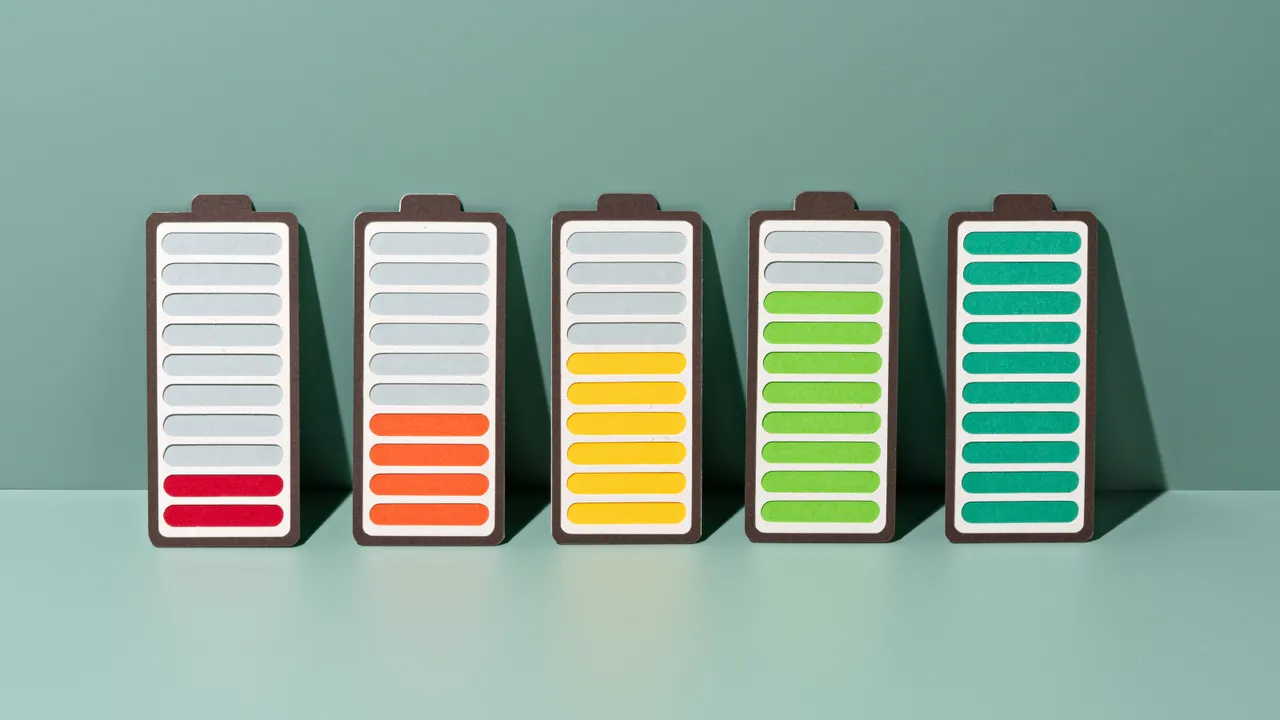
Researchers in China reported a sodium metal battery design that fully charges in four minutes and avoids dendrite-related short circuits for over 6,000 hours. If the approach scales, it could pressure lithium-ion dominance by enabling safer, faster, potentially cheaper batteries built around sodium instead of lithium and cobalt.
Here is the battery news that actually matters: a sodium metal battery design is charging from 0 to 100% in just four minutes, and it is surviving over 6,000 hours without dendrites short-circuiting the cell. That is the kind of headline that usually comes with a footnote. This one comes with a study, published May 21 in the journal Nano-Micro Letters, and it targets the core failure mode that has kept sodium metal batteries largely theoretical.
Sodium metal batteries, or SMBs, are ultrafast-charging batteries that use metallic sodium as the anode. In theory, they combine strengths that lithium-ion has and fixes that sodium-ion has not. But SMBs have a big, chemistry-shaped problem: dendrite formation. Dendrites are spiky, stalagmite-like sodium deposits that grow on the highly reactive pure sodium anode. Over time, they can bridge the cathode to the anode, short-circuiting the battery. On top of that, sodium is extremely reactive, so the battery’s protective layer dynamics are tricky. When the anode reacts with the electrolyte, it forms an SEI layer, typically 10 to 50 nanometers thick. In many sodium battery chemistries, that SEI cracks. The cracks create spots that attract more sodium ions, which then feed dendrite growth.
The China team’s proposed fix is a tough, quasi-solid gel electrolyte they call Sn-FB QSE. The electrolyte strengthens the battery against punctures and gives the cell a semisolid internal structure designed to prevent dendrites from forming in the first place. In other words, this is less “we found a new ingredient” and more “we changed the physical environment inside the battery so the failure mechanism cannot get traction.” That distinction is important for decision-makers because it determines whether the solution is likely to survive scaling. Gel electrolytes are easier to control than many atom-by-atom chemical tweaks.
The reported performance is unusually specific. After charging and discharging for over 6,000 hours, the team says dendrites did not short-circuit the battery. When charged from zero to 100% in four minutes, the battery retained an electrical charge of 80.1 mAh g-1. When the team charged it more slowly, from zero to 100% in 20 minutes, it retained 90% of its charge capacity over 2,000 cycles. The slower charging speed lowered cost and improved safety, and it also produced durability that the researchers say matches theoretical limits for lithium-ion batteries. Importantly for anyone tracking the EV charging arms race, they claim this ultrafast charging behavior was achieved even while charging quicker than lithium-ion batteries can be charged.
That matters because charging speed is still a sticking point for battery deployment in electric vehicles. The fastest charging EV today, according to the source, is the BYD Denza. BYD says it can go from 10-70% in about five minutes, but it requires highly specialized 1MW proprietary chargers. For a more mainstream benchmark, Tesla representatives say the Model 3 can recharge from 10-70% in approximately 15 minutes using Tesla’s own 250kW flash chargers. Meanwhile, representatives from Zapmap say the same vehicle takes around 90 minutes to reach 80% on 50kW chargers. That gap is not just user experience. It changes where chargers get built, what grid upgrades are needed, and how automakers make commitments.
So why does this story keep showing up in boardroom conversations? Because most batteries in modern tech, from smartphones to EVs, are lithium-ion. Lithium-ion batteries are expensive to produce because they depend on geographically concentrated metals like lithium and cobalt, and they are prone to catching fire. Meanwhile, manufacturers have pushed toward sodium-ion batteries at commercial scale because they are cheaper and safer. The tradeoff is that sodium-ion is heavier and larger than lithium-ion.
SMBs are the research community’s attempt to thread the needle between those two realities. Sodium metal uses a metallic sodium anode, not graphite or hard carbon. In principle, that can make SMBs lighter and cheaper to produce, bringing them closer to lithium-ion on size and weight while maintaining a different safety profile. The source points out that SMBs are safer partly because sodium ions are bulky, and they cannot flow through breaches quickly enough to cause thermal runaway. Thermal runaway is the self-sustaining chain reaction that causes batteries to ignite when damaged.
Still, this is not “problem solved and shipping containers are on the way.” The research must be replicated and scaled. The source also flags a real constraint: devices like smartphones are subject to harsh temperature changes that affect batteries relying on gel electrolytes. That means even if ultrafast charging and long-term stability work in a lab setup, manufacturers would need confidence that the chemistry behaves reliably across environments. If the issues of dendrite formation and stability at lower temperatures can be resolved, replicated, and scaled, the researchers say SMBs could reshape the economics of battery deployment over the next decade.
For executives, the second-order question is not whether sodium metal batteries are cool. It is whether a gel-based dendrite suppression strategy can survive the three pressures that typically break breakthroughs: manufacturing variability, lifecycle testing under realistic charging profiles, and system-level integration with fast-charge infrastructure. If it does, SMBs could be excellent candidates for EV use cases where fast charging matters most, such as public transport or commuter cars, because they can charge faster even if they may have lower ranges than sodium-ion and lithium-ion batteries. And that is the strategic stake: an improvement in charge time and safety could shift procurement priorities, production investments, and competitive positioning for years, not quarters. The best part is the story’s claim is specific: four minutes to full charge, 6,000 hours without dendrites short-circuiting, and a durability curve that aims to look like lithium-ion’s theoretical ceilings.
This story's Key Insights and Take-aways are locked.
Create a free account to unlock Executive Actions for one credit.
Register to UnlockAlways free for Executives Club members. Join the Club
More in Science

Alaska's 1,580-foot tsunami had warning signs. Scientists just found them.
Rapid glacier retreat, heavy rainfall, and thousands of tiny tremors preceded Alaska's 1,580-foot tsunami, a warning for every coastal community in a warming world.

The rare mutation that lets high-risk brains dodge Alzheimer's
Scientists found a natural defense against protein buildup, opening a new path to preventive treatments.

3,000 steps a day may halve Alzheimer's decline, study finds
New research links a modest daily walk to less tau buildup and nearly half the cognitive and functional decline, even for those with early signs.