
Sony patents controller buttons that harden or soften based on on-screen action
A WIPO filing from November 2024, published in May, points to adaptive tactile controls that could reshape controller UX.
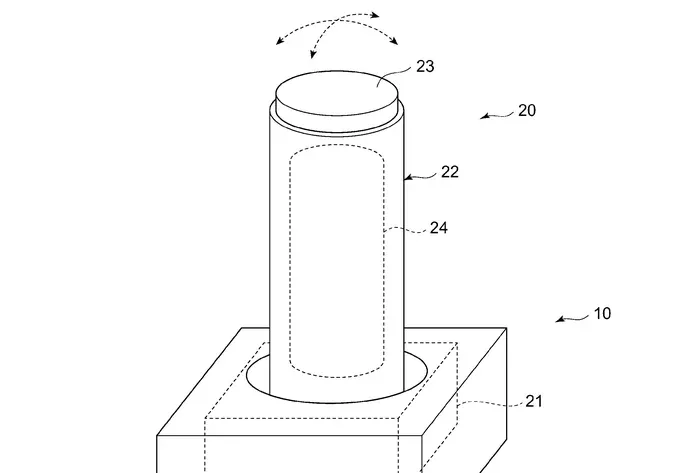
Sony Interactive Entertainment has published a patent for a controller whose buttons can change resistance and tactile feel. Filed with WIPO in November 2024 and published in May, the idea could push future game hardware toward real-time, on-screen adaptive interaction.
Sony Interactive Entertainment has published a patent for a controller with buttons that can alter their resistance and tactile feel, essentially letting the controls get harder or softer depending on what is happening on screen. The concept is not just “better vibration” or a shinier rumble motor. It is about changing how the button physically behaves, so your thumb feels the game’s context, not just reads it visually.
This adaptive input is backed by a paper trail. Sony initially filed the patent application with the World Intellectual Property Organization, the United Nations’ patents agency, in November 2024. It was then officially published in May, according to coverage by Cheat Happens. In other words, this is not a rumor pulled from a dev diary, it is a formally disclosed, regulator-visible attempt to lock in intellectual property around a new kind of controller experience.
Why should busy decision-makers care? Because controller design is one of those areas where “experience” becomes product strategy fast. The industry has already learned that players can tolerate higher latency if the feel is right, but they revolt if mechanics feel inconsistent. Traditional controllers are built around fixed hardware behavior: springs, membranes, or switches that deliver a predictable travel and resistance. This patent points to a hardware approach where the input itself could be tuned in real time to match the on-screen state.
That matters for more than feel. Adaptive tactile behavior creates a new surface area for differentiation and, just as importantly, for compliance and accessibility. When buttons can harden or soften, the question becomes what happens across players with different hand strength, different motor control needs, or different preferences for how “heavy” a control should feel. From a product and governance standpoint, that is the kind of design detail that can turn into a requirement discussion internally, and a support and testing workload externally.
It also has strategic implications for how Sony, and competitors, think about the boundary between software and hardware. In many modern systems, software does the heavy lifting: maps controls, adjusts sensitivity, and adds assist features. Hardware tends to be the constant baseline. A controller that changes tactile resistance blurs that line. That means software teams and hardware teams would need tighter coordination than usual, because your in-game logic could directly influence the physical properties of input devices.
Now layer in the regulatory and IP angle. Filing with WIPO in November 2024 signals that this is not merely an internal engineering sketch. WIPO publications help create an auditable timeline for intellectual property claims that can later become more valuable during negotiations, licensing discussions, or disputes. For executives sitting on product roadmaps, patents like this are a reminder that “cool ideas” have a shelf life. If Sony is spending legal and administrative resources to define the technology early, the company is likely signaling long-term intent, even if actual consumer availability is not guaranteed by a publication.
There is also a market-wide second-order effect: adaptive controls raise the stakes for platform consistency. If Sony’s approach works as described, other hardware providers, including console competitors and accessory makers, will face pressure to either match the capability or differentiate in a way that does not confuse users. Players quickly get used to new interaction affordances, and then they judge older designs by that new expectation. That can shift demand not just for one controller, but for the whole ecosystem of compatible devices.
For peers across gaming platforms, hardware brands, and investors tracking interactive technology, this patent is a signal worth logging. It suggests Sony is exploring a more physical form of immersion, where the controller actively participates in the gameplay state rather than simply transmitting inputs. And because the patent was filed in November 2024 and published in May, it is already in the public domain enough to shape competitive thinking, even if the final product, timeline, and user-visible behavior are still unknown.
The strategic takeaway is simple: as games evolve, the input layer becomes part of the user experience contract. A controller that can harden or soften based on what is on screen could become a new baseline for “responsiveness,” and that baseline can quickly turn into a competitive requirement for anyone betting on the next generation of console and PC play.
This story's Key Insights and Take-aways are locked.
Create a free account to unlock Executive Actions for one credit.
Register to UnlockAlways free for Executives Club members. Join the Club
More in Entertainment

Russell Brand's accuser 'bewildered and confused' as he denies 7 sex charges
The criminal case against the comedian is a live test of how media companies manage talent risk when serious allegations go public.

'It's a Magic Trick': Ballet Experts Say Rosalía's SNL Pose Is Impossible
Three ballet experts tell Rolling Stone Rosalía's gravity-defying SNL stillness shouldn't be possible - and why the debate is now part of the show.

Activision CMO: GTA 6 Will Boost Call of Duty, Not Bury It
Activision's top marketer says Rockstar's blockbuster will drive players back to consoles and into Modern Warfare 4, even as the company admits its recent strategy failed.