
Sotheby's July 14 T. rex sale targets $30M, as private buyers outbid museums
One 67-million-year-old skeleton, Gus, sits at the center of a science vs. luxury market reckoning.
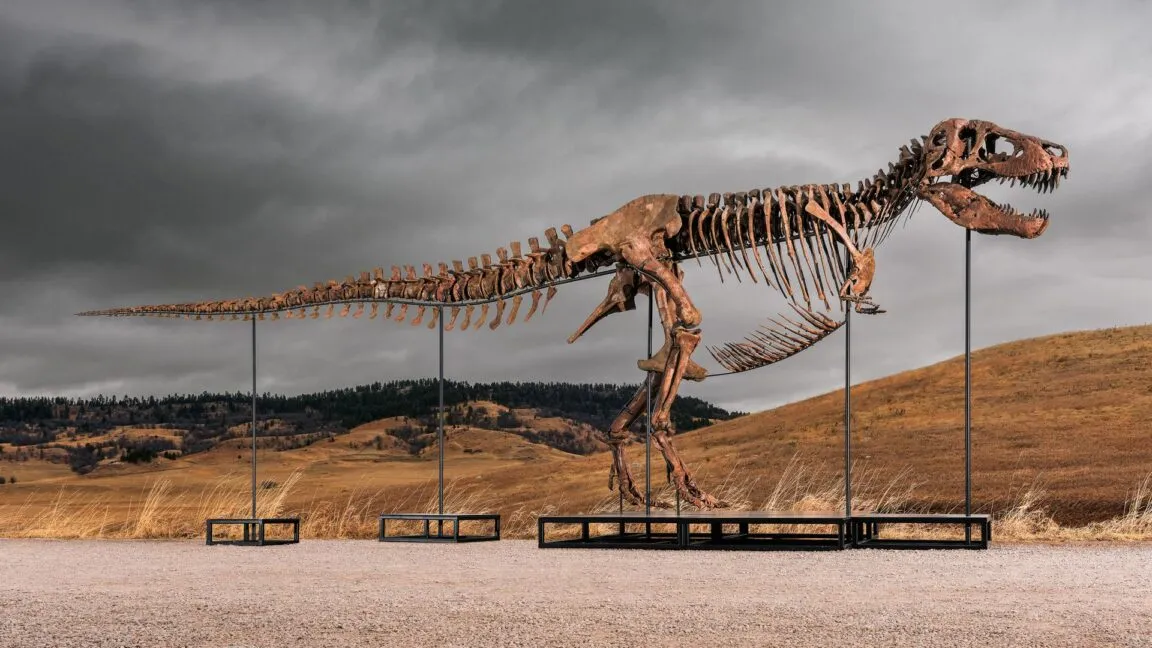
Sotheby's opened live bidding on July 14 for assorted fossils, with lot 20, a rare 67-million-year-old Tyrannosaurus rex skeleton dubbed Gus, expected to fetch up to $30 million. Paleontologists say auction hype and rising private collector demand are shifting fossils away from museums and toward luxury assets, with consequences for science.
On July 14, Sotheby's opened live bidding on assorted fossils, and the spotlight is already on lot 20: a rare 67-million-year-old Tyrannosaurus rex skeleton dubbed Gus. Sotheby's expects Gus to fetch up to $30 million, billing it as one of the largest, most complete T. rexes ever found, and the prize will go to the highest bidder, whether that bidder is a public museum or a private collector.
Why this matters is baked into the auction format itself. Paleontologists interviewed by Ars Technica say private buyers are increasingly outbidding museums for fossils, and that auction houses contribute to the trend by building hype around “sale of the century” style moments. When private collectors treat fossils as luxury assets, those specimens can effectively be lost to science, even if the bones still exist physically. Gus is a poster child for that tension: Sotheby's description emphasizes completeness and spectacle, not research access.
Gus is positioned as a major scientific and cultural object, at least on paper. In Sotheby's listing, the specimen was discovered on a ranch in South Dakota, and it is described as comprising “an incredible 183 fossil bone elements.” By bone count, Sotheby's says Gus is approximately 61 percent complete. The remains have been mounted in a custom steel armature, paired with replicas of the missing bones, resulting in a reconstructed skeleton staged as if in hot pursuit, mouth full of dagger teeth ready to tear into prey.
That degree of theatrical presentation is exactly what can distort the incentives of the fossil market. Auctions reward visibility. A dramatic mounted display and a strong provenance story are built to help buyers see what they are getting and justify high bids, especially buyers who value rarity, aesthetics, and status. Sotheby's is not alone in understanding that fossils are not just raw scientific material. They are also collectible objects. But when that value is dominated by “who can pay more” rather than “who can study more,” the scientific upside depends on what happens after the hammer falls.
The core market shift described here is straightforward: museums, which often operate under public mandates and constrained budgets, are facing competition from private collectors with greater flexibility and, increasingly, a taste for high-end acquisitions. Sotheby's expects Gus to go to the highest bidder, which means museums and private buyers are competing under the same rules at the same moment. If private buyers keep winning, then the ecosystem of accessible specimens can shrink. Not because fossils stop existing, but because ownership structures can change what researchers can examine, how frequently access occurs, and whether study is prioritized over display.
Auction houses sit at the center of that dynamic. Paleontologists cited in the article argue that hype itself can be a catalyst. When listings and events emphasize spectacle and urgency, they can pull attention away from scientific context and toward market value. That is a second-order effect that executives should recognize even outside museums and science: marketing can reshape supply and demand, and then the underlying purpose of an asset can drift. In this case, the asset is a fossil, and the purpose that gets strained is research and public knowledge.
There is also a regulatory and governance angle that decision-makers in adjacent sectors should notice, even if the article does not lay out new rules. Fossil ownership and stewardship often live in a patchwork of national and regional laws, and the availability of specimens for research can depend on how regulators and institutions treat private holdings. When high-profile specimens go to private ownership, the path to collaboration can become slower and less predictable, because access is negotiated rather than institutional. That matters for scientific communities that rely on reproducible study, transparent provenance, and the ability to handle and examine material over time.
At the strategic level, the lesson for boards, executives, and investors is not “auctions are bad” or “private collectors are villains.” It is that capital allocation signals everything. The July 14 Gus auction makes a market statement: fossils can be priced like luxury assets, and that price can outcompete institutions designed to share knowledge. If the private sector continues to outbid museums, then the science pipeline faces an ownership bottleneck. The bones are still here, but the scientific commons may get smaller. And the next time a rare specimen like Gus appears, the question will not only be how much it costs. It will be who controls what comes next.
This story's Key Insights and Take-aways are locked.
Create a free account to unlock Executive Actions for one credit.
Register to UnlockAlways free for Executives Club members. Join the Club
More in Science
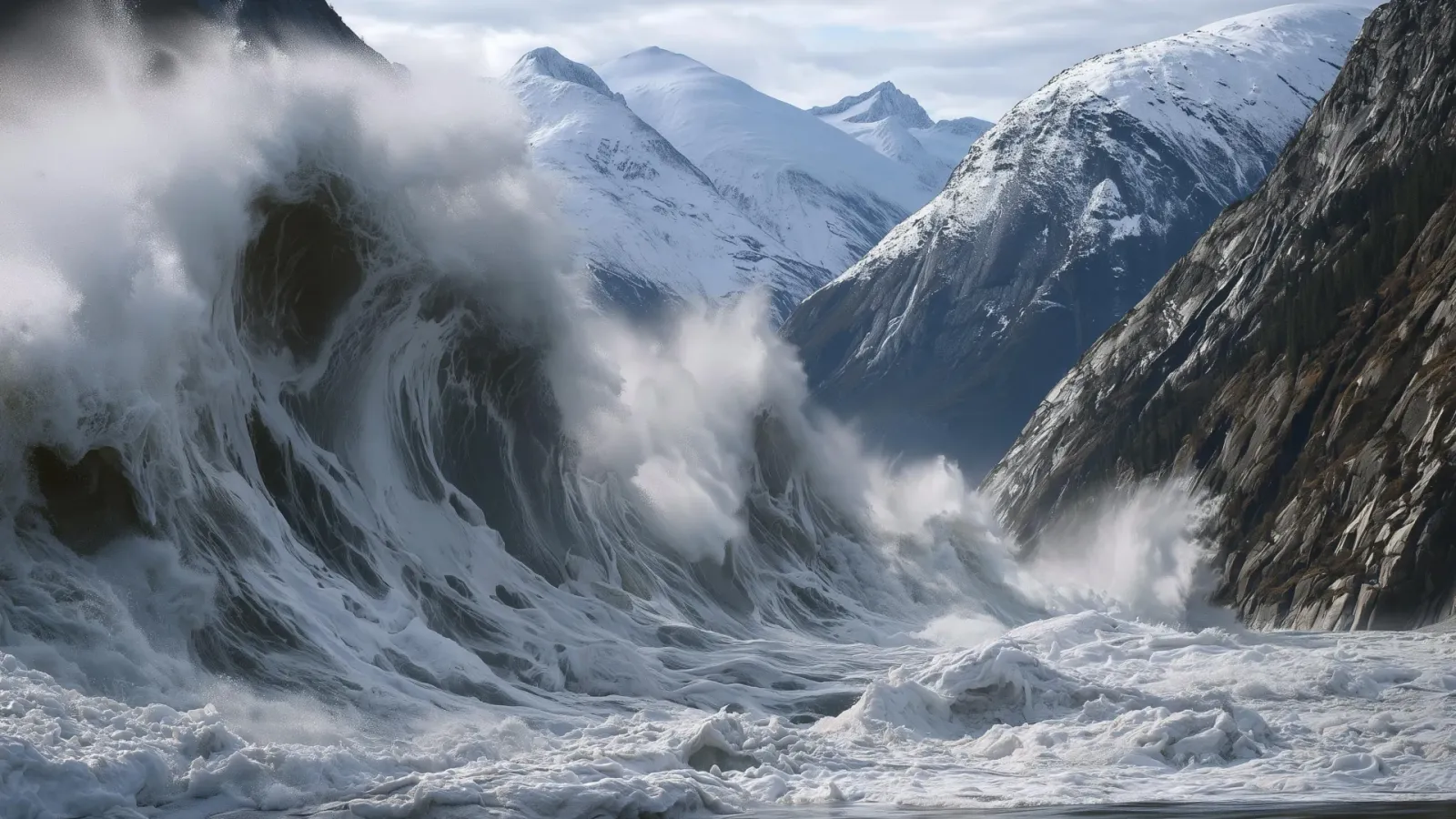
Alaska's 1,580-foot tsunami had warning signs. Scientists just found them.
Rapid glacier retreat, heavy rainfall, and thousands of tiny tremors preceded Alaska's 1,580-foot tsunami, a warning for every coastal community in a warming world.

The rare mutation that lets high-risk brains dodge Alzheimer's
Scientists found a natural defense against protein buildup, opening a new path to preventive treatments.

3,000 steps a day may halve Alzheimer's decline, study finds
New research links a modest daily walk to less tau buildup and nearly half the cognitive and functional decline, even for those with early signs.